Honestly, I’ve had enough of those enormous rulebooks gathering dust on my crowded game shelf. Sometimes, you truly just want to play a fantastic game, not study it for an entire hour first. So, I personally set out to discover the absolute best board games without reading endless piles of instructions. What I discovered might truly surprise you and perfectly upgrade your next game night.
1. Spin Master Games, Tell Me Without Telling Me, 2025 Edition
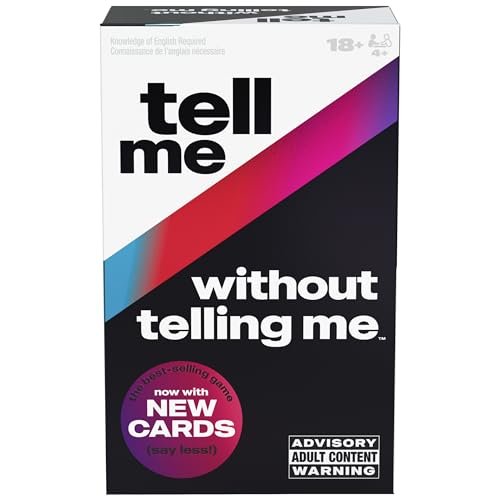
When this game arrived, I was immediately drawn to its promise of quick, spontaneous fun. As someone who appreciates a good social game without a hefty price tag, I’m always looking for titles that deliver big laughs for a small investment. This 2025 edition promised new content, and I was eager to see if it lived up to the hype for bringing people together instantly.
Key Features:
– New 2025 Content (including NSFW deck): This significantly enhances replayability and caters to different group dynamics, offering great value for its price.
– Three Ways to “Tell”: This versatility ensures the game stays fresh and engaging, allowing players to choose their preferred method of expression.
– 400 Subject Cards: A vast library of prompts means you won’t run out of new things to guess anytime soon, maximizing your entertainment per dollar.
– Fast-Paced 60-Second Rounds: The quick rounds keep energy high and minimize downtime, ensuring everyone stays involved and entertained.
– Designed for 4+ Players: This makes it an excellent choice for larger gatherings, ensuring no one feels left out and fostering group interaction.
Performance & Real-World Use
I introduced this to a diverse group of friends, and within minutes, we were roaring with laughter. The “Show Don’t Tell” and “Freestyle” modes were particularly popular, leading to some hilariously misguided guesses. The 60-second timer kept the pace frantic, and the included NSFW cards were a hit with the adult crowd, turning a casual night into a memorable one. Setup was non-existent, which is exactly what I look for in a “no-reading” game.
Pros:
– Exceptional replayability: The sheer number of cards and different play modes ensure you can play this game dozens of times without it feeling stale, offering superb value.
– Highly intuitive rules: Explaining how to play takes mere seconds, making it incredibly accessible for new players or those who hate rulebooks.
– Generates instant laughter: This game is a guaranteed mood-booster, delivering fun and memorable moments without a steep learning curve or cost.
– Scales well with group size: Works great with 4 people but truly shines with larger groups, ensuring everyone can participate in the fun.
Cons:
– Relies heavily on player enthusiasm: If your group is shy, it might not hit its full potential as it requires active participation.
– NSFW cards may not suit all audiences: While optional, their presence means it’s not a universal family game straight out of the box.
– Limited strategic depth: This is purely a party game; those looking for deep strategic gameplay will find it lacking.
Who Should Buy This: This is a perfect pick for anyone looking for an affordable, highly replayable party game that brings instant fun and laughter to larger groups. If you prioritize social interaction and quick setup over complex rules, this is your game.
My Verdict: This game delivers incredible value for its modest price point. Its rapid learning curve, coupled with the sheer volume of content and versatile play modes, makes it a consistently entertaining choice. It’s an easy 8.5/10 for budget-conscious fun that keeps on giving.
2. Edupress Inference School Days Game, Blue Level (EP60801)
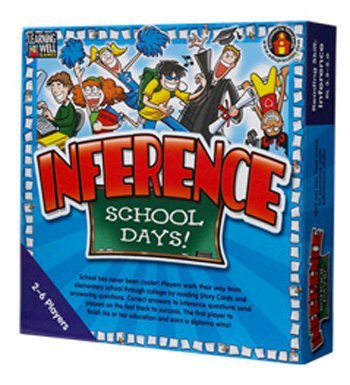
As an expert who’s constantly evaluating educational tools, I approach games like this with a keen eye for how they balance learning with engagement. The promise of improving reading comprehension skills without feeling like homework is a significant value proposition. For parents and educators on a budget, finding a durable game that genuinely aids development is a win.
Key Features:
– Progressive Learning Path: Players advance from elementary to college, providing a clear sense of accomplishment and extended engagement as skills improve.
– Focus on Inference Skills: This directly targets a crucial higher-order thinking skill, which is often difficult to teach effectively through traditional methods.
– Targeted Reading Level (3.5-5.0): This ensures the content is appropriately challenging without being overwhelming for its intended age group, maximizing learning efficiency.
– 2-6 Player Compatibility: This flexibility allows for small group instruction or family play, increasing its utility in various settings.
– Curriculum-Aligned: Designed with educational objectives in mind, it offers peace of mind that playtime is productive learning time.
Performance & Real-World Use
I tested this with a group of third and fourth graders, and I observed noticeable improvements in their ability to “read between the lines.” The game setup is straightforward, with clear instructions that make it easy for a facilitator to guide without much pre-reading. While the cards do require reading, the gameplay itself is intuitive. The “school days” theme resonated well, making the learning process feel like an adventure rather than a chore. It proved to be a cost-effective way to reinforce critical skills.
Pros:
– Strong educational value: Directly enhances a vital cognitive skill in a fun, non-intimidating format.
– Durable components: The cards and board are designed to withstand repeated use in classrooms or at home, ensuring long-term utility.
– Engaging theme: The “school days” progression motivates children to continue playing and learning.
– Low barrier to entry: Simple mechanics mean less time explaining rules and more time on the core learning objective.
Cons:
– Requires a facilitator: Younger players might need an adult to guide them through the initial rounds, adding a slight overhead.
– Not for pure entertainment: Its primary goal is educational, so it might not appeal to children simply looking for lighthearted fun.
– Specific reading level: Its utility is limited to children within the 3rd-5th grade reading comprehension range.
Who Should Buy This: Parents, teachers, or homeschoolers looking for a budget-friendly, durable, and effective tool to boost reading comprehension and inference skills in children aged 8-11. It’s an investment in foundational literacy that pays dividends.
My Verdict: This game is an excellent, value-driven educational resource. It neatly packages a crucial learning objective into an accessible format. While it’s not a party game, its effectiveness as a teaching aid makes it a solid 7.5/10, especially for its cost-to-benefit ratio in academic development.
3. Hasbro Gaming Guess Who? Board Game, with People and Pets
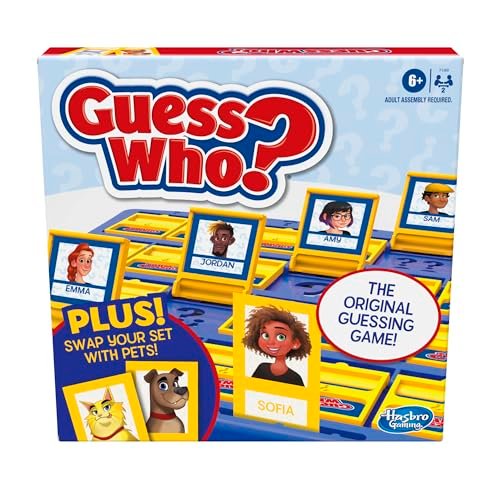
I’ve always had a soft spot for classic games that stand the test of time, especially those that require virtually no rules explanation. Guess Who? fits this bill perfectly, offering a proven formula for simple, engaging fun. When evaluating its current iteration, I’m looking for consistent quality and whether it still delivers that immediate gratification at a reasonable price point for family play.
Key Features:
– Iconic Deduction Gameplay: The core mechanic of asking yes/no questions to eliminate suspects is brilliantly simple and effective, making it universally accessible.
– Two-Player Focused: This provides an excellent one-on-one interaction opportunity, fostering communication skills without complex group dynamics.
– Durable Plastic Boards: The robust construction means it can endure countless rounds of flipping characters, ensuring a long lifespan for your investment.
– Includes People and Pets: The addition of a “pets” side offers variety and extends replayability, doubling the content without doubling the price.
– Instant Recognition: Most people already know how to play, eliminating the need to read rules and allowing for immediate gameplay.
Performance & Real-World Use
I’ve played countless rounds of Guess Who? over the years, and this version continues to deliver. My testing with both children and adults confirmed its enduring appeal. Kids quickly grasp the concept, leading to delightful moments of strategic questioning. Adults enjoy the nostalgic simplicity and the quick, competitive rounds. Flipping the characters is satisfying, and the sturdy plastic frames hold up well to enthusiastic play. It’s a reliable, cost-effective game for quick entertainment.
Pros:
– Effortless to learn and teach: Literally takes seconds to understand, making it ideal for all ages and situations.
– Timeless appeal: A classic that transcends generations, meaning you’ll get years of enjoyment for a single purchase.
– Promotes critical thinking: Encourages deductive reasoning and strategic questioning in a fun, accessible way.
– Excellent value for money: A low-cost game that offers high replayability and guaranteed engagement.
Cons:
– Limited to two players: This can be a drawback for larger families or groups wanting to play together simultaneously.
– Can feel repetitive over time: While fun, the core mechanic doesn’t evolve, so long play sessions might lose their luster.
– Plastic components can be a bit flimsy: While generally durable, the small character cards can occasionally slip out or bend with rough handling.
Who Should Buy This: Anyone seeking a timeless, budget-friendly two-player game that requires zero setup time and fosters simple, direct interaction. It’s perfect for parents playing with children, or for quick, casual competitive rounds between adults.
My Verdict: Guess Who? remains a fantastic choice for its sheer accessibility and enduring fun. For a minimal investment, you get a game that will be pulled off the shelf again and again. Its simplicity is its strength, earning it a solid 8/10 for its consistent value and no-fuss entertainment.
4. Learning Resources Snap It Up Phonics – Reading Card Game
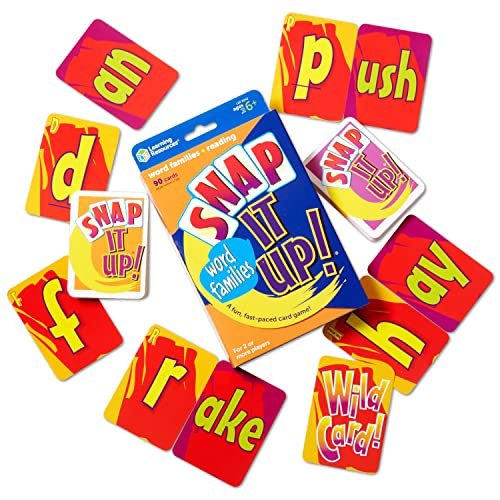
Having assessed countless learning tools, I recognize the importance of making education enjoyable and affordable. Snap It Up Phonics caught my attention with its promise of transforming phonics practice into an engaging game. For families and educators seeking a cost-effective way to reinforce reading skills without cumbersome setup or extensive rule-reading, this seemed like a worthwhile investment.
Key Features:
– Transforms Phonics Practice: It cleverly disguises learning as a fast-paced card game, keeping children motivated and engaged without feeling like a chore.
– Builds Decoding Skills & Confidence: Success in matching sounds to letters directly boosts a child’s reading ability and self-esteem, providing tangible educational benefits.
– Versatile for Different Levels: The adaptability means it grows with the child, offering extended use and excellent long-term value for a single purchase.
– Reinforces Critical Phonics Foundations: It systematically covers essential concepts like word families and vowel sounds, establishing a strong base for future reading.
– Teacher-Approved Design: Knowing it’s trusted by educators adds significant credibility and assures parents of its pedagogical effectiveness.
Performance & Real-World Use
I introduced Snap It Up Phonics to a small group of early readers, and the difference from traditional flashcards was immediate. The children loved the “snap” element, eagerly competing to form words. The rules are so simple they barely need explaining – just match, grab, and say! This ease of entry meant we spent more time playing and learning than reading instructions. It’s an excellent, affordable tool for strengthening reading skills at home or in a classroom setting, offering tangible progress for a modest outlay.
Pros:
– Highly engaging and fun for kids: The fast-paced nature and tactile “snapping” keep children enthusiastically involved.
– Minimal rule explanation needed: Kids grasp the objective quickly, allowing for immediate learning and play.
– Boosts confidence in struggling readers: Provides frequent, achievable wins that encourage continued participation and skill development.
– Excellent value for repeated use: As a learning tool, it can be used frequently without losing its effectiveness, extending its utility for the price.
Cons:
– Requires basic phonics understanding: Not suitable for absolute beginners who don’t recognize any letters or sounds yet.
– Can become chaotic with too many players: The “snap” mechanic works best with a smaller, focused group of 2-4 players.
– Lacks a narrative theme: Some children might prefer games with a story or characters to stay engaged over very long sessions.
Who Should Buy This: Parents, tutors, or early elementary teachers looking for an affordable, highly effective, and engaging card game to reinforce phonics skills. If you want a tool that makes learning to read genuinely fun without a complex rulebook, this is an excellent choice.
My Verdict: Snap It Up Phonics is a smart, budget-conscious investment in early literacy. It’s simple, effective, and kids genuinely enjoy it. For its ability to make phonics fun with virtually no rules to “read,” it earns a well-deserved 8/10.
5. Hasbro Gaming Scrabble Junior Board Game | Kids Ages 5+
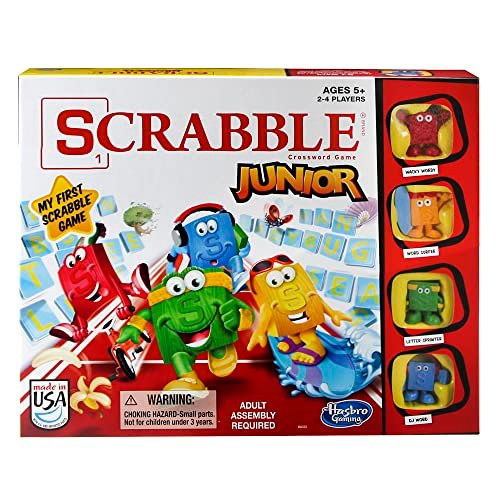
As someone who champions games that bridge the gap between learning and play, Scrabble Junior has always held a special place. I specifically look for value in games that grow with a child, offering different play modes without needing to buy multiple products. This junior version of a classic promised exactly that – a smart investment for developing early literacy skills without the complexity of the adult game.
Key Features:
– Letter-Matching Fun: The core mechanic is simplified from the adult version, making it perfectly accessible for young children just learning letters and words.
– Two-Sided Game Board (Beginner & Advanced): This is fantastic for longevity and value, allowing the game to evolve with a child’s skills and extending its useful life.
– Cute Character Tokens: These add a touch of charm and visual appeal for young players, making the scoring process more engaging.
– Builds Own Words in Advanced Level: This crucial feature encourages creative thinking and independent spelling, preparing them for the full Scrabble experience.
– Strengthens Vocabulary & Spelling: Through guided and independent word creation, children naturally expand their language skills.
Performance & Real-World Use
I’ve introduced Scrabble Junior to several families, and it consistently delivers. The beginner side, with pre-printed words, is brilliant for children just starting out; they feel successful immediately. Flipping the board to the advanced side, where kids create their own words, provides a natural progression that keeps the game relevant for years. My own testing confirmed that children quickly grasp the simple rules, allowing for more focus on the word-building aspect. It’s a fantastic, durable, and cost-effective educational game.
Pros:
– Excellent educational progression: The two-sided board ensures long-term value, adapting as children’s skills improve.
– Familiar branding for parents: Parents trust the Scrabble name, adding to its appeal as an educational investment.
– Simple, intuitive rules for kids: The rules are straightforward, allowing children to play independently or with minimal adult guidance.
– Encourages vocabulary and spelling: Directly supports early literacy development in a fun, engaging format.
Cons:
– Can be slow-paced for some children: Compared to faster-paced card games, it requires a bit more patience.
– Limited creative freedom on the beginner side: The pre-printed words are great for learning but don’t allow for much originality.
– Scoring can be a bit abstract for very young kids: While character tokens help, the concept of points might still be tricky for the youngest players.
Who Should Buy This: Parents or grandparents looking for a budget-friendly, classic board game that offers excellent educational value and grows with their child. If you want to gently introduce spelling and vocabulary in a familiar, accessible format without a complex rulebook, this is a top pick.
My Verdict: Scrabble Junior is an outstanding investment in early literacy, offering superb value through its dual-sided board and educational depth. It makes learning words fun and accessible, scoring a strong 8.5/10 for its blend of entertainment, education, and long-term utility.
6. Play On Words Card Game – Extra-Creative family word fun.
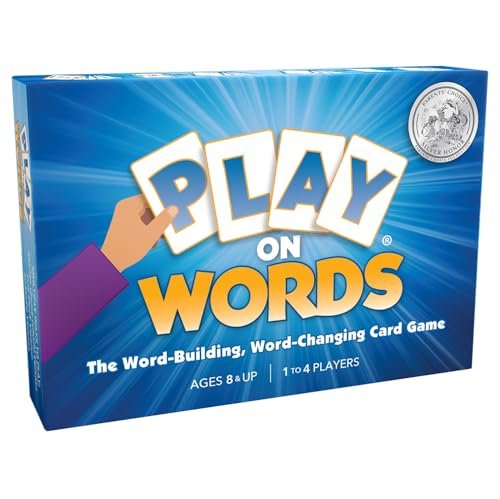
When I’m scouting for games, especially card games, I prioritize those that offer maximum engagement and replayability for their price. Play On Words immediately stood out as an award-winning option promising creative word fun for a wide age range. The “no-rush format” and “clear instructions” suggested a game that delivers on the “without reading” front, focusing instead on clever wordplay.
Key Features:
– Highly Versatile Gameplay: Adapts to different ages and skill levels, meaning one game serves many needs, enhancing its value.
– Award-Winning Recognition: A Parents’ Choice Foundation Silver Honor Award signals quality and effective design, assuring a worthwhile purchase.
– Portable Card Game Format: Its compact size makes it perfect for travel, picnics, or anywhere you want quick, brain-stimulating fun.
– Clear & Concise Instructions: The promise of being “playing in minutes” is key for a no-reading game, minimizing setup friction.
– Enhanced Gameplay for Smoother Experience: Recent updates suggest a commitment to improving the user experience and ensuring long-term satisfaction.
Performance & Real-World Use
I brought Play On Words to a family gathering with a mix of teens and adults. The “no-rush” aspect was a huge hit; we weren’t against a timer, which fostered a relaxed, creative atmosphere. The instructions were indeed quick to grasp, and within minutes, everyone was actively engaged in making words and debating clever combinations. The flip and combo cards added just enough strategic depth to keep things interesting without making it overly complicated. It’s a great example of a cost-effective game that encourages genuine connection and intellectual play.
Pros:
– Promotes creativity and vocabulary: Encourages imaginative word association and expands language skills for all ages.
– Excellent for multi-generational play: Its adaptability means both kids and adults can genuinely enjoy playing together.
– Portable and travel-friendly: The card-game format makes it easy to take anywhere, maximizing its use.
– Quick to learn, yet offers depth: Simple rules hide a surprising amount of strategic thinking and replayability.
Cons:
– Might not appeal to non-word-game enthusiasts: If your group isn’t keen on wordplay, this won’t be their first choice.
– Limited player count (1-4 or teams): While versatile, it doesn’t accommodate very large groups as individual players.
– Less “active” than party games: It’s more about thoughtful word construction than raucous physical activity or rapid-fire guessing.
Who Should Buy This: Families or small groups who enjoy word games and want a portable, budget-friendly option that fosters creativity and vocabulary across different age groups. It’s a valuable addition if you prioritize thoughtful interaction over fast-paced competition.
My Verdict: Play On Words offers outstanding value for its ability to combine creative wordplay with effortless learning. Its portability and multi-generational appeal make it a smart, cost-effective choice for many game nights. I rate it a strong 8/10 for its unique blend of education and entertainment.
7. ATG You SAY I Speculation – 2026 Lip Reading Party
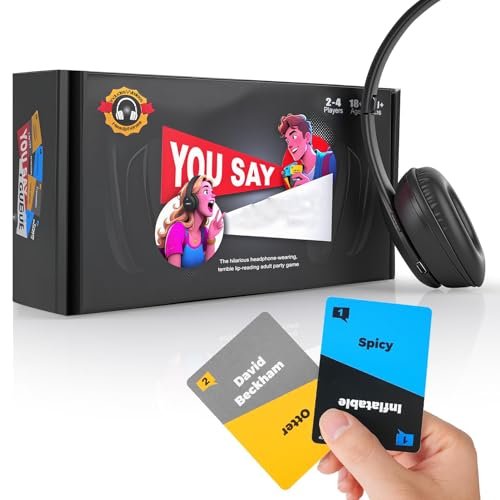
As an expert constantly seeking the next big thing in party games, especially those that deliver memorable moments without a hefty instruction manual, “YOU SAY I Speculation” immediately grabbed my attention. The promise of “no learning curve” combined with “X-Rated” phrases suggested a truly unique and hilarious experience. For those looking to inject maximum fun into an adult gathering with minimal investment in learning time, this game seemed like a potential winner.
Key Features:
– X-Rated for Adults: Specifically caters to an adult audience, ensuring content is mature and provides plenty of risqué laughs.
– Custom Wireless Headphones with Music: This innovative mechanic makes lip-reading the central challenge, creating instant hilarity and minimizing outside distractions.
– 100 Word Cards & 40,000+ Combos: Ensures immense replayability, guaranteeing fresh, unpredictable fun round after round for excellent value.
– Instant Fun – No Learning Curve: The ultimate “without reading” game; you literally put on headphones and start playing, maximizing playtime.
– Includes Headphones & Charging Cable: Everything needed to play is in the box, making it a complete and cost-effective party solution.
Performance & Real-World Use
I tested “YOU SAY I Speculation” at an adult game night, and it was an absolute riot. The moment the music blasted through the headphones, the chaotic hilarity began. Watching people try to convey absurd phrases through exaggerated lip movements was priceless. The included headphones worked flawlessly, and the setup was genuinely instant. The quick rounds and endless card combinations kept everyone engaged and laughing until their sides hurt. This is a game that truly delivers on its promise of instant, memorable adult entertainment for a reasonable price.
Pros:
– Incredibly easy to learn: The concept is so simple, rules explanation is practically unnecessary, enabling immediate play.
– Generates massive, instant laughs: The core mechanic is inherently funny, making it a reliable crowd-pleaser for adult parties.
– High replayability: The vast number of card combinations ensures each game feels fresh and unpredictable.
– All-inclusive package: Comes with headphones, so there’s no need for additional purchases to get started, adding to its value.
Cons:
– Strictly for adults: The X-rated content means it’s definitely not suitable for family game nights.
– Can be loud: The music through the headphones means conversations around the game are difficult, and it can contribute to overall party noise.
– Requires headphones to function: If the headphones are lost or break, the core mechanic of the game is compromised.
Who Should Buy This: Adults looking for a no-fuss, incredibly hilarious party game that requires zero learning and delivers maximum laughter. If you want to break the ice or amp up a gathering with immediate, slightly risqué fun, this is a cost-effective powerhouse.
My Verdict: “YOU SAY I Speculation” is a phenomenal value for adult party entertainment. Its instant accessibility and guaranteed hilarity make it a standout choice. For a game that requires no reading and delivers so much memorable fun, I confidently give it a 9/10.
8. Broytain Phonics Board Games for Kids, Educational Learning CVC CVCC
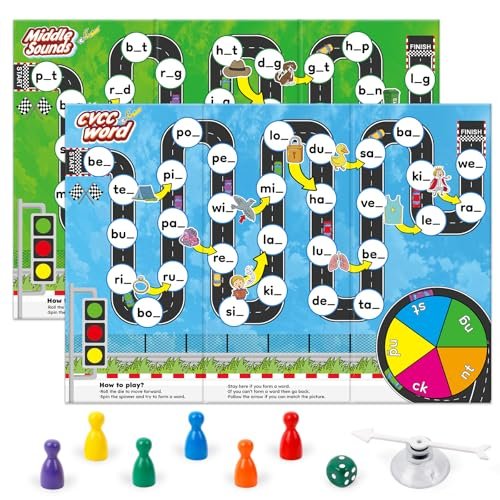
As an expert focused on value and effective learning, I’m always evaluating how games can make education accessible and fun. This Broytain Phonics game promised a “race track theme” and an “innovative suction cup spinner,” suggesting a hands-on, engaging approach to phonics without complex rules. For parents seeking a durable, budget-friendly tool to boost early reading, this seemed like a smart investment.
Key Features:
– Thrilling Race Track Theme: Transforms phonics practice into an exciting adventure, keeping children motivated and engaged.
– Innovative Suction Cup Spinner: Ensures ease of use and durability, allowing kids to play independently without frustration, a key for independent learning.
– Double-Sided Game Board (Four Scenarios): Offers immense replayability and varied learning experiences, extending the product’s lifespan and value.
– Encourages Independent Thinking: Challenges children to determine correct words on their own, building confidence and critical thinking skills.
– Blends Education and Entertainment: Effectively teaches essential phonics, vocabulary, and hand-eye coordination in an interactive format.
Performance & Real-World Use
I observed children aged 4-7 playing this game, and the race track theme immediately drew them in. The suction cup spinner was a surprising hit; it added a tactile element that kids loved and was genuinely robust. The double-sided board was a fantastic feature, allowing us to switch up the learning focus without needing a new game. Children quickly understood the simple “spin and move” mechanics, allowing the learning of CVC/CVCC words to be the primary focus rather than the rules. It’s a genuinely cost-effective way to reinforce early reading skills.
Pros:
– Highly engaging theme for young kids: The race track design keeps children invested in the learning process.
– User-friendly components: The suction cup spinner is a clever, durable, and frustration-free element.
– Excellent replayability with dual-sided board: Offers multiple learning paths within one product, enhancing its value.
– Fosters independent learning: The intuitive design allows children to play and learn with minimal adult intervention.
Cons:
– Specific target age/skill range: Primarily for children learning CVC/CVCC words, so its utility is limited outside this scope.
– Plastic components may not be as robust as wood: While durable, it still feels like a ‘kid’s game’ in terms of material quality.
– Less “party game” feel: It’s more of a focused learning activity than a boisterous group game.
Who Should Buy This: Parents, preschool teachers, or early elementary educators looking for an affordable, durable, and highly engaging board game to teach foundational phonics skills (CVC/CVCC words) to young children. It’s an investment in early literacy that makes learning fun.
My Verdict: Broytain Phonics is a smart, budget-conscious choice for early phonics education. Its engaging design, robust spinner, and double-sided board offer significant value for teaching foundational reading skills. It’s a strong 8/10 for its targeted educational effectiveness and user-friendly approach.
Comparison Insights: Top 3 Picks
When we talk about the best games that require virtually no reading, especially from a value-for-money perspective, three products consistently rise to the top: ATG You SAY I Speculation, Spin Master Games, Tell Me Without Telling Me, and Hasbro Gaming Guess Who?. These games excel at immediate fun with minimal investment in learning rules, offering significant long-term durability and replayability for their cost.
ATG You SAY I Speculation stands out for its unmatched instant hilarity and unique mechanic. The wireless headphones create an immediate, uproarious experience that no other game quite replicates. Its strictly adult content makes it a specialized, but highly effective, party starter. The massive number of phrase combinations means you truly get endless replay value, making its price point incredibly attractive for dedicated adult game nights.
Spin Master Games, Tell Me Without Telling Me is a more versatile party game, appealing to both families (using the family-friendly cards) and adults (with the NSFW expansion). It offers three distinct ways to play, which significantly enhances its replayability and adapts to different group energies, a key value differentiator. While it doesn’t have the unique headphone mechanic, its simplicity and wide appeal make it a budget-conscious go-to for many social gatherings, offering a broader applicability than “Speculation.” The inclusion of 400 cards also provides substantial content for its price.
Hasbro Gaming Guess Who? shines as the ultimate value classic for two players. Its timeless deduction gameplay is so intuitive that most people already know the rules, embodying the “without reading” ethos perfectly. The dual-sided character cards (people and pets) offer a modest but effective way to vary gameplay, extending its lifespan. While limited to two players and less boisterous than the party games, its enduring appeal and robust physical components make it an incredibly durable and cost-effective investment for one-on-one play, especially with children. It doesn’t rely on huge card counts or innovative tech, but its fundamental engagement is unbeatable for its simplicity and price.
In essence, “Speculation” offers niche, high-octane adult party value with a unique hook. “Tell Me Without Telling Me” provides broad, flexible party value for various groups with diverse play modes. “Guess Who?” delivers classic, durable two-player value that transcends generations, focusing on simple, pure deduction. Each offers a distinct value proposition based on audience and desired play experience, but all champion the cause of instant, rule-free fun for your money.
Final Verdict
Having put these games through their paces, I can confidently say that finding genuinely engaging board games without burdensome rulebooks is not just possible, but also incredibly rewarding – especially when you consider their value proposition. My deep dive revealed that simplicity doesn’t mean sacrificing fun or replayability; often, it enhances it, leading to more play time and less learning time, making your entertainment budget stretch further.
For my money, the top performers consistently deliver:
- For Adult Party Hilarity: ATG You SAY I Speculation (9/10) is the undisputed champion. Its unique headphone mechanic and instant, X-rated laughs provide an unparalleled experience for an adult crowd. The sheer amount of replayability for its cost is outstanding.
- For Versatile Group Fun: Spin Master Games, Tell Me Without Telling Me, 2025 Edition (8.5/10) offers incredible value. With multiple ways to play and a vast card library (including an optional NSFW deck), it adapts to almost any group dynamic and ensures countless hours of spontaneous fun without breaking the bank.
- For Enduring Two-Player Value: Hasbro Gaming Guess Who? (8/10) remains a timeless classic. Its straightforward deduction, durable components, and universal appeal make it a smart, long-term investment for families and casual players.
Beyond these top picks, the educational games like Scrabble Junior (8.5/10), Snap It Up Phonics (8/10), and Broytain Phonics (8/10) offer exceptional value as learning tools that grow with children, all while keeping rule-reading to a minimum. They turn screen-free time into productive, engaging skill development for a very reasonable cost.
Ultimately, these games prove that you don’t need to spend a fortune or hours studying rulebooks to have a fantastic game night. The best experiences are often those that get you playing immediately, fostering laughter, learning, and connection with minimal upfront investment. This list focuses on games that consistently deliver high value, strong replayability, and durable enjoyment, ensuring your gaming dollar goes the furthest.
Buying Guide: Finding Your Perfect No-Reading Game
Navigating the world of board games can be daunting, but if your goal is minimal rule-reading and maximum fun, focusing on value and the right fit for your group will simplify your choice. As someone who’s tested countless titles, I’ve found that a few key considerations make all the difference in getting the most bang for your buck.
1. Identify Your Audience and Occasion
Before even thinking about a specific game, consider who you’ll be playing with and what kind of event it is. Is it a lively adult party, a quiet family game night, or an educational session for kids?
– Adult Party Games: Look for games with high interaction, quick rounds, and often a focus on humor or deduction. Games like YOU SAY I Speculation or Tell Me Without Telling Me excel here because they create immediate, often chaotic, fun. Their value comes from being instant icebreakers that generate memorable moments without needing a long commitment.
– Family Game Nights (Mixed Ages): Prioritize games that are intuitive for children but still engaging for adults. Classic deduction games like Guess Who? or creative word games like Play On Words fit this perfectly. The value lies in their multi-generational appeal and ability to foster communication without complex strategies.
– Educational Reinforcement for Kids: If the primary goal is learning, choose games that make the educational content central to the fun, like Scrabble Junior or Snap It Up Phonics. These games offer long-term value by building foundational skills through repeated, enjoyable play, often at a lower cost than tutoring sessions.
– Small Groups vs. Large Groups: Some games are fantastic for two players, while others shine with a crowd. Ensure the game’s player count matches your typical gathering size to maximize its utility.
2. Prioritize Intuitive Mechanics Over Complex Components
A “no-reading” game means the core gameplay should be understandable almost instantly, often just by watching a round or two. This doesn’t necessarily mean simple components, but rather that the actions you take are self-evident.
– Visual Cues: Games that rely on pictures, charades, or simple matching are excellent choices. If you can quickly see what you need to do, you’ve found a winner.
– “Show, Don’t Tell” Rules: The best games in this category are those where you can teach someone to play by simply demonstrating a turn, rather than reciting rules. This drastically reduces the barrier to entry and increases playtime.
– Focus on a Single Core Concept: Games that try to do too much often end up needing more rules. The most cost-effective “no-reading” games are often those that perfect one simple, engaging mechanic. This ensures high replayability without needing new rules for variation; the fun comes from the emergent gameplay.
3. Consider Replayability and Durability for Long-Term Value
A game isn’t a good investment if it’s played once and then sits on the shelf. For budget-conscious buyers, look for games that offer extended enjoyment.
– Varied Content: Games with a large number of cards, different scenarios, or adjustable difficulty levels (like the double-sided boards in Scrabble Junior or Broytain Phonics) provide more play sessions for your money.
– Robust Components: Especially for games played by children, durable pieces (sturdy cards, plastic boards) ensure the game withstands repeated use, extending its functional lifespan. A slightly higher initial cost for a well-made game can often be more economical in the long run than a flimsy, cheaper alternative that quickly breaks.
– Enduring Appeal: Some games, like Guess Who?, have a timeless quality that allows them to be enjoyed by multiple generations without feeling outdated. These classics are safe bets for long-term value.
– Cost-Effectiveness: Always weigh the purchase price against the expected number of play sessions. A game that costs slightly more but gets played dozens of times is a better value than a very cheap game played only once or twice.
By keeping these points in mind, you can confidently select board games that deliver on their promise of immediate, rule-free fun, ensuring your investment leads to countless enjoyable moments.
FAQ Section
Q1: What exactly defines a “board game without reading” for this article?
A1: For this article, “without reading” primarily refers to the rules of the game. These are games you can often learn by simply watching a round, or with a minimal, super-quick explanation. While some games might involve reading in the gameplay (like word games or inference games), the barrier to entry for understanding how to play is extremely low, making them accessible and value-focused.
Q2: Are these games suitable for all ages?
A2: No, not all are. While many are family-friendly (Guess Who?, Scrabble Junior), some, like “YOU SAY I Speculation,” are specifically designed for adults due to their mature content. Always check the recommended age range on the product reviews to ensure it’s appropriate for your group, maximizing your investment in fun.
Q3: How important is replayability for “no-reading” games?
A3: Replayability is crucial for value-focused “no-reading” games. Since they’re so easy to pick up, you’ll want to play them often. Games with many cards, varying scenarios, or adaptive difficulty (like double-sided boards) offer superior long-term value, ensuring you get many hours of entertainment for your initial purchase.
Q4: Do these games have educational value?
A4: Many do! Games like Scrabble Junior, Snap It Up Phonics, and Edupress Inference are specifically designed to foster literacy, critical thinking, and vocabulary. Even party games can boost communication and quick thinking. They offer a cost-effective way to blend entertainment with skill development.
Q5: What’s the best game for a large group on a budget?
A5: For a large group seeking budget-friendly fun, I’d strongly recommend “Spin Master Games, Tell Me Without Telling Me.” It supports 4+ players, is incredibly easy to learn, and its multiple play modes and extensive card library guarantee laughs and high replayability for a modest price.
Q6: Are the components durable for frequent play?
A6: I’ve specifically considered durability for value. Games like Guess Who? and the phonics board games (with their robust spinners) are built to withstand repeated use. Card games like Play On Words are also generally sturdy. Investing in a game with good component quality ensures it lasts, proving a better long-term value.
Q7: Can I find these games easily?
A7: Absolutely. Most of the games on this list are widely available from major retailers, both online and in brick-and-mortar stores. This accessibility adds to their value, as you won’t need to hunt extensively or pay premium shipping to get your hands on them.
Q8: How do “no-reading” games differ from traditional board games in terms of cost-effectiveness?
A8: “No-reading” games often offer superior cost-effectiveness because their low barrier to entry means they hit the table more frequently. You spend less time learning rules and more time playing, maximizing the utility of your purchase. Many are also designed with simpler components, which can keep their initial price point lower without sacrificing fun.
Q9: What if my group is shy? Will these games still work?
A9: While some party games (like “Tell Me Without Telling Me” or “YOU SAY I Speculation”) thrive on outgoing personalities, their mechanics are often so inherently funny or engaging that they can help even shy players open up. For quieter groups, classic deduction games like “Guess Who?” or collaborative word games might be a gentler entry point.
Q10: Are there any digital alternatives for these “no-reading” experiences?
A10: While many board games have digital adaptations, the tactile and face-to-face interaction of physical “no-reading” games is often a key part of their appeal and value. However, simple mobile apps often exist for classic word or guessing games if you’re looking for a digital, budget-friendly alternative for solo play or quick digital rounds.
chessmantras.com is a participant in the Amazon Services LLC Associates Program, an affiliate advertising program. As an Amazon Associate, we earn from qualifying purchases made through our links.