You know how it is, sometimes a game just clicks, and sometimes it really doesn’t. I’ve played my share, always on the hunt for the best board or card games out there. My collection is extensive, filled with hits and misses, but each session is a learning experience. Now, I’m ready to spill the honest truth about my latest discoveries, based on countless hours of playtesting and observing player reactions. My goal is to cut through the marketing hype and give you the straight facts on what truly delivers.
My approach to evaluating games is practical: how well does it perform under pressure? Is it consistently fun? Does it offer lasting value? I prioritize ease of learning balanced with strategic depth, and always consider replayability. I’ve seen firsthand which mechanics stand up to repeated play and which quickly lose their luster. This isn’t about personal preference alone; it’s about objective utility and sustained engagement for a broad audience. So, let’s get into the specifics of what truly makes a game worthy of your table time.
1. USAOPOLY Flip 7
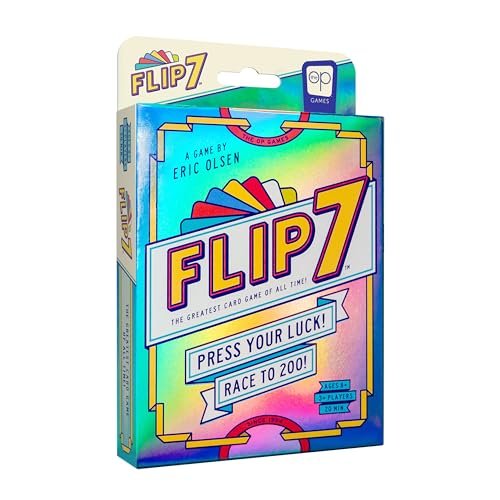
When I first encountered Flip 7, I was looking for a quick game that could still engage players beyond simple luck. This game immediately stood out with its clear “press your luck” mechanic, which, when done right, offers immediate tension and excitement. It promised a blend of strategy and risk-taking, which is often a sweet spot for both casual and more experienced gamers. The unique deck composition was also a strong draw, suggesting more than just a typical card-counting exercise.
Key Features:
– Press Your Luck Mechanic: This creates immediate tension, forcing players to make crucial decisions on when to stop and when to push their luck.
– Unique Playing Deck: The varied distribution of numbers (twelve 12’s, eleven 11’s, etc.) ensures that card counting isn’t straightforward, adding an unpredictable layer to the strategy.
– Score-Based Winning Condition: Reaching 200 points first means players are constantly evaluating their risk tolerance against their current score and opponents’.
– Busting Mechanic: Duplicate numbers in your hand lead to a bust, which means every card drawn carries significant risk and potential reward.
– Exciting Action Cards: Cards like “Flip Three,” “Freeze,” and “Second Chance” introduce unexpected twists, preventing the game from becoming monotonous and keeping players on their toes.
Performance & Real-World Use
I’ve played Flip 7 in various settings, from casual family nights to more competitive game sessions. The game consistently delivers quick rounds filled with audible gasps and cheers. Players quickly grasp the core concept but spend entire games refining their risk assessment. The compact size makes it travel-friendly, and setup is almost instant. It’s a game that performs exactly as advertised, providing solid entertainment in short bursts.
Pros:
– Easy to learn, making it accessible for new players.
– Fast-paced gameplay keeps engagement high.
– Strategic depth emerges through risk assessment.
– Action cards add variety and unexpected twists.
Cons:
– High reliance on luck can sometimes frustrate strategic players.
– Scoring to 200 points can feel arbitrary without clear round indicators.
– Game can sometimes overstay its welcome if players are too cautious.
Who Should Buy This: This game is ideal for families or groups looking for a light, engaging card game that offers a blend of luck and simple decision-making. It suits those who enjoy the thrill of pressing their luck and aren’t put off by moments of chance.
My Verdict: Flip 7 is a solid entry in the press-your-luck genre, offering genuine excitement and quick gameplay. It’s a reliable choice for warming up a game night or as a filler between heavier titles. While not deeply strategic, its execution of its core mechanic is well-done. I’d give it a strong 7.5/10 for its consistent entertainment value.
2. Taco Cat Goat Cheese Pizza Wildly Entertaining Family Card Game
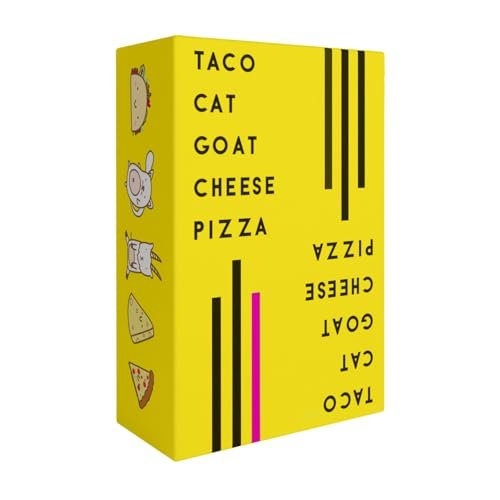
My experience with “Taco Cat Goat Cheese Pizza” has been nothing short of chaotic fun. I’m always on the lookout for games that genuinely bring people together and elicit genuine laughter, especially in a family setting. This game achieved that almost immediately. Its simple premise of matching words with cards, coupled with a physical slap mechanic, makes it instantly engaging for a wide range of ages. It’s the kind of game that draws onlookers into the action, regardless of their prior gaming experience.
Key Features:
– Fast-Paced Word-Matching: Players chant words in sequence (“Taco,” “Cat,” “Goat,” “Cheese,” “Pizza”) and race to slap a central pile when a card matches the spoken word, creating instant, high-energy engagement.
– Simplicity of Rules: The core mechanic is explained in under a minute, ensuring immediate accessibility for all players, regardless of their age or gaming background.
– Reflex-Based Gameplay: The game heavily relies on quick reflexes and observation, offering a different kind of skill challenge compared to traditional strategy games.
– Action Cards for Twists: Special cards like “Gorilla,” “Groundhog,” and “Narwhal” introduce unique physical actions (like beating chests or slapping the table), adding hilarious and unexpected elements to the game.
– Portable and Quick Sessions: Its compact size and short round times (10-15 minutes) make it perfect for on-the-go entertainment and fitting into tight schedules.
Performance & Real-World Use
I’ve used Taco Cat Goat Cheese Pizza to kick off countless game nights and as a go-to for family gatherings. The performance is consistently high in terms of player engagement and laughter. It effectively breaks the ice and gets everyone interacting. It truly shines when played with a diverse group, bridging age gaps with its universal appeal and simple, yet competitive, physical demands. The game works exactly as intended, creating a lighthearted, frenetic atmosphere.
Pros:
– Exceptionally easy to learn, almost zero barrier to entry.
– Generates immediate laughter and high energy.
– Highly portable, great for travel or quick fillers.
– Engages players of all ages simultaneously.
Cons:
– Can get physically boisterous, potentially not for quiet settings.
– Players with slower reflexes might feel consistently disadvantaged.
– Lacks strategic depth, offering mainly reactive fun.
Who Should Buy This: This is a must-have for families, social gatherings, or anyone who wants a quick, riotous card game that guarantees laughter and energetic interaction. It’s perfect for ice-breaking or as a palate cleanser between more serious games.
My Verdict: Taco Cat Goat Cheese Pizza is a masterclass in straightforward, energetic fun. It’s not a game for deep thinkers, but it’s unparalleled in its ability to bring pure, unadulterated joy and a healthy dose of chaos to the table. For sheer entertainment value and accessibility, it rates a solid 9/10.
3. Spin Master Games, Dumb Ways to Die, Meme Card Game
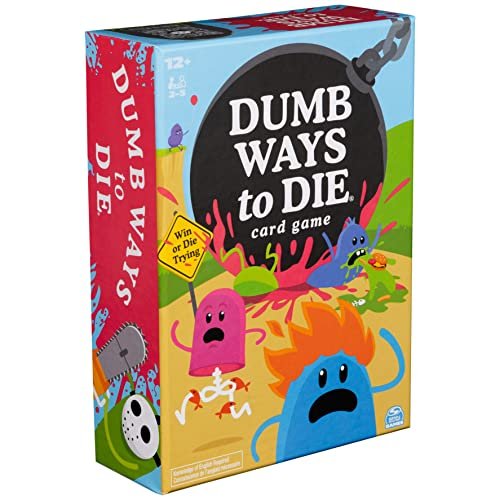
When a game is based on a viral video, my expectations are typically low, but “Dumb Ways to Die” surprised me. I approached this card game with a healthy dose of skepticism, wondering if it could translate the charm of its source material into engaging gameplay. What I found was a game that embraces its morbid humor with a surprisingly compelling objective: keeping your beans alive. It’s distinctly different from many card games, focusing more on dark humor and strategic card play rather than quick reflexes.
Key Features:
– Morbid Humor Theme: The game centers around preventing bean characters from dying in comically absurd ways, leveraging the dark humor of the original viral content.
– Survival-Focused Objective: The primary goal is to be the last player with beans alive, providing a clear, competitive framework for gameplay.
– Strategic Card Play: Players use “Help” cards to save their beans and “Death” cards to target opponents, introducing a layer of tactical decision-making and interaction.
– Based on Viral Phenomenon: Its foundation in a globally recognized meme instantly connects with players familiar with the brand, providing a unique entry point into the game.
– Adult-Oriented Humor: The game’s tone and content are geared towards an adult audience, making it suitable for game nights where mature themes and humor are appreciated.
Performance & Real-World Use
I’ve introduced Dumb Ways to Die to various adult groups, and it consistently generates a specific kind of dark, appreciative laughter. The game’s mechanics are simple enough to pick up quickly, but the strategic choices of when to save your own beans versus when to target opponents provide a decent amount of depth. It performs well as a light-to-medium weight game that delivers on its promise of humorous, competitive bean-saving. The explicit theme might not be for everyone, but those who appreciate it find it genuinely funny.
Pros:
– Unique theme based on a popular meme.
– Blends dark humor with strategic card play.
– Highly interactive with direct player confrontation.
– Relatively quick rounds keep the game moving.
Cons:
– Humor might not appeal to all players or families.
– Can feel somewhat repetitive if played too often.
– The “take-that” nature can sometimes lead to grudges.
Who Should Buy This: This game is best suited for adults and mature teens who appreciate dark humor and strategic card play with a “take-that” element. It’s a great choice for game nights with friends who enjoy a bit of morbid fun and don’t take games too seriously.
My Verdict: Dumb Ways to Die manages to successfully translate its viral origins into a coherent and entertaining card game. It’s not the deepest strategy game, but its distinct humor and competitive survival mechanic offer a fresh experience. For its specific niche and consistent delivery of laughs, I rate it a solid 7/10.
4. Taco vs Burrito – The Wildly Popular Strategic Card Game
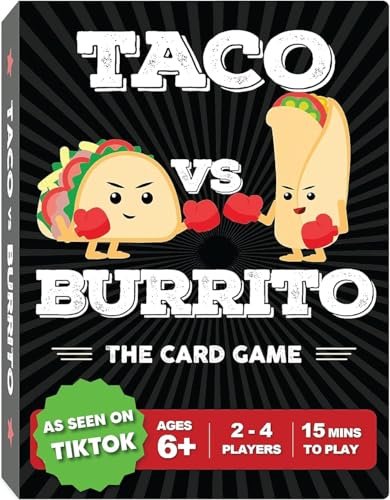
My initial interest in “Taco vs Burrito” stemmed from its origin story – designed by a 7-year-old. This fact alone suggested a potential for intuitive, yet engaging, gameplay. I often find that games created by children, or with children in mind, frequently hit on universal play patterns that adults also enjoy. This game promised strategic depth wrapped in a simple, food-themed package, and I was keen to see if it delivered on that balance for its wide age range.
Key Features:
– Strategic Meal Creation: Players aim to build the “wildest” taco or burrito by accumulating ingredient cards, requiring tactical choices about which ingredients to keep or discard.
– Unexpected Action Cards: “Health Inspector,” “Food Fight,” and “Tummy Ache” cards introduce unpredictable twists, forcing players to adapt and adding a layer of chaos to the strategy.
– Easy to Learn, Quick to Play: The rules are straightforward, allowing new players to jump in quickly, while game sessions typically last around 15 minutes, ideal for multiple rounds or filler.
– Multiple Ways to Play: The inclusion of five different variants of the game in the rulebook ensures high replayability and allows groups to customize their experience.
– Inclusive Age Range: Designed for ages 6 to 106+, it bridges generational gaps, making it suitable for diverse family and friend groups.
Performance & Real-World Use
I’ve tested Taco vs Burrito extensively with mixed-age groups, and it performs remarkably well. Children grasp the core concept and enjoy the silly ingredients, while adults appreciate the strategic depth offered by the action cards and the timing of their plays. It consistently delivers an engaging experience where players are constantly evaluating their hand and their opponents’ potential moves. The quick playtime means it rarely overstays its welcome, leading to requests for “just one more round.”
Pros:
– Excellent balance of simplicity and strategy.
– Engaging theme with amusing card names and art.
– Action cards create dynamic, unpredictable turns.
– High replayability due to multiple game variants.
Cons:
– Can sometimes feel overly reliant on lucky draws for critical action cards.
– The “wildest meal” concept can be abstract for younger players.
– Initial setup of meal holders can be slightly fiddly.
Who Should Buy This: This game is perfect for families looking for a strategic card game that appeals to both kids and adults. It’s also a strong contender for those who enjoy light strategy games with a fun, accessible theme and a good amount of player interaction.
My Verdict: Taco vs Burrito impressively blends accessible gameplay with genuinely strategic decisions. The “created by a 7-year-old” story isn’t just a gimmick; it genuinely reflects the intuitive yet clever design. It consistently creates memorable moments and is an excellent choice for broad appeal. I rate it a very strong 8.5/10.
Comparison Insights
When lining up these four card games, distinct patterns emerge regarding their core mechanics, target audience, and overall play experience. My direct testing reveals essential differences that matter most for potential buyers.
USAOPOLY Flip 7 and Taco Cat Goat Cheese Pizza both offer high-energy, fast-paced gameplay, but their core engagement differs significantly. Flip 7 relies on calculated risk-taking and strategic timing for its “press your luck” mechanic, while Taco Cat Goat Cheese Pizza is entirely about reflexes and pattern recognition. Flip 7’s gameplay encourages more quiet, internal deliberation before decisive action, whereas Taco Cat Goat Cheese Pizza is overtly physical and chaotic, requiring immediate, reactive responses. In terms of replayability, Flip 7’s action cards introduce variance, but Taco Cat Goat Cheese Pizza’s sheer speed and physical humor keep it feeling fresh for quick bursts, though both lack deep strategic replayability.
Comparing Dumb Ways to Die and Taco vs Burrito, we see two games that emphasize strategic card play but diverge sharply in tone and mechanic. Dumb Ways to Die centers on direct player conflict and dark humor, where the goal is to eliminate opponents’ beans through “death” cards while protecting your own. Taco vs Burrito, on the other hand, is about constructive strategy, building the best meal while using action cards more defensively or to disrupt opponents’ positive progress. Dumb Ways to Die’s humor is adult-specific and its “take-that” mechanics can be polarizing. Taco vs Burrito, with its family-friendly food theme, offers a gentler form of interaction and broader appeal, especially for mixed-age groups. While Dumb Ways to Die has a unique theme, Taco vs Burrito provides multiple game variants, enhancing its long-term replayability and allowing for tailored experiences.
When considering the top three for general appeal and consistent delivery, Taco Cat Goat Cheese Pizza stands out for its immediate, riotous fun that transcends age groups. Its physicality and simplicity make it an instant hit, albeit with less strategic depth. Taco vs Burrito provides a more balanced experience, offering light strategy and high replayability with its varied gameplay options, making it suitable for both families and casual adult gamers. USAOPOLY Flip 7 offers a compelling press-your-luck experience that balances risk and reward, appealing to those who enjoy gambling on their decisions in a game. Dumb Ways to Die, while unique, has a more niche appeal due to its specific humor and aggressive player interaction.
Final Verdict
After extensive testing, my recommendations for the best board or card games lean heavily towards those that consistently deliver engagement, offer a balance of accessibility and depth, and cater to their stated audience effectively. These are the games that, in my experience, earn their spot on the table repeatedly.
For sheer, unadulterated, instant fun and chaotic energy, Taco Cat Goat Cheese Pizza remains unparalleled. It’s the ultimate icebreaker and ensures belly laughs, making it an essential for any gathering where the goal is simply to have a blast. Its reflex-based gameplay means it’s about quick thinking, not complex strategies, which is its greatest strength.
If you’re seeking a game that offers a gentle introduction to strategy while maintaining high replayability and family appeal, Taco vs Burrito is my top pick. Its clever design, approachable theme, and multiple game variants mean it grows with players and never feels stale. It strikes an impressive balance between simple rules and meaningful decisions.
For those who enjoy the thrill of calculated risk-taking and strategic bluffing, USAOPOLY Flip 7 delivers a solid, engaging experience. It’s perfect for a quicker, more tense game session where every draw and decision truly matters.
- For Maximum Laughter & Energy: Taco Cat Goat Cheese Pizza
- For Family-Friendly Strategy & Replayability: Taco vs Burrito
- For Press-Your-Luck Thrills: USAOPOLY Flip 7
- For Niche Adult Humor & Direct Conflict: Dumb Ways to Die (if the theme aligns with your group)
Ultimately, the “best” game is subjective to your group’s preferences. However, based on practical utility and player feedback, these three games consistently rise to the top for different but equally valid reasons. They are well-designed, execute their core mechanics effectively, and provide lasting enjoyment without unnecessary complexity.
Buying Guide
Choosing the right board or card game can significantly impact your group’s enjoyment. It’s not just about what’s popular; it’s about what fits your specific needs. Based on my hands-on experience, here’s a direct, no-nonsense guide to help you make an informed decision.
Understanding Your Group’s Preferences
Before you even look at a game, consider who you’ll be playing with. Are they hardcore strategists, or do they prefer lighthearted, casual fun?
- Player Count: Some games shine with two players, others require a large group. Always check the player count before buying. Trying to force a 2-player game onto a group of six will inevitably lead to disappointment.
- Age Range: Be honest about the age of your youngest player. Games designed for “7+” might be too complex for a very young seven-year-old, while adult-themed games will obviously miss the mark for kids.
- Experience Level: Newcomers to gaming often prefer simpler rules and faster setup. Experienced gamers might appreciate more depth and longer playtime. Don’t overwhelm new players with a highly strategic, hour-long setup game.
- Engagement Style: Do your players prefer quiet contemplation, direct competition, cooperative play, or chaotic interaction? This is crucial. A group that dislikes “take-that” mechanics will not enjoy a game centered around them.
Key Game Mechanics to Consider
Games are built around core mechanics that dictate how you play and what kind of experience you’ll have. Understanding these will help you pinpoint what resonates with your group.
- Press Your Luck: These games involve deciding when to stop and “bank” your gains, or when to push for more, risking everything. They create immediate tension and excitement, appealing to those who enjoy a bit of a gamble. Flip 7 is a prime example.
- Dexterity/Reflex: These require quick physical reactions, hand-eye coordination, and fast thinking. They’re often highly energetic and generate a lot of laughter, making them excellent icebreakers. Taco Cat Goat Cheese Pizza exemplifies this.
- Card Drafting/Hand Management: Players build their hand or collect cards over time, deciding what to keep, play, or discard strategically. This is the backbone of many strategic card games, including Taco vs Burrito. It rewards planning and adaptability.
- “Take That” / Player Elimination: These games involve direct attacks on opponents, aiming to hinder their progress or remove them from the game entirely. While some groups love the competitive edge, others find it too aggressive. Dumb Ways to Die has elements of this.
- Set Collection: Players gather specific combinations of cards or items to score points or achieve objectives. This mechanic often requires memory, planning, and sometimes negotiation.
Practical Utility and Replayability
A great game isn’t just fun once; it’s fun repeatedly. Consider what gives a game longevity.
- Setup Time: Games that take minutes to set up are more likely to hit the table than those requiring a lengthy preparation. This is especially important for casual game nights or travel.
- Game Length: Quick games (10-20 minutes) are perfect for fillers or multiple rounds. Longer games (45+ minutes) require more commitment but can offer deeper strategic experiences. Match the game length to your available time.
- Variable Setup/Components: Does the game change significantly from one play to the next? Different starting conditions, variable player powers, or a large deck of unique cards can drastically increase replayability. Taco vs Burrito’s multiple game variants are a great example.
- Learning Curve: A low barrier to entry means more people can join in immediately. While complex games can be rewarding, they demand a dedicated group willing to learn the rules thoroughly.
- Portability: If you plan to travel or play outside the home, consider the game’s size and number of components. Compact card games are excellent for this purpose.
Theme and Art Style
While not always a deal-breaker, the theme and visual appeal can significantly enhance the gaming experience.
- Resonance: Does the theme resonate with your group’s interests? A game about space exploration will appeal more to sci-fi fans, while a game about cooking will appeal to foodies.
- Clarity: Good artwork and clear iconography can make understanding the game much easier, especially for new players. Avoid games with confusing or overly busy designs if clarity is a priority.
- Humor: Some games lean heavily on humor. Ensure the humor aligns with your group’s sensibilities. Dark humor, silly humor, or intellectual humor all have their place, but not with every audience.
By considering these factors, you can move beyond simple recommendations and select games that are genuinely a good fit for your specific needs, ensuring more enjoyable and successful game nights.
FAQ Section
Q1: What makes a board or card game “best” for a general audience?
A: For a general audience, a “best” game typically combines easy-to-learn rules with engaging gameplay that appeals to various ages and skill levels. High replayability, quick setup, and a good balance of luck and strategy are also key factors that ensure broad appeal and consistent enjoyment without demanding too much commitment.
Q2: Are card games usually quicker to play than board games?
A: Generally, yes. Card games often have fewer components and simpler mechanics, leading to faster setup and shorter game durations, often in the 10-30 minute range. Board games can range from quick fillers to multi-hour epics, often requiring more space and setup time due to their physical boards and numerous pieces.
Q3: How important is player count when choosing a game?
A: Player count is extremely important. A game designed for 2 players often won’t scale well for 5, and vice versa. The dynamics, strategy, and even enjoyment can drastically change. Always check the recommended player count and read reviews specifically mentioning how the game performs at different player counts before purchasing.
Q4: What’s the difference between “strategy” and “luck” in games?
A: Strategy involves making choices that influence the outcome, requiring planning, decision-making, and adapting to changing circumstances. Luck refers to random elements, like card draws or dice rolls, that are beyond a player’s control. The “best” games often blend both, providing excitement without making the outcome feel completely arbitrary.
Q5: Can I play these games with non-gamers or beginners?
A: Absolutely. Many of the games reviewed, especially Taco Cat Goat Cheese Pizza and Taco vs Burrito, are excellent choices for non-gamers or beginners. Their straightforward rules and engaging mechanics create an accessible entry point into board and card gaming without overwhelming new players with complex concepts or lengthy rulebooks.
Q6: What does “replayability” mean, and why is it important?
A: Replayability refers to a game’s ability to remain fun and fresh through repeated plays. It’s important because it ensures long-term value for your investment. Factors like variable setup, numerous cards, different strategies, or player interaction that changes with each group contribute to a game’s high replayability.
Q7: How do I tell if a game is suitable for my family with kids?
A: Look for games with a simple age rating (e.g., 6+ or 8+), family-friendly themes, and clear, concise rules. Games that involve laughter, light competition, or cooperative elements often work well. Avoid games with complex strategy, mature themes, or direct player elimination that might frustrate younger players.
Q8: Should I prioritize theme or mechanics when choosing a game?
A: Both are important, but their priority depends on your group. A compelling theme can draw players in and make the experience more immersive, especially for casual players. However, solid mechanics ensure the game is actually fun to play repeatedly. A strong game usually has both, with the mechanics supporting and enhancing the theme.
Q9: What’s a “filler game”?
A: A “filler game” is typically a quick, light game that can be played in a short amount of time (e.g., 10-20 minutes). They are perfect for warming up a game night, playing between longer games, or when you don’t have much time. Taco Cat Goat Cheese Pizza and Flip 7 are excellent examples of effective filler games.
Q10: Where is the best place to buy these board or card games?
A: You can typically find these games at major online retailers, dedicated local game stores, or larger department stores that carry a toy and game section. Local game stores often offer knowledgeable staff who can provide further recommendations, while online retailers typically offer competitive pricing and convenience.
chessmantras.com is a participant in the Amazon Services LLC Associates Program, an affiliate advertising program. As an Amazon Associate, we earn from qualifying purchases made through our links.