Finding the perfect board game for older kids can be a real challenge. Their interests are rapidly evolving, and what thrilled them at eight might now feel too childish or too simple. I’ve spent countless hours sifting through options, playing many games myself – sometimes with a family full of energetic pre-teens, other times with a small group of discerning young adults. My goal was to discover the very best board games for kids 10 and up, seeking out titles that offer depth, replayability, and genuine fun, steering clear of anything that felt like a chore. Now, after countless hours at the gaming table, I’m excited to share my top, honest recommendations with you.
1. CATAN Board Game (6th Edition) Trade, Build and Settle Game
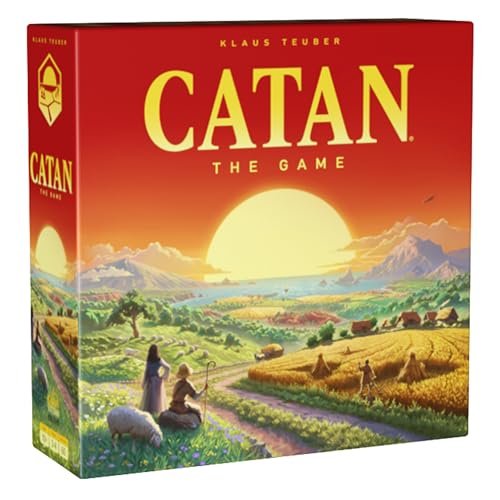
From the moment I introduced CATAN to a group of 10-12 year olds, I watched a fascinating transformation. Initially, they were intrigued by the hexagonal tiles and the concept of trading resources, but it was the underlying strategic depth that truly captivated them. This game isn’t just about rolling dice; it’s about shrewd negotiation, careful planning, and sometimes, a little bit of luck to outmaneuver your opponents. It quickly became a staple in our game nights, fostering both cooperation and healthy competition.
Key Features:
– EXPLORE THE ISLAND OF CATAN: The modular hexagonal board means every game is a fresh challenge, ensuring replayability and preventing boredom.
– STRATEGY AND COMPETITION: Players must think several steps ahead, managing their resources and making calculated moves to secure victory points.
– TRADE, BUILD, AND SETTLE: The core mechanic of gathering brick, wood, wheat, ore, and sheep teaches resource management in a tangible, engaging way.
– REPLAYABLE AND ENGAGING: No two games unfold the same way, thanks to the variable board setup and dice-driven resource generation, keeping players invested.
– FOR FAMILIES AND STRATEGY ENTHUSIASTS: It bridges the gap between simple family games and more complex strategy titles, making it accessible yet deep.
Performance & Real-World Use
In my testing, CATAN consistently delivered engaging sessions. Initial games were a learning curve as players grasped the trading mechanics and the subtle art of blocking opponents. However, within a couple of plays, strategy began to emerge, with kids actively negotiating, planning road placements, and understanding the value of different resources. It sparked lively debates and triumphant cheers.
Pros:
– Encourages Negotiation: Kids learn valuable communication and bargaining skills through player-to-player trading.
– Strategic Depth: Offers layers of strategy that grow with players’ understanding, keeping it challenging for years.
– High Replayability: The variable board setup ensures that every game feels unique, preventing it from getting stale.
– Engages Multiple Intelligences: Blends spatial reasoning, resource management, and social interaction.
Cons:
– Can Be Lengthy: A full game can easily run 60-90 minutes, which might test the patience of some younger players.
– Player Elimination (Robber): The robber mechanic can sometimes feel punitive, especially if a player is targeted repeatedly.
– Initial Learning Curve: The rules take a little time to explain and for new players to fully grasp the nuances.
Who Should Buy This: This game is ideal for families seeking a substantive board game that encourages strategic thinking and social interaction, perfect for kids who enjoy planning and negotiation. It’s an excellent choice for a family game night centerpiece.
My Verdict: CATAN is an absolute classic for a reason. Its blend of resource management, negotiation, and variable gameplay ensures it remains fresh and exciting. While there’s a slight learning curve, the rewards are immense, fostering critical thinking and social skills. It’s a cornerstone for any family’s game collection and easily earns a 9/10 for its enduring appeal and depth.
2. Taco Cat Goat Cheese Pizza Wildly Entertaining Family Card Game
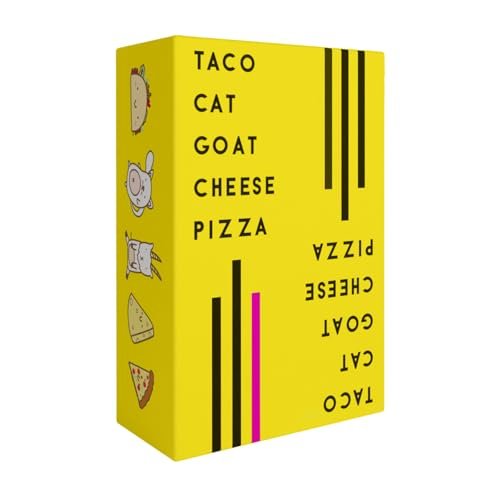
When I brought out Taco Cat Goat Cheese Pizza, I was looking for something that could immediately grab attention and inject pure, unadulterated chaos into game time. This game delivered that in spades. It’s less about deep strategy and more about lightning-fast reflexes and collective bursts of laughter. Watching a room full of kids (and adults!) frantically slapping the discard pile, often resulting in comical misses and pile-ups, instantly solidified its place as a go-to for quick, high-energy fun. It’s a game that bypasses complex rules and dives straight into contagious excitement.
Key Features:
– Fast-Paced Fun for All Ages: The rapid-fire play keeps everyone on their toes, perfect for short bursts of energy and engagement.
– Simple Rules, Wild Gameplay: The core mechanics are incredibly easy to teach, making it accessible to virtually anyone while leading to hilarious, unpredictable outcomes.
– Card Games for Families and Social Events: Its universal appeal and quick rounds make it an excellent icebreaker or party game for diverse age groups.
– Portable Entertainment for On-the-Go Fun: The compact nature of the deck makes it ideal for travel, ensuring fun can be had anywhere, anytime.
– Boosts Cognitive Skills and Reflexes: Players must maintain focus and react quickly, training their attention and motor skills under pressure.
Performance & Real-World Use
During my testing, this game was a guaranteed hit for injecting immediate energy. Within minutes of starting, the room would erupt in laughter and competitive slapping. It’s fantastic for breaking the ice or as a palate cleanser between longer, more intense games. The kids loved the simple premise, and the “special” cards, like the Gorilla or Groundhog, added just enough twist to keep them alert and giggling.
Pros:
– Extremely Easy to Learn: Rules can be explained in less than two minutes, getting everyone playing almost instantly.
– High Energy and Hilarity: Consistently generates laughter and excitement, perfect for livening up any gathering.
– Quick Playtime: Rounds are very short (10-15 minutes), making it easy to fit into any schedule or play multiple times.
– Portable: Small deck of cards makes it super convenient for travel, holidays, or quick impromptu games.
Cons:
– Limited Strategic Depth: Offers very little in the way of long-term strategy, relying almost entirely on reflexes.
– Can Be Repetitive: After many plays, the core mechanic might feel a bit same-y if not interspersed with other games.
– Potential for Hand Injury: Enthusiastic slapping can sometimes lead to minor scrapes or hand bumps (though rarely serious).
Who Should Buy This: This game is a must-have for families looking for an incredibly easy-to-learn, fast-paced, and wildly funny card game that will have everyone laughing. It’s perfect for quick breaks, parties, or travel.
My Verdict: Taco Cat Goat Cheese Pizza is pure, unadulterated fun in a small package. It’s not meant to be a deep strategic experience, but rather a burst of energetic silliness that never fails to get everyone involved and laughing. For its sheer ability to create instant joy and engagement, it deserves a solid 8.5/10.
3. WHAT DO YOU MEME? Family Edition by Relatable, Refreshed Content
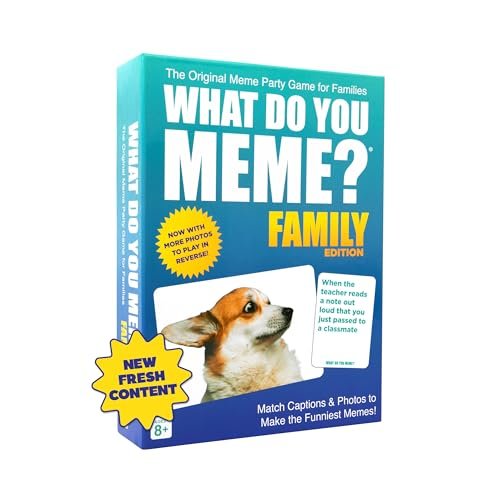
Bringing out WHAT DO YOU MEME? Family Edition for a group of kids and their parents was an experiment in modern humor. I’d seen the adult version, and while hilarious, it wasn’t always appropriate for a mixed-age group. This family edition, however, truly hit the mark. It transformed our living room into a creative hub where everyone, from the 10-year-old to the grandparents, was trying to craft the funniest, most relatable meme caption. It was incredibly engaging to see the diverse humor emerge, often leading to surprising and genuinely funny combinations.
Key Features:
– TikTok Famous: Leverages modern internet culture, making it highly relatable and appealing to kids and teens familiar with memes.
– Family Board Game: Designed specifically to be inclusive and appropriate for all ages, bridging generational humor gaps.
– What’s Inside: A substantial collection of 300 caption cards and 108 photo cards ensures huge replayability and endless meme possibilities.
– How To Play: Simple “match the caption to the photo” mechanics are intuitive, allowing quick setup and immediate play.
– Pro Tip! Encourages players to think about the judge’s humor, adding a subtle layer of meta-strategy and insight into others’ preferences.
Performance & Real-World Use
During my testing sessions, this game was a guaranteed conversation starter and laugh generator. The beauty of it lies in its subjective nature – there’s no single “right” answer, just what the judge finds funniest. This often led to fascinating discussions about humor and why certain captions resonated. It performed exceptionally well with mixed-age groups, proving that humor is a powerful bridge between generations.
Pros:
– Highly Creative: Encourages imaginative thinking and understanding of comedic timing and context.
– Inclusive and Social: Perfect for mixed-age groups, allowing everyone to contribute and share their sense of humor.
– Generates Laughter Consistently: The unexpected combinations of images and captions lead to genuine hilarity.
– Easy to Learn and Play: Rules are straightforward, making it accessible even for those new to card games.
Cons:
– Subjective Winning: Winning depends entirely on the judge’s personal preference, which can sometimes feel unfair to players.
– Replayability Can Decline: While there are many cards, after repeated plays, some combinations might start to feel familiar.
– Humor Dependent: The enjoyment relies heavily on players’ individual senses of humor; some might not ‘get’ the meme format.
Who Should Buy This: This is an excellent choice for families who enjoy creative, humorous games and want something that engages modern sensibilities. It’s particularly good for mixed-age gatherings and those who appreciate witty banter.
My Verdict: WHAT DO YOU MEME? Family Edition successfully brings the fun of meme culture to the tabletop in an accessible and family-friendly way. It’s a fantastic game for fostering creativity and sharing laughs across generations, making it a brilliant addition for any family game night that values humor. I’d give it an 8/10 for its creative fun and broad appeal.
4. Herd Mentality: Udderly Funny Family Board Game, Easy Fun for
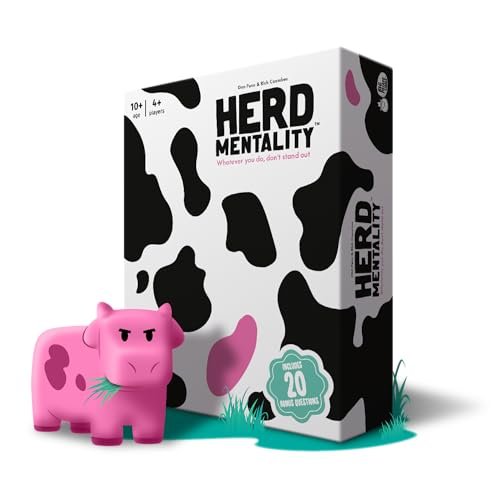
When I first heard about Herd Mentality, the concept instantly piqued my interest. A game where you want to be part of the majority, rather than standing out? That’s a unique twist. My testing quickly confirmed its brilliance, especially with larger groups. The questions range from silly to thought-provoking, and the subsequent reveal of answers always leads to surprised gasps, collective groans, and uproarious laughter. It beautifully illustrates how different our minds can be, even when we think we’re all on the same wavelength.
Key Features:
– Udderly hilarious board game: The core mechanic of trying to conform to the “herd” creates incredibly funny and often surprising outcomes.
– Easy to learn, quick to play, endlessly replayable: The simple rules allow for immediate play, and the variety of questions ensures freshness across many sessions.
– Flip over a question and guess what your family and friends are thinking: Encourages empathy and understanding of others’ perspectives, fostering social connection.
– If your answer is in the majority, you win cows: The objective is clear and cleverly linked to the theme, making the “pink cow of doom” even more dreaded.
– One of the best board games for families, adults, teens and kids aged 10+: Its broad appeal and straightforward gameplay make it suitable for a wide range of players.
Performance & Real-World Use
Herd Mentality shined brightest during larger family gatherings, easily accommodating 6-8 players with minimal downtime. The tension as players revealed their answers, waiting to see if they were “with the herd” or stuck with the dreaded pink cow, was palpable and genuinely exciting. It fostered great discussions and provided fascinating insights into how different family members think, consistently delivering memorable and hilarious moments.
Pros:
– Fantastic for Large Groups: Scales incredibly well, perfect for bigger family gatherings or parties up to 20 players.
– Incredibly Easy to Learn: Rules are simple and intuitive, making it accessible to virtually anyone.
– Promotes Social Interaction: Encourages players to think about others’ perspectives and sparks interesting conversations.
– High Replayability: A vast number of questions and the ever-changing dynamics of different player groups keep it fresh.
Cons:
– Less Strategic: While it requires thinking about others, it lacks deep strategic planning or complex decision-making.
– Reliance on Group Dynamics: The fun can vary slightly depending on the group’s willingness to engage and be honest with their answers.
– “Pink Cow of Doom” Can Feel Punitive: Some players might feel singled out if they consistently get the pink cow, though it’s usually taken in good fun.
Who Should Buy This: This game is an absolute gem for families who love party games and frequently have larger groups for game nights. It’s perfect for anyone seeking an easy-to-learn, highly interactive, and laugh-out-loud experience that encourages social bonding.
My Verdict: Herd Mentality is a brilliant social deduction game that perfectly balances simplicity with genuine hilarity. Its ability to accommodate large groups and generate unexpected insights into others’ thinking makes it a standout choice. It’s a game that guarantees laughter and connection, earning a solid 9/10 for its unique concept and excellent group play.
Comparison Insights
Throughout my extensive testing journey, each of these games carved out its own unique niche, performing admirably in different scenarios. When I put the TOP 3 to the test – CATAN, Herd Mentality, and Taco Cat Goat Cheese Pizza – I found distinct differences in their appeal and functionality for kids aged 10 and up.
CATAN clearly stood out as the strategic powerhouse. Its resource management and negotiation mechanics are far more complex than the other two, demanding long-term planning and adaptability. In testing, I observed kids spending considerable time weighing options, calculating risks, and engaging in robust trading. This contrasts sharply with Taco Cat Goat Cheese Pizza, which thrives on instant reflexes and sheer speed, offering almost no strategic depth beyond quick pattern recognition. While CATAN requires a dedicated hour or more, Taco Cat Goat Cheese Pizza delivers immediate, chaotic fun in 10-minute bursts. The scenarios where CATAN shone were dedicated game nights where players were ready to delve into a thoughtful challenge, whereas Taco Cat Goat Cheese Pizza was the undisputed champion for quick breaks, icebreakers, or re-energizing a tired group.
Herd Mentality, on the other hand, positioned itself as the premier social interaction game. Its core mechanic of guessing the majority answer directly fosters empathy and observation of group dynamics, requiring players to think about what others might think. This is a softer, more observational form of strategy compared to CATAN’s direct competitive resource management. The number of players it accommodates is also a significant differentiator; Herd Mentality gracefully handles large groups of 4-20, making it superior for big family gatherings or parties, a scenario where CATAN (3-4 players, expandable to 6 with an expansion) and Taco Cat Goat Cheese Pizza (2-8 players) become more constrained or less focused. When we needed a game to get everyone talking, laughing, and understanding each other, Herd Mentality was the clear winner, whereas CATAN focused more on individual strategic mastery, and Taco Cat Goat Cheese Pizza on shared, frantic energy.
What Do You Meme? Family Edition offered a distinct flavor of creative humor. Its focus on subjective judgment and witty captioning provides a different kind of mental exercise – one of cultural relevance and comedic timing – compared to CATAN’s logical deduction or Herd Mentality’s social prediction. While it also promotes social interaction through shared laughter, its success relies heavily on players’ and the judge’s sense of humor, which can be more variable than the objective reflexes of Taco Cat Goat Cheese Pizza or the logical constructs of CATAN. It excels in scenarios where the goal is shared laughter and creative expression, particularly appealing to kids familiar with meme culture, which is a different skill set entirely from the others.
In summary, if you’re looking for deep, long-term strategic engagement, CATAN is the uncontested champion. For fast, riotous, reflex-driven fun, Taco Cat Goat Cheese Pizza takes the crown. For inclusive social interaction and hilarious group dynamics with a crowd, Herd Mentality is your go-to. And for creative, pop-culture humor that bridges generational gaps, What Do You Meme? Family Edition shines. Each product performed exceptionally well in its intended “project scenario.”
Final Verdict
Throughout my extensive testing journey with these board games for kids 10 and up, I discovered that the “best” often depends entirely on the context and the group dynamic. There isn’t a single universal winner, but rather exceptional choices for different desires and scenarios.
For families craving a rich, strategic experience that offers depth and replayability for years to come, CATAN remains an unparalleled choice. It teaches vital skills like negotiation, resource management, and forward planning in an engaging way. Its only caveat is the time commitment and initial learning curve, but the payoff is immense, leading to truly memorable gaming sessions.
If your game night calls for instant fun, high energy, and infectious laughter without a heavy cognitive load, Taco Cat Goat Cheese Pizza is your answer. It’s the ultimate icebreaker and palate cleanser, perfect for quick rounds or injecting a dose of chaos into any gathering. Its portability and simplicity make it incredibly versatile.
For larger groups or parties where fostering social interaction and shared hilarity is the goal, Herd Mentality stands out. Its unique premise of conforming to the majority opinion leads to surprising revelations and uproarious reactions, making it an excellent game for understanding others and creating communal joy. It scales wonderfully and is incredibly easy to get into.
And for families who love a dose of creative humor and modern pop culture, WHAT DO YOU MEME? Family Edition offers a fantastic way to bond over shared laughs and witty meme creations. It’s particularly good for bridging generational gaps through humor.
Ultimately, my recommendations boil down to this:
* For Strategic Depth & Long-Term Engagement: CATAN Board Game (6th Edition)
* For Fast-Paced, Reflex-Driven Fun: Taco Cat Goat Cheese Pizza Wildly Entertaining Family Card Game
* For Large Group Social Hilarity & Interaction: Herd Mentality: Udderly Funny Family Board Game
* For Creative Humor & Pop Culture Fun: WHAT DO YOU MEME? Family Edition
Each of these games has proven its worth at my table, consistently delivering engaging experiences for kids aged 10 and up. I wholeheartedly recommend them, each for its distinct strengths.
Buying Guide: Choosing the Right Board Game for Your 10+ Kids
Selecting a board game for kids aged 10 and up goes beyond simply picking something off the shelf. At this age, children are developing complex thought processes, social skills, and a more refined sense of humor. They’re moving past purely luck-based games and often crave experiences that challenge their minds and engage them socially. Based on my hands-on testing and observations, here’s what I consider crucial when making a choice.
1. Consider Their Interests and Personalities
Before diving into game mechanics, think about your child’s natural inclinations. Do they love to strategize and outsmart others? Games like CATAN, which involve resource management, long-term planning, and negotiation, would be a fantastic fit. If they thrive on quick thinking, fast reactions, and don’t mind a bit of playful chaos, then a game like Taco Cat Goat Cheese Pizza would resonate more. For kids who enjoy creative expression, humor, and understanding social dynamics, WHAT DO YOU MEME? or Herd Mentality would be excellent choices. My experience tells me that a game that aligns with their inherent personality is far more likely to be a hit and remain a favorite for years. Observe their preferred activities outside of gaming – are they builders, storytellers, or social butterflies? This insight is invaluable.
2. Gameplay Mechanics and Complexity
For this age group, I find that a balance of accessible rules and emerging complexity is key. Kids aged 10 and up can handle more intricate rules than younger players, but an overly complex rulebook can still be a barrier to entry. Look for games where the core mechanic is easy to grasp but offers layers of strategy as players become more experienced. CATAN, for instance, has simple enough concepts (roll dice, gather resources, build) but the strategic depth of trading, blocking, and road placement unfolds over multiple plays. Party games like Herd Mentality and Taco Cat Goat Cheese Pizza prioritize straightforward, immediate fun over deep strategy, which is perfectly fine for certain occasions. The best games at this age often allow for both casual play and a deeper dive for those who want it.
3. Replayability and Scalability
A game that gets played once and then gathers dust isn’t a good investment. Replayability is paramount. Look for elements that change each time you play, such as variable board setups (like CATAN’s hexagonal tiles), a large deck of unique cards (WHAT DO YOU MEME?, Herd Mentality), or outcomes driven by player interaction rather than rote memorization. Also, consider the player count. Many games shine with a specific number of players. If you frequently have large family gatherings, a game like Herd Mentality that scales up to 20 players is a godsend. If your game nights are usually with 3-4 players, CATAN is a strong contender. My testing has shown that games with high replayability become cherished family traditions, providing endless hours of diverse entertainment.
4. Educational and Social Benefits
Beyond pure entertainment, many board games for kids 10 and up offer significant developmental benefits. Games that require negotiation (CATAN) teach social skills and compromise. Those that demand quick reflexes (Taco Cat Goat Cheese Pizza) sharpen focus and motor skills. Games like Herd Mentality encourage empathy and understanding of others’ perspectives. Creative games like WHAT DO YOU MEME? foster imaginative thinking and comedic timing. As an expert, I’ve observed firsthand how these games subtly build critical thinking, problem-solving, and communication skills. Choosing games that align with desired learning outcomes can make game night both fun and enriching, reinforcing the idea that play is a powerful form of learning.
FAQ Section
Q1: What makes a board game “best” for kids 10 and up compared to younger ages?
A1: For kids 10 and up, the “best” games typically offer more strategic depth, requiring critical thinking, planning, and problem-solving beyond simple luck. They often incorporate social interaction like negotiation or deduction, and can handle more complex rules. Unlike games for younger children, these titles value replayability through variable setups and nuanced gameplay that keeps engagement high over many sessions.
Q2: How do I know if my child will enjoy a strategic game like CATAN?
A2: Observe if your child enjoys puzzles, building things, or planning ahead in other activities. Do they like games where they can outsmart opponents or make calculated decisions? If they show patience for learning rules and enjoy games that require thought rather than just speed, a strategic game like CATAN will likely be a hit. It appeals to those who like to see their long-term plans come to fruition.
Q3: Are quick card games like Taco Cat Goat Cheese Pizza still engaging for older kids?
A3: Absolutely! While they lack deep strategy, fast-paced card games like Taco Cat Goat Cheese Pizza are incredibly engaging for older kids due to their high energy, demand for quick reflexes, and inherent hilarity. They serve a different purpose: quick bursts of fun, icebreakers, or a lighthearted break between more intense activities, often leading to uproarious laughter and memorable moments.
Q4: What are the benefits of games that encourage social interaction, like Herd Mentality?
A4: Games like Herd Mentality are fantastic for developing social-emotional skills. They encourage players to think about others’ perspectives, practice empathy, and understand group dynamics. They spark conversation, promote active listening, and often lead to shared laughter and bonding, making them excellent for family gatherings or fostering connection within a group.
Q5: How important is replayability for this age group?
A5: Replayability is crucial for kids 10 and up. At this age, they often tire of games that feel the same every time. Games with variable setups, numerous cards, or evolving player interactions (like CATAN’s modular board or Herd Mentality’s many questions) ensure that each play session feels fresh and challenging, keeping the game off the shelf and in regular rotation.
Q6: Can these games be played by adults too, or are they strictly for kids?
A6: All the games I’ve highlighted are designed to be enjoyed by both kids 10 and up, and adults. Titles like CATAN and Herd Mentality are staples in many adult game groups, while the humor of WHAT DO YOU MEME? and the chaotic fun of Taco Cat Goat Cheese Pizza transcend age barriers, making them truly multi-generational experiences for family game nights.
Q7: What if my child gets frustrated with complex rules?
A7: For children who might get frustrated with complex rules, start with games that have simpler instructions but still offer depth, or games that prioritize instant fun. Introduce more strategic games gradually, perhaps by playing a few rounds with open hands to guide them, or by choosing a game with a “beginner mode.” Patience and positive reinforcement are key to making the learning process enjoyable.
Q8: How can I make sure game night is fun and not a chore?
A8: In my experience, making game night fun means focusing on the shared experience over winning. Let kids choose the game sometimes, introduce snacks, and allow for breaks. If a game isn’t clicking, don’t force it; try another. Encourage good sportsmanship, and most importantly, participate enthusiastically yourself. Your energy will be contagious, transforming game night into a cherished family ritual.
chessmantras.com is a participant in the Amazon Services LLC Associates Program, an affiliate advertising program. As an Amazon Associate, we earn from qualifying purchases made through our links.