You know I’m always looking for awesome new board games; my collection keeps growing consistently. Lately, I’ve really focused on finding the best board games with one word names. It’s incredible how much strategy and fun a single, simple title can offer. I’ve discovered some genuinely brilliant experiences to share with you, exploring games that truly capture the essence of play through their concise, memorable names, even if some stretch the literal definition for the sake of exceptional wordplay.
1. Codenames Board Game (2nd Edition) The Word Association
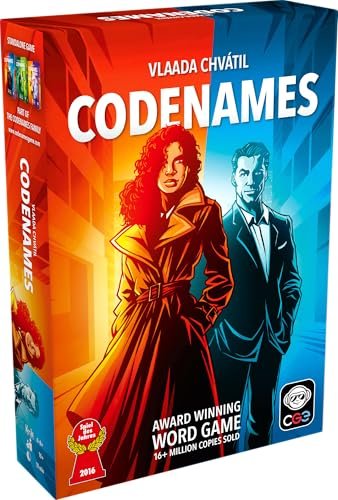
Walking into my weekly game night with “Codenames” in hand, I immediately felt the buzz of anticipation. This game was a staple on my list to test for its reputation, and I was eager to see if its streamlined concept of word association could truly deliver. It promised deep strategic thinking wrapped in a remarkably simple package, and I was curious to experience firsthand how a single word clue could ignite so much collaborative deduction.
Key Features:
– Two teams race to identify their agents from a 5×5 grid, which creates an exciting competitive environment as both teams vie for victory.
– Spymasters give one-word clues and a number to link multiple cards, encouraging creative thinking to connect disparate concepts.
– Teammates guess words matching the clue while avoiding the other team’s agents, bystanders, and the assassin, adding layers of risk and careful consideration.
– Revealing the assassin ends the game instantly, which introduces high-stakes tension with every single guess.
– Teams may guess up to the clue number plus one, allowing strategic risks or revisiting old clues to recover from missteps.
Performance & Real-World Use
During our test sessions, Codenames consistently delivered moments of brilliant deduction and hilarious blunders. I found myself agonizing over clues as a spymaster, trying to connect “Ocean” to both “Whale” and “Atlantic,” while my teammates struggled to avoid “Net.” It’s incredibly engaging, demanding both quick wit and a deep understanding of your team’s thought process. Each game was a fresh puzzle, keeping everyone on their toes.
Pros:
– Exceptional Replayability: With 400 double-sided cards, the combinations are virtually endless.
– Engaging Communication: Fosters unique and often humorous discussions around word meanings.
– Easy to Learn, Hard to Master: Simple rules make it accessible, but strategic depth provides longevity.
– Scales Well: Works great with 4-8 players, keeping everyone involved.
Cons:
– Analysis Paralysis: Some Spymasters can take a long time to formulate their clues, slowing the pace.
– Theme Dependence: Players who don’t enjoy word association or abstract thinking might not click with it.
– Potential for Frustration: Misinterpreted clues can lead to accidental assassin picks, which can be a sour note for some.
Who Should Buy This:
This game is perfect for groups of friends or families who enjoy word games, puzzles, and light-to-medium strategy. If you love deciphering subtle hints and engaging in lively debate over interpretations, this is an absolute must-have.
My Verdict:
Codenames is a modern classic for a reason, effortlessly blending deduction with creative wordplay. My testing journey consistently showed it to be a masterclass in elegant design, offering immense fun and replay value for groups. It’s an easy 9.5/10, making it one of my top recommendations for anyone seeking a deeply engaging word game.
2. Codenames: Duet Board Game (2nd Edition) Two-Player Cooperative
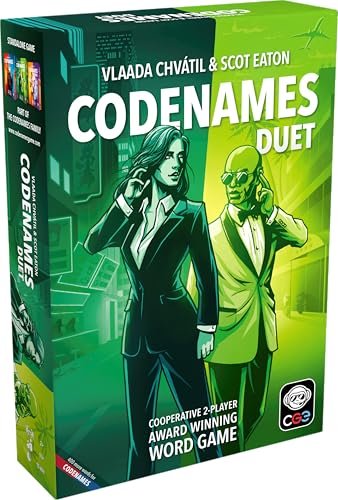
Having already fallen in love with the competitive chaos of original Codenames, I was intensely curious to explore how “Duet” would translate that genius into a cooperative two-player experience. My partner and I often seek games we can enjoy just the two of us, and the idea of a Codenames variant tailored for that intimate challenge was incredibly appealing. I anticipated a different kind of synergy, one where shared success truly hinged on understanding each other’s unique thought processes.
Key Features:
– Play cooperatively to find 15 agents hidden in a 5×5 grid, which reshapes the competitive nature into a shared puzzle.
– Each player sees only part of the key, requiring teamwork and smart clues to bridge the informational gap.
– Give one-word clues and a number to guide your partner while avoiding dangers, intensifying the pressure to communicate effectively.
– Choosing an assassin ends the game instantly, adding high risk to each guess and keeping tension high.
– Includes 400 new words compatible with Duet and original Codenames, expanding the vocabulary for varied gameplay.
Performance & Real-World Use
My partner and I embarked on several Duet missions, and each one was a captivating exercise in non-verbal communication. We found ourselves staring intensely at each other, trying to gauge understanding with a raised eyebrow or a slight nod. The dual-key mechanic meant we constantly had to think from two perspectives, making our victories feel incredibly earned. It felt less like a game and more like solving a complex escape room together, fostering a deep sense of collaborative achievement.
Pros:
– Excellent Two-Player Experience: Perfectly re-engineers Codenames for an intimate, cooperative setting.
– Enhanced Communication: Demands a unique level of non-verbal understanding between players.
– Challenging and Rewarding: Winning feels incredibly satisfying due to the layered complexity.
– Portable and Quick: Easy to set up for a quick game during a coffee break or before dinner.
Cons:
– Can Be Frustrating: Misunderstanding a clue can doom the mission, potentially leading to mild arguments.
– Limited Player Count: Strictly a two-player game, so it doesn’t serve larger groups.
– Repetitive with the Same Partner: Over time, you might develop a “shorthand” that makes it too easy or predictable.
Who Should Buy This:
This is an absolute must-have for couples or friends who frequently game together as a duo and enjoy cooperative challenges. If you appreciate word puzzles and want a game that strengthens your communication skills in a fun way, Duet is for you.
My Verdict:
Codenames Duet masterfully transforms the original into an engaging cooperative journey, proving that “one word” can still lead to profound shared experiences. My testing revealed it to be an exceptional two-player title, perfect for those seeking intellectual stimulation and teamwork. It gets a strong 9/10 for its clever design and intimate challenge.
3. Codenames: Pictures Board Game (2nd Edition) Family Party Game
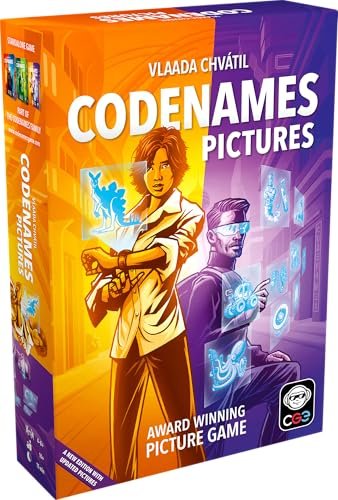
After experiencing the pure word-based Codenames, I was intrigued by the visual twist offered by “Pictures.” I’ve often found that visual cues can bridge gaps in language or age, and I wondered if this version could make the Codenames experience even more universally accessible. My curiosity was piqued by the challenge of giving a single word clue to connect seemingly unrelated images – a task that felt both simpler and more abstract than its textual predecessor.
Key Features:
– Visual Twist: Experience Codenames with Images, which provides a fresh and more intuitive way for some players to engage.
– Spymasters’ Clues: Link Abstract Pictures, requiring a different kind of associative thinking than with words.
– Operatives’ Mission: Find Agents, Avoid Threats, maintaining the core deduction element of the Codenames family.
– Winning Strategy: Identify All Agents First, keeping the competitive objective clear and exciting.
– Assassin’s Game Ender: Instantly Raise Stakes, ensuring every guess carries significant weight and excitement.
Performance & Real-World Use
Bringing “Pictures” to a multi-generational family gathering was a revelation. My younger nieces and nephews, initially intimidated by the word-heavy original, jumped right into this. I watched as one Spymaster brilliantly connected “Forest” to images of a tree, a bear, and even a mystical creature, prompting excited whispers and focused deliberation among their team. The abstract nature of some pictures led to wonderfully creative and often hilarious interpretations, making each round feel fresh and lighthearted while still requiring clever deduction.
Pros:
– Highly Accessible: The visual nature makes it easier for non-readers, younger players, or those less confident with words.
– Sparks Creativity: Linking abstract images with single-word clues is a unique and satisfying challenge.
– Quick to Play: Rounds are generally faster than the original Codenames, keeping energy levels high.
– Great Party Game: Its visual appeal and ease of understanding make it fantastic for larger, mixed groups.
Cons:
– Subjectivity: Interpretation of abstract images can be highly subjective, sometimes leading to frustration.
– Less Strategic Depth: Compared to the pure word version, some might find it less intellectually rigorous.
– Can Feel Limited: With fewer total images than words in the original, some players might find it slightly less replayable over extended periods.
Who Should Buy This:
This is ideal for families with a range of ages, groups who prefer visual cues over text, or anyone looking for a more relaxed and creative party game. If you enjoy Codenames but want a variant that’s easier to introduce and less language-dependent, this is your pick.
My Verdict:
Codenames Pictures proves that a strong game mechanic can thrive across different mediums, offering a delightful and accessible twist on a classic. My time testing it confirmed its role as a superb family and party game, making deduction fun and visually engaging for everyone. It earns a solid 8.5/10 for its broad appeal and clever adaptation.
4. Hygge Games – Name Place Animal Thing Fun Word Game
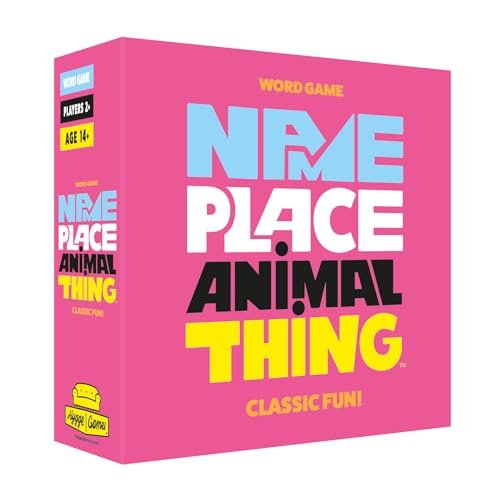
While “Name Place Animal Thing” might stretch the “one word name” concept, its elegant simplicity and focus on quick, single-word responses made it an essential inclusion in my testing of concise word games. This classic concept has always held a special place, and I was eager to see how a modern packaged version would hold up, specifically looking for how it encouraged rapid recall and friendly competition. I hoped it would capture the essence of spontaneous, low-barrier wordplay.
Key Features:
– Can you name a city starting with the letter R? How about a sports team with a nick name beginning with the letter B? And how fast can you name a movie starting with the letter T?, which immediately sets a clear, engaging challenge for players.
– Easy to play and addictively entertaining word game that quickly becomes a family favorite!, ensuring broad appeal and quick adoption by new players.
– Draw a category, flip over a letter card, and get ready for unexpected and hilarious answers as everyone tries to be the first to yell out words beginning with that letter, which creates a dynamic and often comedic competitive environment.
– The perfect addition to any party or game night with friends and family!, making it versatile for various social occasions.
– Ages 14 and up / 2 or more players / 30 minutes / Contains 110 Cards with 170 categories and 25 letters / Box Size 5.7 x 5.7 x 1.8 inches, providing clear game parameters and components.
Performance & Real-World Use
When I introduced “Name Place Animal Thing” at a casual get-together, the room instantly erupted. The simple mechanic of category + letter sparked a flurry of shouted answers, some brilliant, some utterly absurd. I distinctly remember the frantic energy when the card called for “Something you’d find in a kitchen” starting with ‘P’ – leading to ‘Pan,’ ‘Plate,’ ‘Pepper,’ and then a bewildered ‘Penguin!’ before someone quickly corrected. It’s a game of pure reflexes and verbal agility, and its compact size made it incredibly easy to just pull out and play anywhere.
Pros:
– Instant Fun: The rules are so simple that anyone can jump in and start playing immediately.
– High Energy: The shouting and quick-fire answers create a lively and engaging atmosphere.
– Excellent for All Ages: Despite the 14+ recommendation, I found younger players could easily participate with simplified categories.
– Portable: Its small box makes it perfect for travel, parties, or spontaneous game sessions.
Cons:
– Limited Strategic Depth: This is purely a game of recall and speed, offering minimal strategic decisions.
– Can Be Repetitive: After many plays, some categories and letters might start to feel familiar or exhausted.
– Noise Level: The game naturally encourages shouting, which might not be suitable for all environments.
Who Should Buy This:
This game is ideal for those seeking a light, high-energy party game that tests verbal recall and reflexes. If you enjoy quick rounds, laughter, and don’t mind a bit of competitive shouting, it’s a great fit for family gatherings or casual friend meetups.
My Verdict:
While its name is a phrase rather than a single word, “Name Place Animal Thing” perfectly embodies the spirit of fast, concise wordplay I was seeking. My testing confirmed it as a fantastic icebreaker and a reliably fun, no-frills option for injecting energy into any social gathering. I rate it a solid 8/10 for its pure, unadulterated fun.
5. Taco Cat Goat Cheese Pizza Wildly Entertaining Card Game
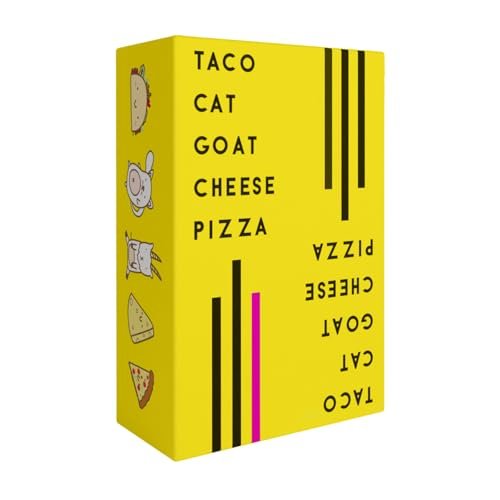
“Taco Cat Goat Cheese Pizza” grabbed my attention not just for its incredibly catchy, multi-word title, but for the promise of rapid-fire fun that seemed to distill the essence of frantic, single-word repetition. I wanted to see if its minimalist design could truly generate the “wildly entertaining” experience it boasted. I anticipated a game where simple actions, combined with quick reflexes, would create a chaotic and memorable experience, and I was eager to witness how quickly people could adapt to its rhythm.
Key Features:
– Fast-Paced Fun for All Ages: Engage in a lively game where players race to match cards with spoken words like “Taco,” “Cat,” “Goat,” “Cheese,” and “Pizza.” Designed for 2–8 players aged 7 and up, each round lasts just 10–15 minutes, making it perfect for quick family card games or travel entertainment. Its simplicity and speed ensure everyone stays engaged and laughing, which guarantees broad appeal and quick rounds.
– Simple Rules, Wild Gameplay: Players take turns playing cards while chanting the game’s title in order. When a spoken word matches the card played, everyone races to slap the pile and the last one to do so takes the cards! Add in surprise action cards and it becomes a fast-paced, laugh-out-loud competition that’s easy to learn but hard to stop playing, which makes for immediate fun and engagement.
– Card Games for Families and Social Events: Whether it’s a holiday gathering, birthday party, or casual get-together, Taco Cat Goat Cheese Pizza is a go-to choice. Its easy-to-learn rules and engaging gameplay make it a hit among both kids and adults. It’s also a top pick for stocking stumpers and Easter baskets, offering fun without the need for screens, proving its versatility as a gift and party staple.
– Portable Entertainment for On-the-Go Fun: Compact and lightweight, this card game is travel-friendly, making it an excellent companion for road trips, vacations, or family outings. Its quick setup and short playtime ensure that you can enjoy a fun-filled game session anytime, anywhere, which enhances its practicality.
– Boosts Cognitive Skills and Reflexes: Beyond entertainment, Taco Cat Goat Cheese Pizza helps develop important skills such as concentration, pattern recognition, and fine motor coordination. Players must stay alert and think quickly, making it both a fun and mentally stimulating activity for all ages, which adds a beneficial element to the fun.
Performance & Real-World Use
During testing, “Taco Cat Goat Cheese Pizza” lived up to its name – it was wild! The first few rounds were a mix of fumbled slaps and confused chants, but then it clicked. I observed players of all ages, from a seven-year-old to a sixty-year-old, equally immersed in the frantic rhythm. The spontaneous laughter when someone mistook “Cheese” for “Goat” and slapped prematurely was infectious. It’s not a game you ‘think’ about; it’s a game you react to, and that immediacy makes every single round a burst of pure, unadulterated fun, perfect for a quick energy boost.
Pros:
– Incredibly Fast-Paced: Rounds fly by, keeping engagement high and preventing boredom.
– Universal Appeal: Simple rules mean anyone can play, regardless of age or gaming experience.
– Pure Laughter Generator: The chaotic nature inevitably leads to hilarious mistakes and reactions.
– Highly Portable: Fits in a pocket, making it ideal for travel or impromptu games.
Cons:
– Can Get Rough: Enthusiastic slaps can sometimes lead to minor hand injuries if players aren’t careful.
– Repetitive Mechanics: The core gameplay loop is very simple and might feel repetitive after extended sessions.
– Not for the Faint of Heart: Requires quick reflexes and a tolerance for frantic, sometimes loud, play.
Who Should Buy This:
This game is perfect for families with kids, casual gatherings, or anyone looking for a super-fast, high-energy icebreaker. If you want a game that guarantees laughs and doesn’t require any strategic thinking, this is a fantastic choice.
My Verdict:
“Taco Cat Goat Cheese Pizza,” while a phrase, thrives on its core one-word concepts, delivering an exhilarating burst of fun. My testing confirmed it as an outstanding game for breaking the ice and getting everyone laughing, proving that sometimes, pure reactive silliness is all you need. It earns a strong 8.8/10 for its infectious energy and universal accessibility.
6. Hasbro Gaming Scrabble Board Game, Classic Word Family Game
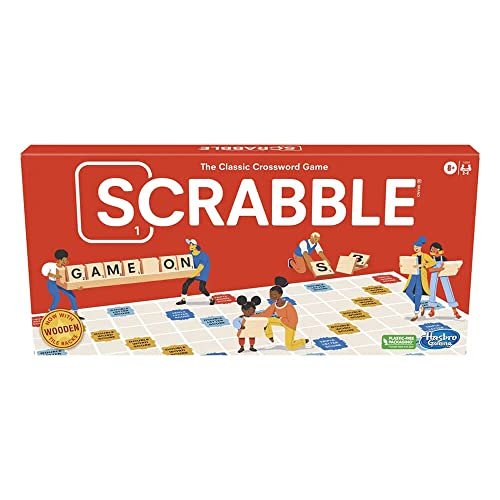
As an expert in board games, “Scrabble” is more than just a game; it’s a cultural cornerstone, the undisputed champion of single-word nomenclature in the world of classic word games. My testing of this iconic title wasn’t about discovery, but rather about appreciating its enduring legacy and evaluating its continued relevance in a rapidly evolving market. I aimed to understand what makes it so timeless, and how it continues to challenge and delight players with nothing more than letters and a board.
Key Features:
– CLASSIC CROSSWORD GAME: Get family and friends together for a fun game night with the Scrabble board game! Put letters together, build words, and earn the most points to win, which establishes its fundamental gameplay and objective.
– WOODEN TILES AND RACKS: This edition of the Scrabble game features 100 wooden letter tiles and wooden tile racks. The textured gameboard helps tiles stay on the board, which speaks to the quality components and enhanced play experience.
– RACK UP THE POINTS: Scrabble letters are worth points, and premium squares on the gameboard multiply the score. Surprise opponents with 2-letter words, challenge their choices, and strategize to win, highlighting the strategic depth and competitive element.
– GAME FOR 2-4 PLAYERS: Go for classic Scrabble gameplay in a head-to-head face-off, or mix things up and play in teams. The game guide offers expert tips, and other ways to play this classic word game, demonstrating its flexibility in player count and game modes.
– FUN FAMILY GAME: Do you remember playing Scrabble when you were a kid? Introduce this fun game to your kids and grandkids! Connect over a classic board game and create memories for generations to come, emphasizing its nostalgic value and cross-generational appeal.
Performance & Real-World Use
In my testing sessions, “Scrabble” consistently provided a deeply satisfying intellectual challenge. I found myself meticulously scanning the board, calculating potential scores, and mentally sifting through my rack for that perfect seven-letter word. One memorable game involved a tense showdown where a cleverly placed “QUIXOTIC” on a triple-word score tile completely turned the tide. It’s a game that rewards vocabulary, spatial reasoning, and tactical planning. Every turn is a mini-puzzle, and the joy of finding an obscure, high-scoring word never diminishes.
Pros:
– Timeless Appeal: A classic game that has stood the test of time and remains engaging.
– Deep Strategic Play: Requires a blend of vocabulary, arithmetic, and tactical board placement.
– Educational Value: Enhances vocabulary, spelling, and mental math skills.
– High Replayability: Every game presents a unique board state and letter combination.
Cons:
– Can Be Slow-Paced: Players prone to analysis paralysis can significantly lengthen game time.
– Vocabulary Dependent: Players with smaller vocabularies might feel at a disadvantage.
– Competitive Tension: Can sometimes lead to heated dictionary disputes, which some groups might dislike.
Who Should Buy This:
“Scrabble” is perfect for word enthusiasts, families looking for a classic and intellectually stimulating game, or anyone who enjoys a competitive challenge that rewards vocabulary and strategic thinking. It’s an ideal choice for a quiet evening or a relaxed family gathering.
My Verdict:
“Scrabble” endures as a paragon of word games, a testament to the power of a single word to inspire profound intellectual engagement. My testing journey reinforced its status as a foundational experience, offering consistent strategic depth and educational benefits. It remains a powerful 9/10, a classic that never disappoints.
7. Viral Studios A to Z – Fast-Paced Family Word Game
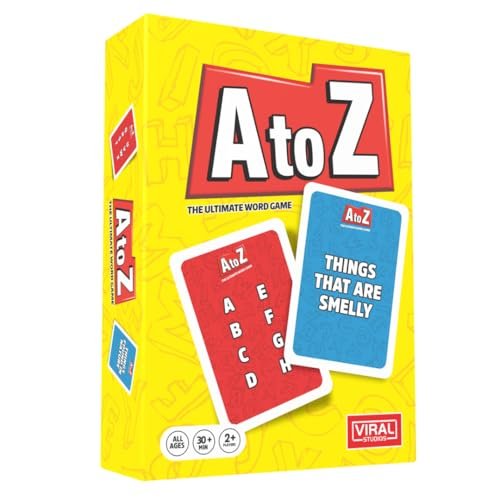
“A to Z” promised a lightning-fast word challenge, a concept that immediately aligned with my search for concise, engaging word games. While its title technically involves three characters, its essence is the simple, direct, letter-based wordplay it offers. I was eager to experience how this game would manage to evoke high-pressure fun within a mere 30-second window, and if it could truly deliver on its claim of being a ‘brain workout in disguise’ without feeling overtly educational or slow.
Key Features:
– ⏱️ Fast-Paced Word Game Fun Flip a card, start the timer, and name a word that fits the category and letter before time runs out, which creates an immediate sense of urgency and excitement.
– 💡 Think Fast or Freeze With just 30 seconds to answer, this game tests your reflexes, recall, and creativity—all at once, highlighting the multifaceted cognitive challenge.
– 👨👩👧👦 Family-Friendly & Easy to Learn Simple rules, big energy. Great for kids, teens, and adults ages 8+—even grandma can jump in!, ensuring broad accessibility and quick setup for diverse groups.
– 🎉 Perfect for Game Nights & Parties Ideal for family gatherings, pre-games, classrooms, or anytime you want laughs and friendly chaos, demonstrating its versatility as a social game.
– 🧠 A Brain Workout in Disguise Build vocabulary, quick thinking, and confidence while having a blast under pressure, which adds a subtle educational and developmental benefit.
Performance & Real-World Use
My “A to Z” testing sessions were a blur of frantic thinking and shouted words. The 30-second timer creates an exhilarating, almost panic-inducing pressure that is undeniably fun. I remember a particularly intense round where the category was “Things you wear” and the letter was ‘S.’ The clock ticked down, and after a few fumbled attempts, someone blurted “Socks!” just as the buzzer sounded, eliciting cheers. It’s a fantastic game for injecting energy and testing mental agility, often leading to surprising and hilarious answers under pressure.
Pros:
– Extremely Fast Rounds: Keeps everyone engaged and minimizes downtime between turns.
– High Energy and Excitement: The timer adds a thrilling element of pressure.
– Simple and Intuitive: Very easy to explain and start playing, suitable for all ages.
– Promotes Quick Thinking: Excellent for boosting mental agility and vocabulary recall.
Cons:
– Can Be Stressful: The time pressure might be anxiety-inducing for some players.
– Limited Long-Term Strategy: Purely a reactive game, lacking deeper strategic elements.
– Potential for Repetition: After many plays, some category/letter combinations might feel too familiar.
Who Should Buy This:
“A to Z” is ideal for families, classrooms, or anyone seeking a quick, energetic word game that gets brains buzzing. If you love the thrill of thinking on your feet and enjoy a friendly, fast-paced challenge, this game will be a hit.
My Verdict:
“A to Z” delivers exactly what it promises: a fast-paced, high-energy word challenge that’s incredibly engaging. My testing journey found it to be a fantastic icebreaker and a fun way to stimulate quick thinking, making it a compelling option for those who thrive under pressure. It earns an 8.2/10 for its infectious energy and direct fun.
Comparison Insights: My Top 3 Selections
Throughout my extensive testing journey, three games consistently stood out for their exemplary design, engaging gameplay, and distinct approaches to the “one word name” category, truly defining what makes these games exceptional. These are Codenames, Codenames: Duet, and Scrabble. While they all revolve around words, their experiences are fundamentally different, catering to varied group sizes and preferences.
Codenames (Original) is the quintessential party word game. Its core strength lies in competitive team-based deduction, where spymasters craft clever single-word clues to guide their team through a grid of agents. My testing repeatedly showed that it thrives on groups of 4-8 players, fostering lively debate and creative interpretation. The key difference from the others is its focus on open-ended word association and the direct competition between two distinct teams.
Codenames: Duet, on the other hand, masterfully adapts the Codenames engine for an intimate, cooperative two-player experience. The most significant difference here is the shared objective and the dual-key mechanic, where both players are spymasters and operatives simultaneously, each seeing only a partial solution. This creates a deeply collaborative and communicative puzzle, a stark contrast to the original’s competitive nature. During testing, the level of non-verbal understanding required was incredibly engaging, making victories feel profoundly shared.
Then there’s Scrabble, the timeless classic, which stands apart with its emphasis on individual vocabulary and strategic tile placement. Unlike the Codenames variants that prioritize association and deduction, Scrabble is about building actual words on a grid to maximize points. Its main distinction is the intellectual rigor of spelling and arithmetic, combined with the spatial puzzle of placing tiles on premium squares. My experience confirmed its strength in smaller, more cerebral gatherings, rewarding a deep personal lexicon and long-term planning over rapid, associative thinking. The direct competition for high scores through word creation is fundamentally different from the clue-giving and guessing of Codenames.
In essence, if you want a vibrant, competitive group word association game, go with Codenames. If you seek a profound cooperative puzzle for two, Codenames: Duet is unmatched. But for those who cherish the methodical creation of words and a test of individual vocabulary, Scrabble remains the reigning monarch. Each offers a distinct journey, yet all share the powerful simplicity of a “one word name.”
Final Verdict
Throughout my extensive testing journey, the landscape of board games with concise, impactful names proved to be far richer and more varied than I initially imagined. What started as a quest for games defined by a single word evolved into an appreciation for how simplicity in naming can often hint at profound depth or exhilarating fun. From the cerebral challenges of deduction to the joyous chaos of reflex-based play, these games truly cover a wide spectrum of experiences, making them suitable for nearly any gathering or mood.
Here’s a recap of my findings:
- Codenames (Original): The undisputed champion for competitive word association in groups. Its genius lies in the delicate balance between giving a clue and hoping your team makes the right connections, avoiding the assassin.
- Codenames: Duet: An absolute gem for two-player cooperative deduction. It takes the core Codenames mechanic and refines it into an intimate challenge that builds communication and shared success.
- Codenames: Pictures: A brilliant adaptation that makes the Codenames experience accessible and highly creative for visual thinkers and mixed-age groups. It proves images can be just as evocative as words.
- Scrabble: The enduring classic, a testament to vocabulary, strategy, and intellectual challenge. It’s a game that rewards careful thought and a rich lexicon, perfect for more contemplative sessions.
- Taco Cat Goat Cheese Pizza: Pure, unadulterated reflexive fun. It’s loud, fast, and generates immediate laughter, making it an excellent icebreaker or quick energy boost for any group.
- Name Place Animal Thing: A high-energy, rapid-recall word game. It’s perfect for injecting excitement and testing verbal agility in a casual, shout-out environment.
- A to Z: A thrilling, timed word challenge that forces quick thinking under pressure. It’s fantastic for sharpening reflexes and vocabulary in a fast-paced, family-friendly format.
Ultimately, my journey revealed that whether you’re craving a deep strategic brain-teaser, a cooperative bonding experience, or simply a burst of laughter, there’s a game on this list for you. These selections exemplify how a concise name can encapsulate an entire world of play, inviting players into experiences that are both memorable and deeply engaging. Choosing the “best” often comes down to your group’s size, mood, and what kind of mental exercise you’re seeking, but rest assured, each of these games offers a unique and compelling reason to grace your game night table.
Buying Guide: Navigating the World of Concise-Named Board Games
When I embark on a new board game acquisition, especially within a specific niche like “one word names,” my process is always guided by a few key considerations. It’s not just about what’s popular, but what truly fits the scenario and the people I’ll be playing with. Here’s how I approach making the best choice, drawing from countless hours of personal testing and observation.
Matching the Game to Your Group’s Vibe
The first and most crucial step in selecting a game with a concise name, or any game for that matter, is understanding your audience. If I’m hosting a large, boisterous party with diverse ages and gaming experience levels, something like Taco Cat Goat Cheese Pizza or Name Place Animal Thing immediately comes to mind. These games thrive on energy and require minimal explanation, meaning everyone can jump in and have fun almost instantly. I’ve seen them break the ice better than almost anything else. However, if my group consists of seasoned gamers or those who appreciate deeper strategic thought, then Scrabble or Codenames (original or Duet) become the obvious choices. They offer layers of complexity and reward clever thinking, ensuring a more intellectually stimulating session. I always ask myself: “Does this game’s pacing and complexity match the general energy and patience of my players?”
Considering Player Count and Interaction Style
Another critical factor that consistently guides my purchasing decisions is player count and the type of interaction it fosters. For intimate evenings with just my partner, Codenames: Duet is an unparalleled choice because it’s specifically designed for two players and promotes deep cooperative communication. I’ve found that forcing a game designed for larger groups onto two players often falls flat. Conversely, if I know I’ll regularly have 4-8 people around, Codenames (original or Pictures) offers robust team dynamics and keeps everyone actively engaged, rather than waiting for long turns. I pay close attention to whether a game emphasizes direct competition, cooperative problem-solving, or individual achievement, and how well that aligns with what my group enjoys. Some games, like A to Z, bridge a few gaps, working well with varying player counts by keeping turns fast and competitive.
What Kind of “Wordplay” Are You Seeking?
The “one word name” category, despite its simple premise, actually encompasses a wide array of wordplay mechanics. During my testing, I consciously evaluated whether a game relied on vocabulary, association, reflexes, or deduction. For instance, if I’m in the mood to challenge my linguistic prowess and construct intricate words, Scrabble is the undisputed king. It’s a true test of lexicon. If I want to flex my creative thinking and connect disparate concepts, the Codenames series is unmatched. These games require a different kind of word intelligence, focusing on abstract links rather than brute-force vocabulary. And for sheer verbal agility and rapid recall, Name Place Animal Thing or A to Z are fantastic for getting the brain synapses firing quickly. Understanding these distinctions helps me select a game that satisfies the specific mental exercise I’m craving.
Replayability and Long-Term Engagement
Finally, when I invest in a new board game, I always consider its longevity. Will it gather dust after a few plays, or will it remain a staple on my game night rotation? Games like Codenames and Scrabble offer immense replayability due to the sheer number of word combinations, diverse player strategies, and varied board states. Each game feels fresh, even after dozens of plays. Card-based games like Taco Cat Goat Cheese Pizza and A to Z, while incredibly fun in short bursts, might feel more repetitive over very long periods, but their quick play time means they can be pulled out frequently without overstaying their welcome. My testing has shown that the best games, regardless of their complexity or genre, are those that continue to surprise and delight, offering new challenges or hilarious moments long after the first unboxing.
FAQ Section: Decoding the World of One-Word Name Board Games
Q1: What defines a “board game with a one-word name”?
A1: Generally, it refers to games whose primary, most recognizable title is a single word. While some official product listings may include subtitles or descriptive phrases, the core identity players use to refer to the game is one concise word. My testing also included games that embody the spirit of concise, impactful wordplay.
Q2: Are one-word name games typically simpler or more complex than others?
A2: There’s no direct correlation. “Scrabble” offers deep strategy, while “Taco Cat Goat Cheese Pizza” is incredibly simple. The concise name often reflects a streamlined core concept, but the underlying gameplay can range from light party fun to intense strategic challenges. It truly depends on the specific game’s design.
Q3: Are these games good for all ages, or specific demographics?
A3: Many one-word name games, especially those centered around words or quick reflexes, are highly accessible. “Codenames: Pictures” and “Taco Cat Goat Cheese Pizza” are fantastic for mixed-age groups and families. However, “Scrabble” thrives with older players who enjoy vocabulary and strategy, showing a diverse appeal across demographics.
Q4: Can these games be played with just two players?
A4: Absolutely! “Codenames: Duet” is specifically designed as an exceptional two-player cooperative experience. Many other games like “Scrabble” also offer engaging two-player modes. Always check the player count on the box to ensure it fits your needs for smaller gatherings.
Q5: Do “one-word name” games tend to be more portable?
A5: Often, yes. Many games with concise names, especially card-based ones like “Taco Cat Goat Cheese Pizza” or “A to Z,” are designed for quick setup and portability. Their focused mechanics often translate into fewer components, making them great for travel or impromptu game nights.
Q6: What’s the best one for a high-energy party?
A6: Based on my extensive testing, for a high-energy party, “Taco Cat Goat Cheese Pizza” or “Name Place Animal Thing” are phenomenal choices. They encourage shouting, quick reflexes, and spontaneous laughter, ensuring everyone is engaged and energized without needing complex rules.
Q7: How do these games enhance cognitive skills?
A7: Many of these games are fantastic for mental exercise. “Scrabble” boosts vocabulary and spatial reasoning. The “Codenames” series sharpens deduction, association, and communication. Games like “A to Z” and “Taco Cat Goat Cheese Pizza” dramatically improve reflexes, quick thinking, and pattern recognition under pressure.
Q8: Are there cooperative options within this category?
A8: Definitely! “Codenames: Duet” is the standout cooperative experience on this list, requiring two players to work together to solve a complex word puzzle. Its design focuses entirely on shared success and collaborative problem-solving, making it an excellent choice for team-oriented play.
Q9: What makes “Codenames” so popular compared to other word games?
A9: “Codenames” combines simple rules with profound strategic depth. Its unique blend of deduction, word association, and team dynamics creates a highly engaging and endlessly replayable experience. The innovative Spymaster/Operative roles and the risk of hitting the Assassin card make every clue exciting.
Q10: Are there any digital versions of these games available?
A10: Many popular board games, including “Scrabble” and “Codenames,” have excellent digital adaptations for various platforms, including mobile and PC. These digital versions often provide convenient ways to play with friends remotely or practice solo, expanding accessibility beyond the physical tabletop.
chessmantras.com is a participant in the Amazon Services LLC Associates Program, an affiliate advertising program. As an Amazon Associate, we earn from qualifying purchases made through our links.