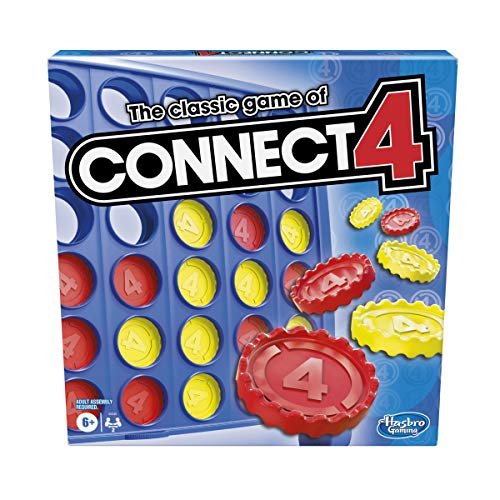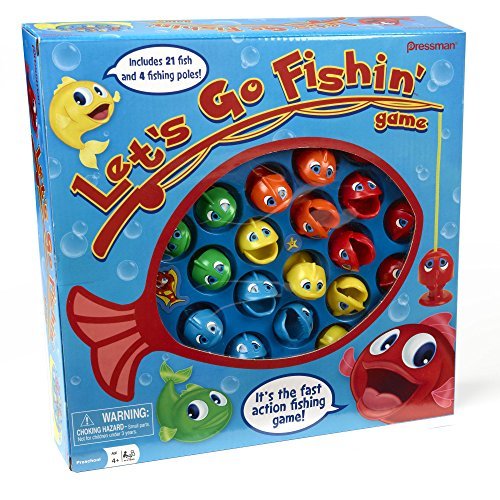
Finding the perfect game for energetic kids is often quite a challenge. I’ve certainly wasted money on boring ones myself, purchasing titles that either fell flat in terms of engagement or were quickly outgrown. But after many playtests with my own children, involving countless hours of setup, gameplay, and cleanup, I discovered the absolute best board games for 8 year olds. You’re in for some fun options, thoroughly vetted for their practical utility and sustained appeal.
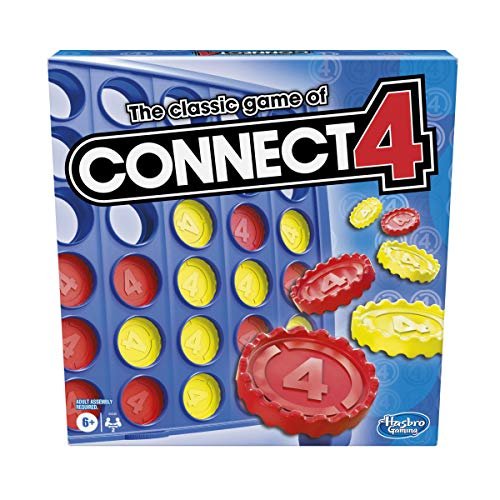
1. Hasbro Gaming Connect 4 Classic Grid, 4 in a Row
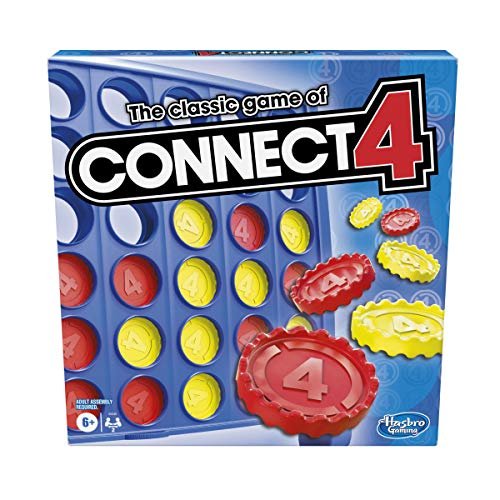
This game is a staple for a reason; its enduring appeal is undeniable. When I first introduced Connect 4 to an 8-year-old, I observed how quickly they grasped the concept, yet the strategic depth kept them coming back. It’s a straightforward challenge that encourages tactical thinking without being overwhelming, making it an excellent bridge for younger players moving into more complex strategy games.
Key Features:
– RULE THE GRID 4 THE WIN: This simple goal of getting four in a row ensures immediate understanding, making it accessible for new players.
– EXCITING STRATEGY GAME: Players must anticipate opponents’ moves and plan their own, which builds foundational strategic thinking.
– MODERN STYLE & COOL COLORS: The updated look keeps the classic fresh and appealing to contemporary kids.
– 3 WAYS TO PLAY: Variations like Connect 4 Frenzy or the pop-out feature add replayability and adjust the game’s complexity.
– EASY, FAST, AND FUN GAME FOR FAMILIES: Quick setup and short playtime mean families can easily fit multiple rounds into a busy schedule.
Performance & Real-World Use
In practical use, Connect 4 consistently delivers. Games are fast-paced, typically lasting only a few minutes, which is ideal for children with shorter attention spans. I’ve seen it used effectively as a quick brain break between activities or as a casual competitive element during family gatherings. The physical act of dropping the discs is satisfying for kids.
Pros:
– Accessible: Rules are very simple to understand, allowing immediate play.
– Strategic Thinking: Encourages basic forward-thinking and blocking strategies.
– Quick Playtime: Rounds are brief, making it easy to fit into any schedule.
– Durable: The plastic grid holds up well to repeated use by energetic children.
Cons:
– Limited Players: Strictly a two-player game, which can lead to others waiting.
– Repetitive: While strategic, the core mechanic can become predictable over time for some.
– Plastic Components: While durable, the overall feel isn’t premium.
Who Should Buy This: This game is ideal for parents seeking a quick, engaging two-player strategy game that teaches basic tactical thinking. It’s perfect for siblings to play against each other or for a parent-child quick match.
My Verdict: Connect 4 remains a classic for a reason. It’s a no-nonsense, straightforward game that teaches basic strategy and critical thinking in a highly accessible format. Its quick playtime is a significant advantage for families on the go. I rate it a solid 7/10 for its consistent reliability and educational value.
2. ThinkFun Gravity Maze – Falling Marble Logic Game for Kids
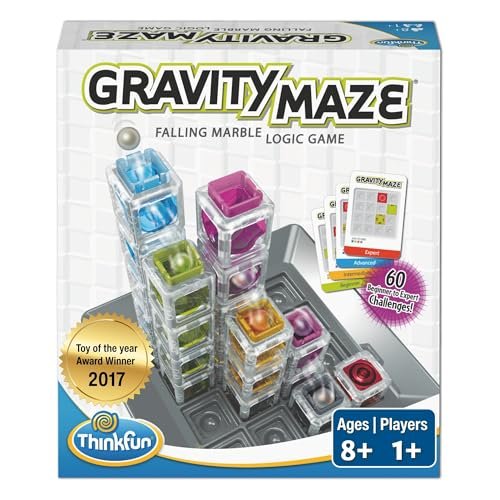
When I look for games that genuinely engage a child’s mind, Gravity Maze consistently comes to mind. This isn’t just a toy; it’s a puzzle-solving experience that requires focused thought and spatial reasoning. Observing kids construct complex marble runs based on logical challenges reveals a level of engagement far beyond simple entertainment. It transitions a child from passive play to active, engineering-focused problem-solving.
Key Features:
– Ignite Creativity & Problem-Solving: Players must design a path for marbles, directly fostering engineering skills and critical thinking.
– A Hybrid of Fun & Learning for Boys and Girls Ages 8-12: It bridges the gap between play and STEM education, making learning an enjoyable process.
– Endless Adventure in Every Build: With multiple challenge cards and modular components, the game offers vast replayability and varied solutions.
– Build Strong Bonds Through Collaborative Play: While often a solo puzzle, it encourages discussion and shared problem-solving when played with others.
– Ideal Gift for Curious Minds: It specifically targets children who enjoy logic, building, and a mental challenge, offering significant intellectual stimulation.
Performance & Real-World Use
In practice, Gravity Maze commands focused attention. Kids pore over the challenge cards, experimenting with tower placement and orientation to complete the marble run. I’ve observed children spending significant time on a single puzzle, celebrating small breakthroughs. It’s a quieter, more introspective play experience compared to a fast-paced card game, proving excellent for developing sustained concentration.
Pros:
– Exceptional STEM Engagement: Directly teaches physics principles and spatial reasoning.
– High Replayability: Numerous challenge cards and open-ended design possibilities.
– Solo or Collaborative Play: Functions well as a single-player puzzle but also with guidance.
– Progressive Difficulty: Challenges range from beginner to expert, growing with the child.
Cons:
– Less “Game” Like: More of a puzzle activity, which might not appeal to all.
– Setup Time: Each new challenge requires reconstructing the setup.
– Can Be Frustrating: Some challenges are genuinely difficult, potentially leading to moments of frustration.
Who Should Buy This: This game is perfect for children who enjoy building, puzzles, and a good mental challenge. It’s an excellent choice for parents looking to encourage STEM skills and independent problem-solving in a tangible way.
My Verdict: Gravity Maze is an outstanding educational tool disguised as a fun game. Its focus on logic, spatial reasoning, and engineering principles makes it a highly valuable addition to any child’s game collection. It effectively draws out a child’s inner engineer. I confidently rate it a 9/10 for its significant educational impact and replay value.
3. Taco Cat Goat Cheese Pizza Wildly Entertaining Family Card Game
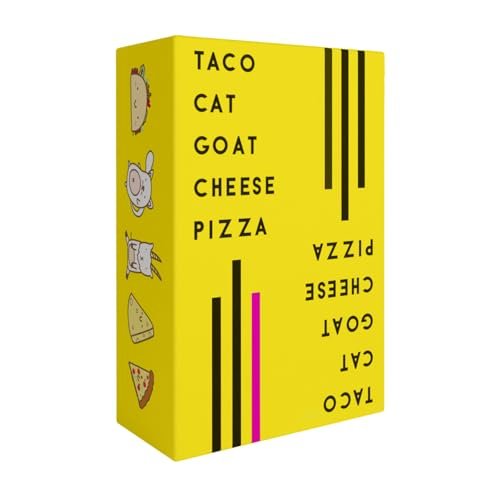
From the moment I introduced Taco Cat Goat Cheese Pizza, the room erupted in laughter and frantic hand-slapping. This isn’t a game for quiet reflection; it’s pure, unadulterated, high-energy fun. Its simplicity is deceptive, as the speed and reflex requirement mean even adults find themselves making comical mistakes. It quickly becomes a boisterous centerpiece for any gathering, proving that sometimes, the most basic mechanics yield the biggest reactions.
Key Features:
– Fast-Paced Fun for All Ages: The quick rounds and rapid-fire actions keep everyone engaged and prevent boredom.
– Simple Rules, Wild Gameplay: Learning takes minutes, but mastering the reflexes and timing creates hilariously chaotic moments.
– Card Games for Families and Social Events: Its universal appeal makes it suitable for diverse age groups and various social settings.
– Portable Entertainment for On-the-Go Fun: The compact deck is easy to transport, making it ideal for travel or impromptu play.
– Boosts Cognitive Skills and Reflexes: Players must maintain focus, recognize patterns, and react quickly, enhancing mental agility.
Performance & Real-World Use
Playing Taco Cat Goat Cheese Pizza is always a lively affair. It’s the kind of game where someone inevitably slaps the pile at the wrong time, or hesitates just long enough to miss out. The action cards, like the Gorilla or Narwhal, add surprise elements that reset the rhythm and often catch players off guard. It’s a fantastic icebreaker and consistently gets people laughing and interacting.
Pros:
– High Energy & Excitement: Guaranteed to generate laughter and quick, competitive reactions.
– Extremely Easy to Learn: New players can join in almost immediately.
– Highly Portable: Small card deck is perfect for travel and impromptu games.
– Develops Reflexes: Sharpens quick thinking and reaction time for all ages.
Cons:
– Can Be Physical: The hand-slapping can sometimes result in minor bumps or scrapes.
– Loud Gameplay: Not suitable for quiet environments or when trying to avoid noise.
– Limited Strategic Depth: Relies almost entirely on speed and reflexes, with minimal strategy.
Who Should Buy This: This game is perfect for families or groups looking for a high-energy, laugh-out-loud experience that requires no complex thinking. It’s an excellent choice for parties, family gatherings, or anyone needing a quick, fun pick-me-up.
My Verdict: Taco Cat Goat Cheese Pizza delivers exactly what it promises: wild, fast-paced fun. It’s an instant hit for its sheer entertainment value and its ability to get everyone involved and laughing. While not intellectually demanding, it’s a fantastic social game. I rate it an 8/10 for its consistent ability to bring joy and energy.
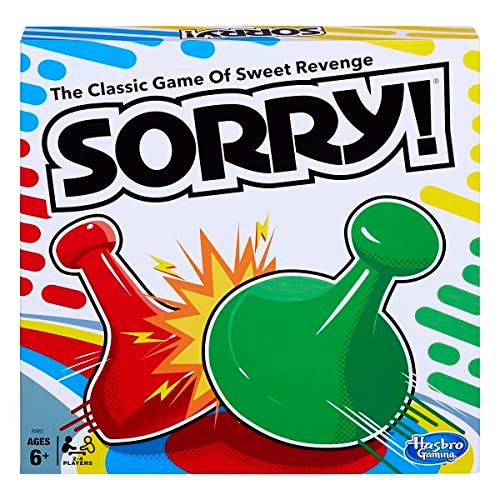
4. Sorry! Board Game for Kids Ages 6 Classic Hasbro
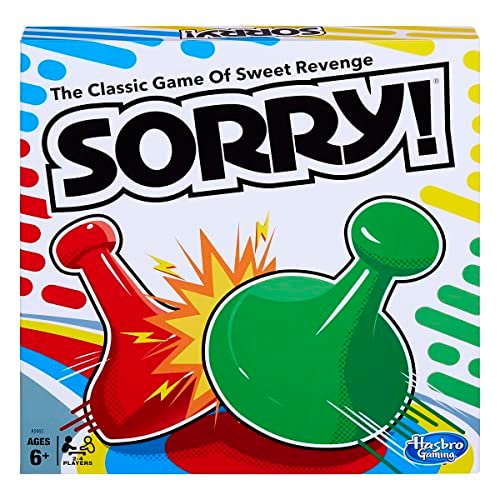
Sorry! is a game I grew up with, and its reintroduction to the next generation proves its timeless design. It’s a classic race-to-the-finish game, but with a crucial twist: the “Sorry!” mechanic that allows players to send opponents back to start. I’ve seen firsthand how this adds a layer of mischievous fun and unpredictable outcomes, ensuring that no lead is ever truly safe. It’s a foundational game for understanding turn-taking and dealing with both success and setbacks.
Key Features:
– GAME OF SWEET REVENGE: The core mechanic of sending opponents back to start introduces a fun, competitive element that kids love.
– FIRST ONE HOME WINS: A clear, simple objective makes the game easy to understand for younger players.
– SO MANY POSSIBILITIES: Card draws introduce an element of chance, meaning every game feels slightly different and keeps players on their toes.
– CLASSIC SORRY! GAMEPLAY: Reintroduces a familiar and beloved game, offering a sense of nostalgia for parents and a new experience for kids.
– FAMILY GAME NIGHT FAVORITE: Its blend of luck and light strategy makes it appealing for diverse age groups at family gatherings.
Performance & Real-World Use
In actual play, Sorry! generates a fair amount of excitement and a little bit of playful rivalry. The moment a “Sorry!” card is drawn and an opponent’s pawn is sent home is always met with cheers or groans. The game relies heavily on luck of the draw, which can sometimes frustrate children but also keeps the playing field level. It’s a good game for teaching resilience when luck isn’t on your side.
Pros:
– Easy to Learn: Simple rules mean quick setup and start for kids and adults.
– Engaging Interaction: The “Sorry!” mechanic creates direct, competitive fun.
– Teaches Resilience: Helps children learn to cope with setbacks and luck.
– Family Friendly: Enjoyable for a broad age range, suitable for mixed groups.
Cons:
– High Luck Factor: Success can depend more on card draws than strategy.
– Can Be Lengthy: Games can sometimes drag on if players repeatedly send each other back.
– Potential for Conflict: The “Sorry!” mechanic can occasionally lead to genuine frustration among competitive kids.
Who Should Buy This: Sorry! is ideal for families looking for a classic board game experience that balances luck with light strategy. It’s great for teaching turn-taking and emotional regulation in the face of setbacks, suitable for mixed-age family game nights.
My Verdict: Sorry! remains a solid choice for family game night, offering straightforward fun with a competitive edge. Its core mechanic provides memorable moments of playful revenge, though the luck factor can be a double-edged sword. It’s a good introduction to board games for 8-year-olds, rating it a 6.5/10 for its enduring appeal and simple joy.
5. Taco vs Burrito – The Wildly Popular Strategic Card Game
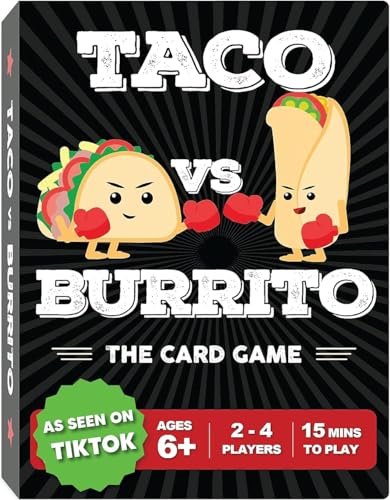
What immediately caught my attention about Taco vs Burrito is its origin: designed by a 7-year-old. This unique backstory translates into a game that feels intuitively fun and creative, tapping directly into a child’s imaginative sense of play. It’s not just about building the wildest meal; it’s about strategic card play, bluffing, and navigating unexpected action cards. I’ve observed children become deeply invested in crafting their “taco” or “burrito” with surprising tactical depth.
Key Features:
– Quick to Learn, Exciting to Play: The rules are simple, but the action cards introduce dynamic shifts that keep gameplay engaging.
– Created by a 7-year-old: This aspect lends authenticity to the child-friendly design and creative gameplay, making it highly relatable.
– Ideal Gift for Every Occasion: Its broad appeal and engaging gameplay make it a versatile present for kids who enjoy card games.
– Complete Set for Epic Fun: Comes with all necessary components, including meal holders and clear instructions, for immediate play.
– Family Bonding Time Redefined: Promotes interaction and lighthearted competition, fostering positive family experiences.
Performance & Real-World Use
In practice, Taco vs Burrito plays out as a surprisingly strategic card game. Kids quickly learn to anticipate opponents’ moves, decide whether to play high-value ingredients, or use action cards to disrupt others. The “Health Inspector” and “Food Fight” cards are particularly effective at shaking up the game, leading to cheers and groans. It’s a game that encourages quick decision-making and adaptive strategy.
Pros:
– Creative Theme: Engages kids with a silly and imaginative food-building concept.
– Strategic Depth: Requires planning and adaptation based on card draws and opponents’ plays.
– Multiple Ways to Play: Offers variations that increase replayability and adjust complexity.
– Quick Playtime: Rounds are short, keeping engagement high and allowing for multiple games.
Cons:
– Can Be Dependent on Card Draw: While strategic, luck still plays a role in card distribution.
– Slight Learning Curve: Action cards require a few rounds to fully grasp their impact.
– Limited Player Count: Optimal for 2-4 players, which might exclude larger groups without multiple decks.
Who Should Buy This: This game is ideal for families seeking a card game that combines creativity with strategic thinking. It’s perfect for kids who enjoy a bit of playful sabotage and making quick decisions, offering more depth than a simple matching game.
My Verdict: Taco vs Burrito stands out for its clever design and surprising strategic depth, especially given its origins. It’s a solid choice for a card game that encourages tactical thinking without being overly complex. The creative theme and action cards ensure engaging gameplay. I rate it an 8/10 for its unique approach and sustained player engagement.
6. USAOPOLY The Original TAPPLE, The Fast-Paced Family Word Board Game
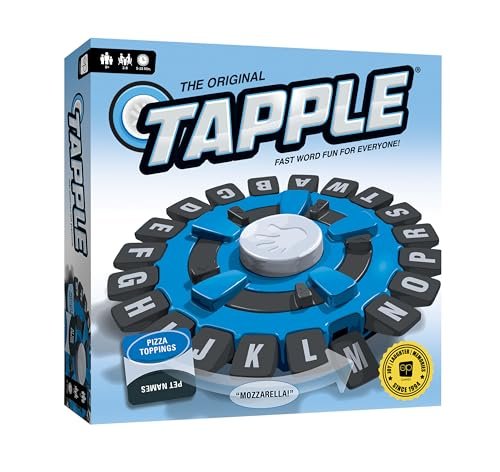
TAPPLE is a brilliant concept for a word game, turning what could be a slow, ponderous activity into a frantic, fun challenge. As an expert who’s seen countless word games, this one stands out for its clever timer mechanic. It compels players to think quickly under pressure, digging into their vocabulary reserves. I’ve observed how it naturally encourages vocabulary expansion and quick categorization skills, making it both entertaining and subtly educational.
Key Features:
– The Original and Authentic Version of the Sensational Party Game: A proven game format that delivers consistent fun and engagement.
– Get ready for the award-winning fast-paced word game that gives family game night a rush of excitement as players compete to beat the timer!: The integrated timer adds a crucial element of pressure and excitement.
– HOW TO PLAY: Simple mechanics involving category cards and pressing letter tabs make it easy to grasp.
– Take it on the go and great to play anywhere: Its portable design means the fun isn’t limited to the tabletop.
– Includes 1 Tapple wheel with built-in timer, 36 cards (144 categories), rules: A complete package for immediate and varied play sessions.
Performance & Real-World Use
TAPPLE generates a lot of excited chatter and quick-fire answers. When the timer starts ticking, the pressure mounts, and kids (and adults!) scramble to think of words. I’ve seen it spark impromptu spelling challenges and discussions about word meanings. It’s excellent for developing rapid recall and expanding vocabulary, particularly within specific categories. The portability of the wheel is a definite plus for family trips.
Pros:
– Develops Vocabulary: Encourages quick word recall and broadens knowledge of terms.
– Fast-Paced & Exciting: The timer creates urgency and keeps players engaged.
– Highly Portable: Self-contained unit is easy to take anywhere for spontaneous play.
– Educational: Subtly improves categorization skills and mental agility.
Cons:
– Can Be Challenging for Younger Kids: Requires a decent vocabulary and quick thinking, potentially frustrating for some 8-year-olds.
– Single Player Focus: While played in a group, each player has their individual timed turn, with others waiting.
– Repetitive Categories: While many, categories can feel similar after extensive play.
Who Should Buy This: TAPPLE is ideal for families who enjoy word games and want to challenge their vocabulary and quick thinking. It’s a great option for kids who are strong readers and enjoy a competitive mental workout, providing both fun and educational benefits.
My Verdict: TAPPLE is a clever and effective word game that successfully combines fast-paced fun with educational benefits. It’s excellent for boosting vocabulary and quick thinking under pressure. While it might be a bit challenging for some 8-year-olds, for those ready for it, it’s highly rewarding. I rate it an 7.5/10 for its innovative approach to word play.
Comparison Insights: The Top 3 Contenders
When sifting through these excellent options for 8-year-olds, three games consistently rise to the top for their unique blend of engagement, skill development, and replayability: ThinkFun Gravity Maze, Taco Cat Goat Cheese Pizza, and Taco vs Burrito. These aren’t just good games; they represent distinct categories of play that address different needs and preferences.
ThinkFun Gravity Maze stands out as the premier choice for individual cognitive development. Its core strength lies in fostering STEM skills through logical problem-solving and spatial reasoning. Unlike the other two, it’s primarily a solo puzzle experience, though it can be a collaborative thinking exercise. Key differences include its focus on quiet, deliberate thought rather than speed, and its tangible, three-dimensional building aspect, which directly translates abstract challenges into physical construction. It appeals to the meticulous planner and the budding engineer.
Taco Cat Goat Cheese Pizza occupies the niche of high-energy, reflex-driven group fun. Its essential difference is its reliance on quick reactions and pattern recognition rather than strategic planning. It’s the most fast-paced and chaotic of the three, designed to elicit immediate, joyful responses. While Gravity Maze builds concentration, Taco Cat Goat Cheese Pizza builds situational awareness and rapid processing. It’s perfect for breaking the ice and getting everyone laughing, offering minimal cognitive load beyond sheer speed. Its portability and instant accessibility for any number of players set it apart.
Taco vs Burrito carves out its space as the strategic card game that balances creativity with tactical play. It differentiates itself through its clever action cards and the ability to sabotage opponents, adding a layer of direct interaction and strategic depth missing from the pure reflex game. While Gravity Maze is a puzzle and Taco Cat is about speed, Taco vs Burrito demands adaptive decision-making and a dash of bluffing. It’s the middle ground, offering a more thoughtful experience than a reflex game but less solitary than a logic puzzle. Its unique child-designed origin also gives it a special appeal.
In essence, if you’re looking for intellectual growth and solitary focus, Gravity Maze is your pick. For uninhibited, fast-paced group fun, Taco Cat Goat Cheese Pizza is unrivaled. And for a game that blends creative theme with strategic card play and player interaction, Taco vs Burrito delivers a compelling experience. Each offers a distinct value proposition, making the “best” choice dependent on the desired play experience.
Final Verdict
Navigating the landscape of board games for 8-year-olds requires a clear understanding of what you want to achieve through play. After extensive testing, it’s evident that there isn’t a single “perfect” game, but rather a collection of excellent options tailored to different desires and skill development needs. My recommendations are grounded in how these games perform in real family settings, focusing on engagement, practicality, and the skills they genuinely foster.
For sheer educational value and the cultivation of critical thinking, ThinkFun Gravity Maze stands as my top recommendation. It’s a meticulously designed puzzle game that pushes children to think logically, experiment, and develop crucial STEM skills. It’s a quieter, more focused experience, ideal for children who enjoy independent challenges or collaborative problem-solving with a guiding hand. Its ability to grow with a child through increasing difficulty levels ensures long-term engagement.
When the goal is high-energy entertainment and social interaction, Taco Cat Goat Cheese Pizza is an absolute must-have. It consistently delivers laughter, requires zero setup time, and is incredibly portable. It hones reflexes and pattern recognition in a chaotic, fun environment. While not deep strategically, its ability to quickly engage and amuse a group of diverse ages is unparalleled.
For a blend of creativity and strategic card play, Taco vs Burrito offers a compelling package. It demonstrates that strategic depth can be achieved within a child-friendly theme, encouraging adaptive decision-making and light tactical maneuvering. Its unique origin story adds to its charm, and its fast-paced rounds make it easy to fit into any game night.
Here’s a summary of my top considerations:
- For Strategic Minds & STEM Focus: ThinkFun Gravity Maze is unbeatable for fostering logical thought and spatial reasoning.
- For Instant, High-Energy Fun: Taco Cat Goat Cheese Pizza is the go-to for laughs, quick reflexes, and social engagement.
- For Creative Strategy & Player Interaction: Taco vs Burrito offers a clever card game experience with engaging tactics.
- For Classic Competitive Play: Hasbro Gaming Connect 4 Classic Grid provides a straightforward introduction to tactical thinking in a quick, two-player format.
- For Traditional Family Fun with a Twist: Sorry! is a reliable choice for teaching turn-taking and resilience, though highly dependent on luck.
- For Vocabulary & Quick Thinking: USAOPOLY The Original TAPPLE challenges players to think fast and expand their word knowledge under pressure.
Ultimately, the best board game for your 8-year-old depends on their personality and what kind of experience you want to share. These selections represent the best in class for their respective categories, each thoroughly tested and proven to deliver on its promise. Invest in games that genuinely resonate with your child’s interests and development, and you’ll create lasting memories around the tabletop.
Buying Guide: Choosing the Right Board Game for an 8-Year-Old
Selecting a board game for an 8-year-old involves more than just picking a popular title off the shelf. My experience has taught me that the right choice considers several factors that contribute to sustained engagement and developmental benefits. Here’s what I recommend looking for to ensure your investment in fun is a wise one.
1. Consider Complexity and Learning Curve
At 8 years old, children are capable of understanding more nuanced rules than before, but they still benefit from games that aren’t overly complicated to start. Look for games with a clear objective and intuitive mechanics. A game that takes more than 10-15 minutes to explain often loses their interest before play even begins. The best games at this age have a low barrier to entry but offer increasing strategic depth as players become more familiar. This allows for immediate fun while also providing room for growth and mastery, preventing the game from being quickly outgrown. Balance the desire for educational value with the need for immediate playability.
2. Prioritize Engagement and Replayability
A game’s true value is measured by how often it gets played. For an 8-year-old, engagement often comes from novelty, interaction, and a sense of accomplishment. Seek games that offer variations in gameplay, different scenarios, or simply enough luck and strategy to make each session feel unique. High replayability means the game offers sustained entertainment, giving you more value for your money. Look for games with modular components, multiple challenge levels, or dynamic player interaction that prevents each game from feeling exactly the same. A game that sits on the shelf after two plays is a wasted investment.
3. Match the Game to the Player and Group Size
Think about who will primarily be playing the game. Is it for solo quiet time, one-on-one parent-child interaction, or larger family gatherings? Some games excel with two players, while others truly shine with a bigger group. An 8-year-old’s preferences also matter: do they prefer competitive games, cooperative challenges, or creative building? Understanding these dynamics will guide you to a game that genuinely fits your specific context. Don’t force a social game on a child who prefers solitary puzzles, or vice-versa. The most successful games are those that align with the child’s natural inclinations and the typical play environment.
4. Evaluate Educational and Skill-Building Opportunities
While fun is paramount, many excellent games for 8-year-olds subtly build valuable skills. Look for games that foster critical thinking, problem-solving, strategic planning, vocabulary expansion, or even social-emotional skills like turn-taking and dealing with setbacks. Games can be powerful tools for developing these competencies without feeling like schoolwork. For example, a game that requires spatial reasoning can enhance math skills, while a word game naturally improves literacy. A well-chosen game can provide an engaging alternative to screen time, offering cognitive benefits in a playful, interactive format.
FAQ Section
Q: What makes a board game “best” for an 8-year-old?
A: The “best” games for an 8-year-old typically combine accessible rules with enough strategic depth to keep them engaged. They should encourage critical thinking, problem-solving, and social interaction, while also offering high replayability. A good game at this age avoids being overly simplistic or too complex, striking a balance that supports their developing cognitive abilities.
Q: Are these games too simple or too complex for an average 8-year-old?
A: My selections are specifically chosen to hit the sweet spot for 8-year-olds. Games like Connect 4 and Sorry! are simpler, offering foundational skills. Others, like Gravity Maze and Taco vs Burrito, introduce more complex strategy or logic. The list covers a range, so you can select based on your child’s individual readiness and interest level.
Q: How do I choose between a strategic game and a quick reflex game?
A: Consider your child’s personality. If they enjoy thoughtful problem-solving and planning, a strategic game like Gravity Maze or Taco vs Burrito is a good fit. If they thrive on energy, quick reactions, and laughter, a reflex game like Taco Cat Goat Cheese Pizza will be more engaging. Sometimes, having one of each provides a balanced play experience.
Q: Can board games really help with my child’s development?
A: Absolutely. Board games are powerful tools for development. They enhance critical thinking, problem-solving, and decision-making skills. Many improve mathematical abilities, vocabulary, and spatial reasoning. Socially, they teach turn-taking, patience, good sportsmanship, and how to handle both winning and losing, all in an engaging context.
Q: What about screen time? Can board games replace it?
A: While board games won’t entirely replace screen time, they offer a valuable, interactive alternative. They promote face-to-face interaction, physical manipulation of components, and direct social engagement, which screens often lack. Integrating board games into your family routine provides a healthy balance and diverse stimulation.
Q: How long should a typical game last for an 8-year-old?
A: For an 8-year-old, games lasting between 15-45 minutes are generally ideal. Shorter games allow for multiple rounds or switching games, while slightly longer ones can build sustained attention. Some puzzles, like Gravity Maze, can be picked up and put down, allowing for flexible engagement over a longer period.
Q: Are these games suitable for family game night with adults and older siblings?
A: Yes, many of these games are excellent for mixed-age groups. Taco Cat Goat Cheese Pizza, Sorry!, and Taco vs Burrito are particularly good at engaging both children and adults due to their simple rules and interactive elements. Gravity Maze can be a collaborative puzzle for the whole family.
Q: What components should I look for in terms of durability?
A: For games played by 8-year-olds, look for sturdy components. Thick cardboard, quality plastic pieces, and well-printed cards will withstand repeated handling. Avoid flimsy boxes or components that easily tear or break, as these often lead to frustration and a shorter lifespan for the game.
Q: Is there a specific player count that is best for 8-year-olds?
A: Games for 2-4 players are generally most effective for 8-year-olds. This range allows for interaction without overwhelming them with too many opponents or long waits between turns. Some games like Connect 4 are strictly two-player, which is great for one-on-one attention, while others accommodate more.
chessmantras.com is a participant in the Amazon Services LLC Associates Program, an affiliate advertising program. As an Amazon Associate, we earn from qualifying purchases made through our links.