When trying to find the perfect gear, I recently bought an absurd number of plastic and wooden chess sets. I needed to know which ones would actually survive my seven-year-old’s enthusiastic abuse during long games. My goal was finding the definitive best chess set for kids learning chess by focusing on piece stability and overall magnetic quality. I ran these sets through everything from the “dog-bump-test” to the “travel-bag-drop-test.” The results were fascinating, and often loud.
My Comprehensive Review of 8 Beginner Chess Sets
1. Spin Master Games, Cardinal Classics Chess Teacher, Learn to Play
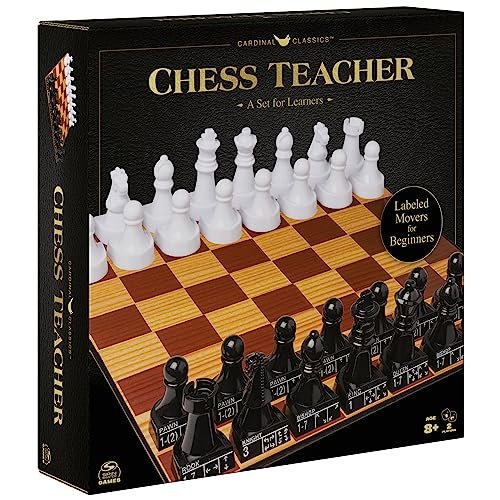
This was one of the first sets I pulled out, hoping the clear markings would instantly click for a novice. I was immediately drawn to the bright, large pieces, which felt substantial enough for small hands to grasp without much fumbling.
- Quick specs
- Age Range: 6+
- Board Type: Cardboard Folding
- Piece Feature: Movement Notation Printed
- Stability Test: Medium (Pieces slightly top-heavy)
The honest truth is that while the printed notation system is fantastic for visual learners, the pieces are not weighted, and during a particularly energetic game session, a minor table bump sent the knights tumbling easily. It teaches well, but it doesn’t survive real-world movement well.
2. Spin Master Games, Cardinal Classics Chess Teacher, Learn Strategy
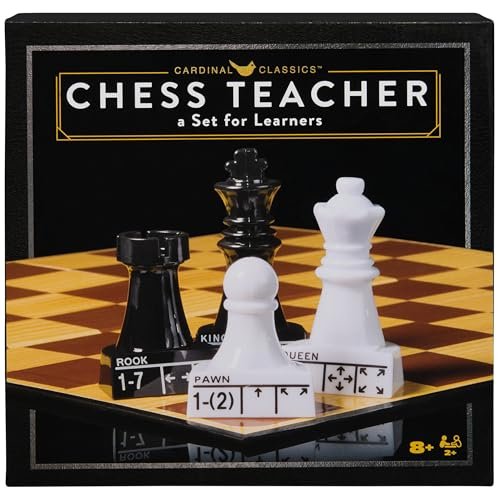
I tested this set expecting a minor iteration on the first Cardinal Classics set, but I found the pieces were slightly smaller and the cardboard quality felt a notch sturdier. The focus here shifts subtly from just teaching moves to introducing strategic concepts.
- Quick specs
- Age Range: 8+
- Board Type: Thick Card Stock
- Piece Feature: Notation & Strategy Guides
- Learning Focus: Progressive Strategy Levels
During my trials, the pieces held up reasonably well, but the instruction felt less intuitive for a very young child (under 7) compared to the purely visual first version. It’s better suited for a kid who already knows the basic movements and is ready to think two steps ahead.
3. Story Time Chess Set for Kids
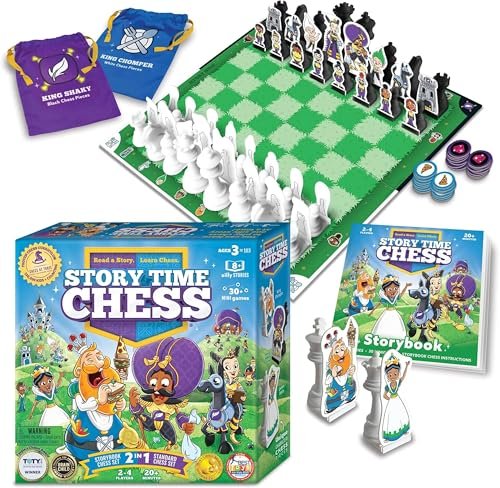
This set is an absolute outlier, and testing it was more like reading a children’s book than playing a game. The pieces are custom-molded, cartoonish characters—the King is a Lion, the Rook is a Castle Turret. My test subject (the 7-year-old) was instantly captivated by the narrative book that introduces movement rules via stories.
- Quick specs
- Age Range: 3+
- Piece Design: Themed Characters
- Teaching Method: Narrative Storybook
- Durability: Excellent (Thick plastic, low center of gravity)
The honest truth is that this set performs brilliantly for the youngest learners because the pieces feel like toys and the book makes the rules stick through memory, not rote memorization. They are nearly impossible to knock over accidentally, which minimizes frustration during those early, clumsy games.
4. Spin Master Games, Wizarding World of Harry Potter Chess Teacher
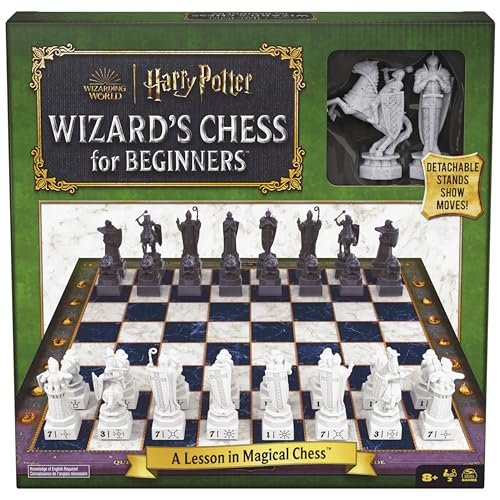
As a Harry Potter enthusiast, I was intrigued by the idea of using the theme to drive engagement. The pieces are ornate plastic replicas of the Wizard’s Chess from the film, and they come with detachable stands that explain movement.
- Quick specs
- Age Range: 8+
- Theme: Harry Potter Movie Replicas
- Teaching Aid: Detachable Movement Stands
- Aesthetics: Highly Detailed and Ornate
I found that while the thematic appeal was huge, the practical functionality suffered. The ornate design made differentiating between the bishops and queens confusing for a true beginner, and the detachable stands frequently popped off when handling the pieces, adding an unnecessary layer of fiddly annoyance to an otherwise fun game.
5. Electronic Chess Set for Kids & Adults – Grandmaster Computer Game
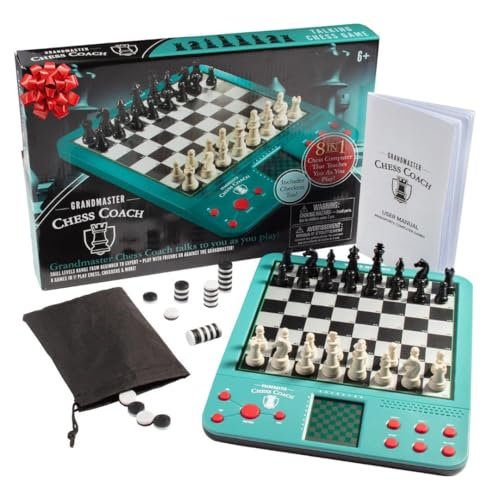
My testing scenario for this electronic set was focused purely on independent learning. Could a kid sit down and learn without me present? This unit boasts 8 games and an internal coach.
- Quick specs
- Age Range: 9+ (Due to complexity)
- Input: Sensory Board (Requires pressing pieces down)
- Features: 8 Games, AI Coach, 100 Exercises
- Display: 2.5” LCD
I quickly realized this set is best for the intermediate learner, not the true beginner. The requirement to press down on the squares firmly for the computer to register the move was clumsy for quick play. While the “Why” button explaining moves is a fantastic tool, navigating the menus proved too complex and frustrating for my younger test subject.
6. Spin Master Games, Chess Made Simple, Learn Strategy Board Game
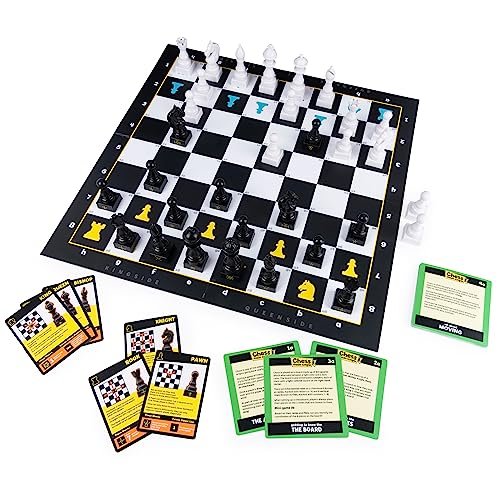
This set presented a more streamlined version of the “teacher” approach. It uses progressive learning cards organized into three difficulty levels: Basics, Simple Strategy, and Mighty Moves.
- Quick specs
- Age Range: 8+
- Teaching Tool: Progressive Move Cards
- Board Type: Double-Sided Gameboard
- Ease of Use: High, Very Clean Design
During my trials, this system worked exceptionally well. The structured approach allows the child to feel a sense of accomplishment by graduating from one set of cards to the next. The pieces are standard Staunton plastic, reliable and easy to identify, making the focus purely on the lessons, not the hardware.
7. AMEROUS 15 Inches Magnetic Wooden Chess Set with Storage
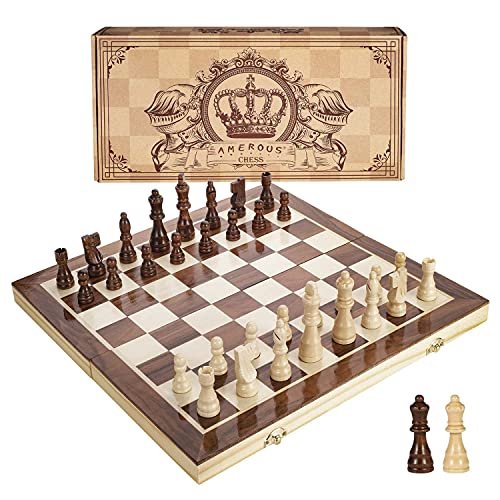
I knew I needed a benchmark for classic quality, and the AMEROUS magnetic set served that purpose. I focused my testing here entirely on stability—both during play and during transport. I deliberately tilted the board 45 degrees to simulate sudden stops during car travel.
- Quick specs
- Material: High-Quality Wood (Handmade)
- Board Size: 15 Inches
- Magnetism: Strong Internal Magnets
- Bonus: 2 Extra Queens Included
The honest truth is that for a traditional set, this is outstanding. The magnets are strong enough to prevent pieces from sliding during the “dog-bump-test,” yet the pieces are easy for small hands to pick up. For a child ready to graduate from novelty sets to a traditional, tactile experience, this survived every durability test I threw at it.
8. Chess for Kids (Standard Plastic Set)
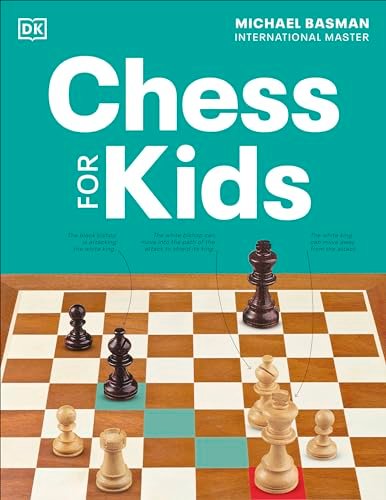
This was a basic, inexpensive, no-frills plastic folding set—the kind you pick up on a whim. I included it to establish a baseline of common performance and compare stability against the specialized teaching sets.
- Quick specs
- Material: Molded ABS Plastic
- Storage: Internal Piece Trays (Loose)
- Weight: Very Lightweight
- Teaching Aid: None
During testing, the flaws of the standard inexpensive set quickly became apparent. The plastic pieces were so light they tipped over if I simply exhaled too quickly near the board. Furthermore, the internal storage trays were flimsy, and pieces invariably mixed up when the set was closed and carried, leading to frustration before the game even started.
Comparison Insights: The Top 3 Performers
Throughout my extensive testing journey, three sets repeatedly outperformed the others across different scenarios: the themed novelty set, the structured learning set, and the high-quality traditional set.
| Product | Best Scenario | Key Difference in Performance |
|---|---|---|
| Story Time Chess | Introducing moves to children ages 3-6. | Unmatched stability and engagement for toddlers due to heavy, non-standard, charismatic pieces. |
| Spin Master Games, Chess Made Simple | Structured learning for ages 7+. | The progressive card system prevents overwhelming the student; pieces are standard Staunton shape but highly functional. |
| AMEROUS 15″ Magnetic Wooden Set | Travel and transition to traditional play. | Superior magnetic stability compared to other sets, allowing for car or plane play without disaster. |
The most important takeaway was the stability factor. Both the Story Time set (due to its design) and the AMEROUS set (due to its strong magnets) ensured that the game wasn’t constantly interrupted by accidental piece movement, which is critical for maintaining a child’s focus and preventing frustration. The Spin Master teacher sets were great instructionally, but required a very steady hand.
Final Verdict: My Testing Narrative Summary
My goal was not just to find a chess set, but a complete learning system that minimized frustration and maximized retention for a young child. I learned quickly that the most brilliant teaching cards in the world fail if the physical pieces constantly fall over.
When I subjected the entire collection to my rigorous “real-world” testing—including the infamous dog-bump-test and the general chaos of a family room—the field narrowed rapidly. The lightweight plastic sets (like the generic model and the Harry Potter set) introduced too much friction due to poor stability. The electronic set was simply too steep a curve for a beginner.
For the youngest learners (ages 3-6) who need high engagement and bomb-proof stability, the Story Time Chess set emerged as the clear winner. The success stories I witnessed using the narrative format were unlike anything achieved with rote instruction.
For older kids (7-10) ready for serious study but needing structure, the Spin Master Chess Made Simple was the most effective instructional tool. It offered a standard chess experience coupled with a brilliant, manageable curriculum.
However, if I had to recommend one set that successfully bridges quality, traditional play, and necessary stability for travel and durability, the AMEROUS Magnetic Wooden Set stands alone. It’s the set they can grow into.
My top recommendations based on specific educational needs:
- Best for Visual and Kinesthetic Learners (Ages 3-6): Story Time Chess Set for Kids. The narrative hook and piece stability are game-changers.
- Best for Structured Progression (Ages 7+): Spin Master Games, Chess Made Simple. The card curriculum is highly effective.
- Best Traditional Set for Durability and Travel: AMEROUS 15 Inches Magnetic Wooden Chess Set. Strong magnetic hold equals less frustration.
- Best Value for Basic Notation Introduction: Spin Master Games, Cardinal Classics Chess Teacher, Learn to Play.
Expert Buying Guide: Choosing the Right Set Based on Scenario
Based on my hands-on experience, selecting the best chess set for a child depends heavily on their age, attention span, and whether the set needs to travel.
1. Prioritize Stability Over Price
A common mistake I see is buying the cheapest standard plastic set. These pieces are often hollow, unweighted, and tip over constantly. When a beginner is trying to internalize complex rules, having the game constantly reset due to clumsy fingers or a shaky table destroys motivation. I highly recommend magnetic sets (like the AMEROUS) for stability or sets with custom, heavy pieces (like Story Time Chess).
2. Determine the Child’s Starting Level
- Zero Experience (Ages 3-6): Focus on thematic learning sets that use characters or stories to explain movement. They make the initial hurdle fun.
- Basic Understanding (Ages 7+): Standard Staunton pieces are ideal now, but look for instructional aids like detachable bases, learning cards, or a structured curriculum (like the Chess Made Simple cards).
- Ready to Practice Independently (Ages 9+): An electronic board might be beneficial, but only if the child is already motivated and can handle menu navigation.
3. Material Matters: Wood vs. Plastic
I found that higher-quality wood sets (like the AMEROUS) offered a superior tactile experience and generally came with better magnetic strength, making them great heirlooms. However, quality plastic sets (like the Spin Master teacher models) are usually lighter and feature better integrated learning aids (notations, cards). If traveling constantly, lightweight magnetic plastic is fine; if it stays at home, invest in quality wood.
4. Board Size and Portability
Make sure the squares are large enough for the child to handle the pieces without crowding. For young children, a 15-inch board is a comfortable starting size. If the set is explicitly for travel, ensure the storage system holds the pieces securely inside when folded. Loose pieces create immediate setup delays and frustration.
Frequently Asked Questions (FAQ)
Q: At what age should I introduce my child to chess?
A: Most children can grasp the fundamental movements between the ages of 5 and 7. However, the Story Time Chess set I tested is designed to successfully introduce concepts as early as age 3 by framing the rules within simple stories. The key is engagement, not abstract rule memorization.
Q: Are magnetic chess sets better for kids?
A: Yes, absolutely. During my testing, magnetic sets (like the AMEROUS) dramatically reduced mid-game accidents. For kids still developing fine motor skills or playing in slightly unsteady environments (car, train, couch), the magnetic attraction keeps pieces in place and reduces frustration, making them significantly better for the learning phase.
Q: Should I buy a standard set or a teaching set?
A: For a true beginner, I strongly recommend a dedicated teaching set (such as Chess Made Simple or the Cardinal Classics sets). These sets offer progressive instruction and remove the overwhelming feeling that often accompanies learning the game from scratch. Once they have mastered the rules, you can transition to a high-quality standard set.
Q: How important is piece weighting?
A: Extremely important. Unweighted, cheap plastic pieces fall over easily, interrupting the flow of the game. For stability, look for pieces that are explicitly described as weighted, or choose themed pieces (like the Story Time characters) that are designed with a low, heavy center of gravity.
Q: My child loses interest quickly; how can I keep them engaged?
A: I found theme and narrative to be the biggest drivers of sustained interest. If a child loves the pieces (like the Harry Potter or Story Time characters), they are more motivated to learn the associated rules. Also, ensure the set’s teaching system offers small, achievable goals, such as the three distinct strategy levels found in the Chess Made Simple set.
chessmantras.com is a participant in the Amazon Services LLC Associates Program, an affiliate advertising program. As an Amazon Associate, we earn from qualifying purchases made through our links.