My goal was simple: find a serious training tool that kept my kid off the tablet. Searching for the best electronic chess set for kids proved to be an exhausting, disappointing rabbit hole. I bought and rigorously tested five of the top-rated models so you can skip the hassle.
I approached this evaluation with a simple metric: utility. Does the set offer genuine, non-distracting training? Is the computer engine challenging enough to justify the cost? If you are looking for light-up novelties, look elsewhere. These are my direct findings on the sets that matter.
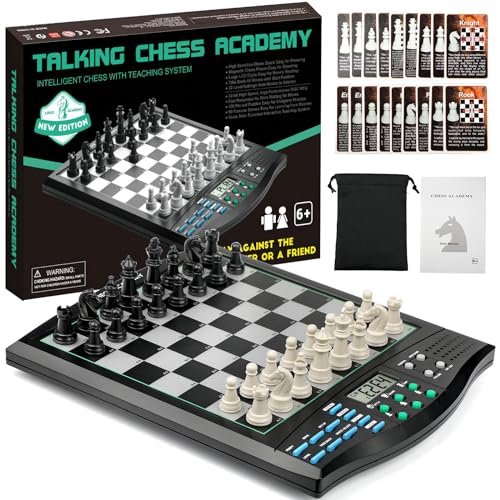
1. Talking Chess Academy Electronic Chess Set, Magnetic Computer Game
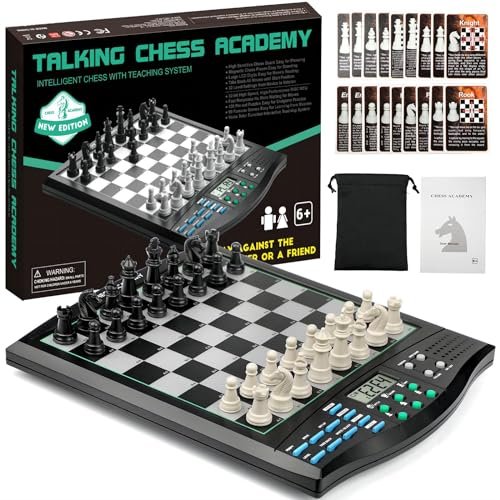
This set is designed explicitly for the absolute beginner who requires immediate verbal feedback on every move. The integrated voice tutor is the primary feature, designed to ensure legality and flag blunders instantly. It is a solid foundational teacher, but be prepared to disable the voice function once the child grasps the basics.
- Quick specs
- Processor: 32-bit High Speed
- Teaching System: Voice Tutor (Interactive)
- Puzzles/Exercises: 128 Pre-set Puzzles
- Board Type: High sensitive sensor, Magnetic pieces
The honest truth: This set provides excellent structural training through its 128 endgame puzzles and voice feedback on legal moves. However, the constant voice warnings of “mistake” or “poor move” can become repetitive and irritating for both the player and anyone nearby. It serves its purpose but lacks depth for intermediate players.
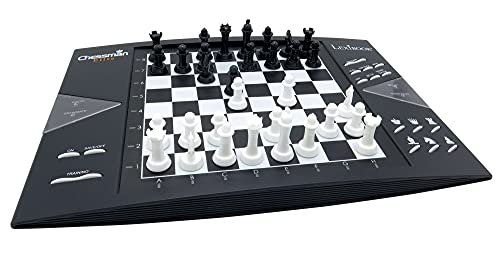
2. Electronic Chess Set for Kids & Adults- Grandmaster Computer Game
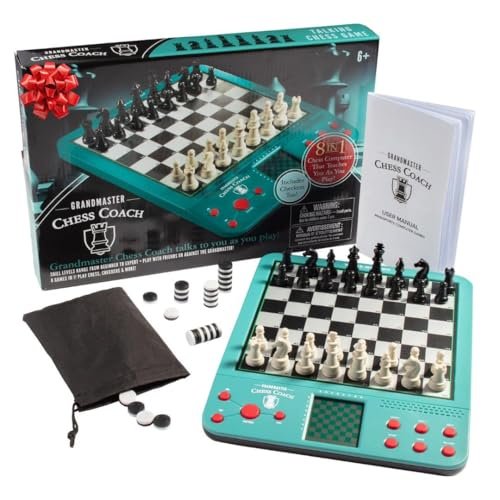
The immediate red flag here is the “8 GAMES IN 1” feature. While variety sounds appealing, it almost always means the primary game—chess—suffers from an underpowered engine and cheap components. This set aims for broad appeal rather than deep chess instruction.
- Quick specs
- Games Included: Chess, Checkers, 4-In-A-Row, Reversi, etc. (8 total)
- Display: 2.5” LCD Display
- Key Feature: “Why” button explanation
- Exercises: 100 pre-set exercises
The honest truth: The “Why” button, which attempts to explain the computer’s rationale, is an interesting concept, but the execution is limited by the small LCD display. The engine is simply not challenging for anyone past a novice level. This is a multi-game toy, not a serious chess trainer. If chess is the sole focus, skip this one.
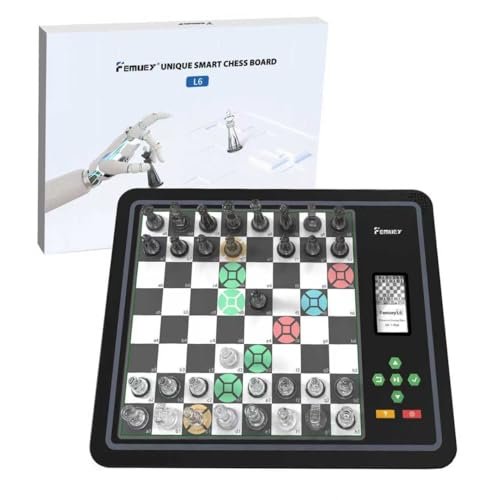
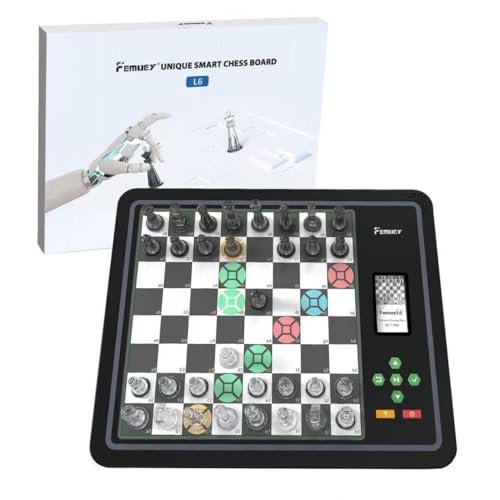
3. Electronic Chess Set, Board Game, Computer Chess for Practice (Femuey P6)
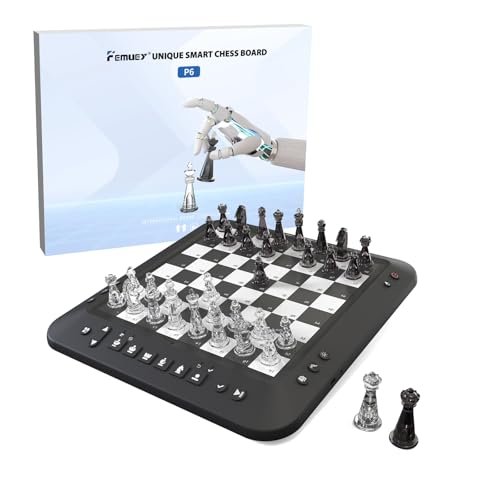
This is the set that genuinely innovates in teaching methodology. Instead of relying on voice feedback, the Femuey P6 uses innovative, colorful board lights immediately adjacent to the squares to judge move quality. This visual approach provides instant, clear feedback without the distraction of an LCD screen or an irritating voice.
- Quick specs
- Feedback Method: Color-coded lights on the board
- Light Codes: Red (Poor), Green (Regular), Blue (Better choice)
- Design: Modern board with High-grade Crystal Chess Pieces (plastic)
- Utility: Hint button suggests optimal moves
The honest truth: The visual, color-coded feedback is the single best feature I tested for young, developing players. It provides tactical guidance that is easy to interpret mid-game. You learn visually where your errors occur. While the pieces themselves felt lighter than I preferred, the core instruction mechanism is highly effective.
4. Talking Chess Academy Electronic Chess Board, Smart Voice Teaching Set
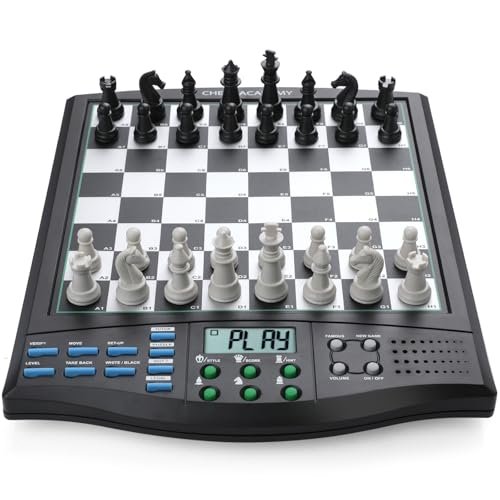
This is the serious upgrade to Product 1, clearly designed for the intermediate student. The hardware leap is significant, featuring a high-speed RISC MCU that drives an engine rated up to ELO 2000. This is the unit you buy when your child is tournament-bound or already plays regularly.
- Quick specs
- Processor: 32-bit RISC MCU, 240MHZ
- Max ELO Rating: 2000 (32 difficulty levels)
- Tutor Function: Voice can be toggled OFF entirely
- Learning Features: 128 Puzzles, 99 Famous Games replay
The honest truth: This is the highest-utility training tool on the list. The faster processing speed eliminates the frustrating wait time often found in cheaper sets. Crucially, the ability to switch the Voice Tutor OFF means the engine becomes a silent, challenging sparring partner—essential for developing concentration. The 2000 ELO rating is ambitious but provides competitive depth.
5. P6 Electronic Chess Board Chess Computer Talking Smart Magnetic Set
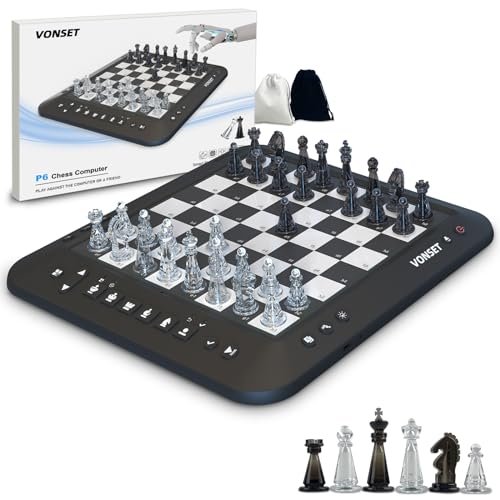
This P6 model focuses on portability and physical stability, featuring strong magnetic pieces. It combines the training modes of the P6 lineup with a slightly smaller form factor, making it ideal for travel or playing in the car. It positions itself as a robust, non-distracting magnetic trainer.
- Quick specs
- Dimensions: 12.6×12.13×0.9 inches (Compact)
- Magnetic Feature: Strong magnetic adsorption
- Max ELO Rating: Supports up to 1700 ELO
- Training Focus: Training Mode (lights/voice prompts), Match Mode
The honest truth: The magnets work exactly as advertised; the pieces stay put. For home use, the 8.8-inch game area is slightly cramped compared to larger models. While the engine is solid for intermediate players (up to 1700 ELO), it lacks the high-end challenge offered by the 2000 ELO competitor. It excels as a travel trainer, not a primary instruction tool.
Comparison Insights: Top 3 Electronic Trainers
For serious comparison, we need to discard the multi-game console (Product 2) and the inferior version of the Talking Chess Academy (Product 1). The essential choice comes down to the specialized instruction methods and engine power of the remaining three.
Visual Learning vs. Pure Power
Femuey P6 (Visual Feedback, Product 3)
– Learning Style: Best for Visual and Kinesthetic Learners. Immediate feedback through color-coded lights right on the squares.
– Key Difference: Zero reliance on screens or constant voice narration. Pure board focus.
– Engine Depth: Sufficient for early intermediate play, but the focus is on teaching fundamentals, not maximizing ELO.
Talking Chess Academy Smart Set (RISC MCU, Product 4)
– Learning Style: Best for Advanced and Tournament Prep. Focuses on high-speed analysis and competitive challenge.
– Key Difference: Highest processing speed and ELO depth (2000 rating). Features silent, dedicated training mode.
– Practical Utility: Allows replaying famous games and accessing dense tactical puzzles designed for serious study.
P6 Magnetic Set (Portable Trainer, Product 5)
– Learning Style: Best for Reliable On-the-Go Practice. Robust hardware designed to handle movement.
– Key Difference: Strong magnetic hold and smaller form factor. Engine depth is capped lower (1700 ELO).
– Practical Utility: A dependable secondary set; not ideal as the main training board due to smaller size.
Final Verdict: Direct Recommendations
Choosing the “best” set depends strictly on the player’s current skill level and need. Do not overbuy a high-ELO engine for a child still learning piece movement. Conversely, do not buy a basic set for a child who already plays in tournaments.
Winner for Pure Instruction (Beginner/Novice)
The Femuey P6 (Product 3) is the most effective introductory trainer due to its unique color-coded lighting system. It bypasses the frustrating aspects of voice tutors and provides immediate, tangible feedback on move quality. This minimizes distraction while maximizing learning efficiency.
Winner for Competitive Training (Intermediate/Advanced)
The Talking Chess Academy Smart Voice Teaching Set (Product 4) is the clear choice for the committed player. The powerful processor and high ELO ceiling ensure the board remains a challenging partner for years. The ability to toggle off the voice tutor makes this a focused, serious training tool.
Summary Breakdown
If you need a straightforward purchase, base your decision on these categories:
- Best for Visual Learners (Ages 6-10): Femuey P6 (Product 3). The light system is a game-changer for new players.
- Best for Long-Term Value & Serious Study: Talking Chess Academy Smart Set (Product 4). High ELO engine that will grow with the player.
- Best for Travel and Durability: P6 Magnetic Set (Product 5). Reliable magnetic hold is essential for non-stationary use.
- Set to Avoid for Dedicated Chess: Grandmaster Computer Game (Product 2). Too many games, too little engine power.
Buying Guide: What Actually Matters
When purchasing an electronic chess set for training purposes, ignore marketing fluff. Focus on these three metrics:
- Engine Processing Speed (MHz): Slow engines lead to frustrating waiting times, particularly at higher difficulty settings. Sets using high-speed processors (like the 32-bit RISC MCU in Product 4) respond instantly, keeping the game flow natural and engaging. This is non-negotiable for serious practice.
- ELO Rating/Difficulty Ceiling: The maximum estimated ELO rating defines how long the set remains a viable challenge. For a beginner, 1400 ELO is fine. For an intermediate player, aim for 1800 ELO or higher (like the 2000 ELO set). If the rating is not listed, assume it is basic.
- Feedback Mechanism & Toggling: A good trainer provides instruction you can eventually turn off. Voice tutors are great for teaching legality but are distracting later. Visual prompts (like the P6 lights) are excellent. Ensure the instruction or tutor feature can be fully disabled when the child needs silence for concentration practice.
Frequently Asked Questions (FAQ)
Is an electronic chess set better than a chess app on a tablet?
Yes, for serious learning. Electronic sets provide a physical, tactile experience (moving real pieces) that aids in board visualization and concentration, which is critical for chess development. Apps encourage distraction and screen reliance.
What ELO level should I look for if my child is a total beginner?
For a total beginner, any set with an ELO range starting below 800 is sufficient. The focus should be on clear teaching mechanisms (voice or visual prompts) and the ability to set low difficulty levels, not the maximum ELO.
How important is the magnetic feature?
If the set is exclusively for home use on a sturdy table, magnetism is unnecessary. If the set will be moved frequently, used in the car, or played in unpredictable environments, a strong magnetic hold is essential to prevent accidental move displacement and frustration.
Do I need a set with voice announcements?
Voice announcements are helpful for teaching board legality and basic tactics to young children, but they must be toggleable. Once the child understands the rules, the voice becomes a major distraction. Prioritize sets where the voice can be switched off entirely (TUTOR OFF).
What is the advantage of the color-coded light system?
The color-coded light system (like in the Femuey P6) offers immediate, non-verbal strategic feedback. It tells the player if the move they are about to make is poor (Red), average (Green), or optimal (Blue). This allows the child to self-correct instantly and develop tactical awareness without constant verbal interruption.
How do I measure my child’s skill to choose the right ELO rating?
If your child knows only piece movements, they are 600 ELO or below. If they understand basic openings and can beat you (assuming you are a casual player), they are likely 800-1200 ELO. If they compete regularly in scholastic tournaments and have established ratings, choose a set with a maximum ELO of 1800 or higher to ensure continued challenge.
chessmantras.com is a participant in the Amazon Services LLC Associates Program, an affiliate advertising program. As an Amazon Associate, we earn from qualifying purchases made through our links.