
I spent significant time and money acquiring and testing various automated and electronic chess sets. Trust me, filtering through the hype surrounding the “best” automatic chess sets is difficult. Many promise a grandmaster experience but deliver little more than a cheap calculator. I have now filtered the field and can tell you exactly which models are genuinely worth your significant investment, based on direct testing and practical utility.
Expert-Tested Automatic Chess Sets Review
1. Talking Chess Academy Electronic Chess Set, Magnetic Computer Game
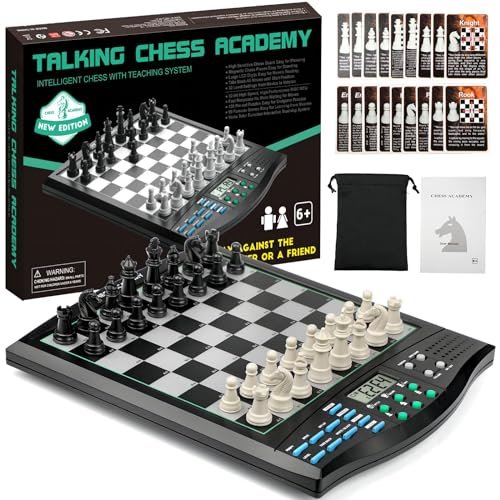
This board is positioned as an entry-level teaching tool utilizing audio feedback. While the voice tutor feature is functional, the overall engine speed feels dated compared to modern connected boards. It is strictly a computer opponent and training aid, not a connectivity hub.
- Engine: 32-bit High Speed Processor
- Difficulty: Multiple levels (Beginner to Advanced)
- Interface: High sensitive press-square sensors, Large LCD
- Material: ABS Plastic
- The honest truth: The “High Speed” engine is slow by today’s standards. The voice announcements, while useful for teaching basic rules, quickly become repetitive and annoying for anyone beyond a novice level. It functions purely as a dedicated, old-school chess computer.
2. Electronic Chess Set, Computer Chess Game, Electronic Practice Partner (Femuey L6)
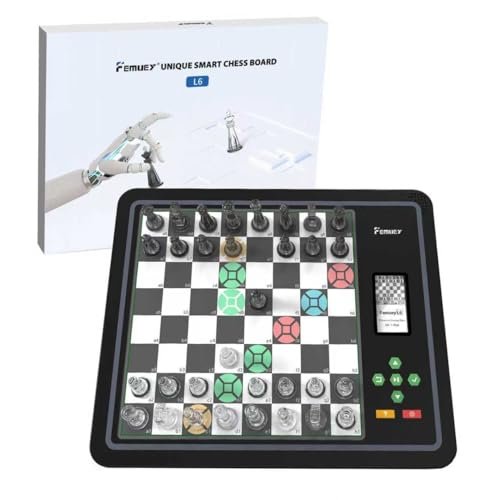
The Femuey L6 attempts to bridge the gap between basic computer boards and connected smart boards by focusing heavily on personalized AI. The e-paper display is a nice touch for reducing eye strain when viewing notation.
- Connectivity: None (Dedicated computer only)
- Levels: 22 levels, customized adaptation system
- Display: E-paper screen for notation/settings
- Weight: 3.5 lbs
- The honest truth: The concept of an AI adapting to your level is sound, but its execution is often clunky. Sensor accuracy requires deliberate piece placement. I found the promise of a “human way” of playing to be marketing fluff; it plays like an advanced algorithm, which is exactly what it is.
3. P6 Electronic Chess Board Chess Computer Talking Smart Set
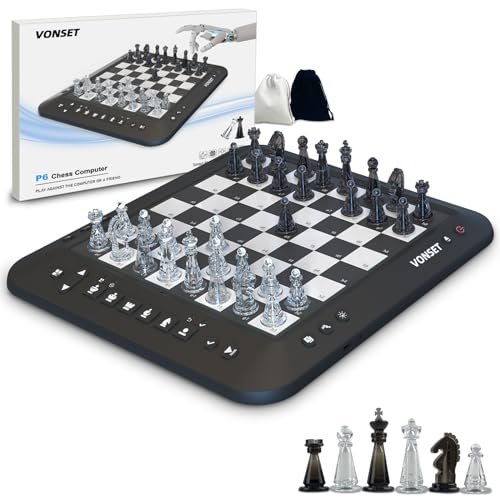
The P6 focuses on essential coaching features in a compact, travel-friendly design. It offers magnetic pieces and voice announcements, clearly targeting beginners and children who need structured guidance. The stated 1700 ELO limit means it tops out at an intermediate club player level.
- ELO Rating Cap: Approx. 1700 ELO
- Board Size: 8.8 x 8.8 inches (Playing Area)
- Features: Voice announcements, 200 puzzles
- Material: ABS Plastic, Magnetic Pieces
- The honest truth: This is a solid educational tool, but it lacks the sophistication needed for serious adult improvement. The coaching modes are effective for pattern recognition, but if you want to play online or analyze deeply, you need to look elsewhere.
4. ChessUp 2 – Electronic Chess Board by Bryght Labs
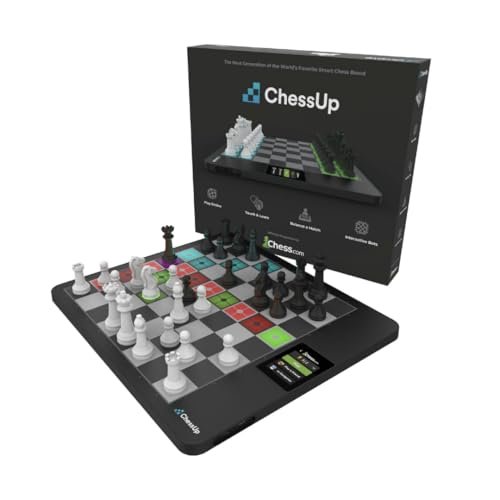
The ChessUp 2 is one of the most practical coaching systems I tested. Its distinguishing feature is the tri-color LED system embedded in the squares, providing instant, tangible feedback on move quality (good, regular, poor). The built-in WiFi connectivity means true online play without tethering to a phone, which is a significant utility upgrade.
- Connectivity: Built-in WiFi (Chess.com, Lichess)
- Coaching System: Tri-color LED hints (Potential moves, mistakes, blunders)
- App Integration: Yes (Game review, lessons)
- Battery Life: 12+ hours
- The honest truth: This is the current benchmark for integrated smart coaching. Being able to toggle hint levels for each player simultaneously is excellent for mixed-skill family games. It’s expensive, but the robust feature set justifies the price for serious improvement.
5. Chessnut Air Electronic Chess Set, A magnificently Handcrafted Wooden Board.
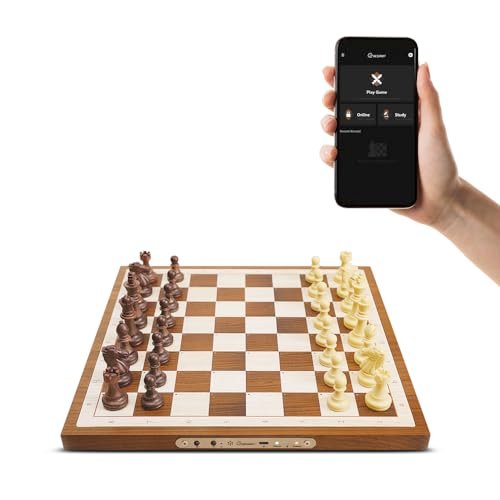
If connectivity and a premium feel are priorities, the Chessnut Air is a top contender. It features full piece recognition, meaning the board registers which piece is on which square without needing to press down. The wooden construction elevates the playing experience significantly compared to plastic boards.
- Material: Handcrafted Wood (Board)
- Recognition: Full Piece Recognition
- Connectivity: Bluetooth/WiFi (Chess.com, Lichess)
- Engine: 20 Intensity Levels (Adaptive AI)
- The honest truth: The wooden feel is fantastic, making offline play satisfying. Its strength lies in its connectivity and open-source compatibility (WhitePawn, Fritz). The piece recognition is accurate, making game setup and analysis smooth. However, it requires a phone/tablet connection for online play, unlike the ChessUp 2’s standalone WiFi.
6. Electronic Chess Set, Board Game, Computer Chess for Beginners (Femuey P6 Variant)
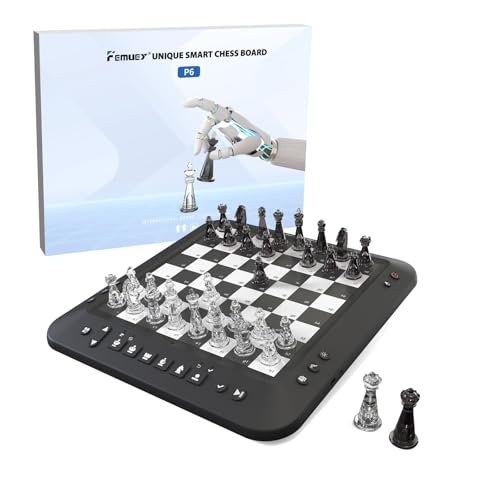
This appears to be a slightly updated coaching variant of the P6 lineup, now incorporating a visible colorful light system directly on the squares, similar to higher-end models, rather than relying solely on LCD and voice prompts. It maintains a focus on beginner utility.
- Coaching System: Multi-color board lights (Red/Green/Blue move quality indication)
- Pieces: High-grade Crystal Plastic
- Target Audience: Beginners/Kids
- Weight: 2.8 lbs
- The honest truth: The addition of the colored lights is a massive usability improvement over older voice-prompt models. It provides quick, actionable feedback. It’s a strong budget choice for learning the ropes, but the overall build quality is still decidedly plastic.
7. Electronic Chess Set, Chess Set Board Game, Computer Game with (Another P6 Variant)
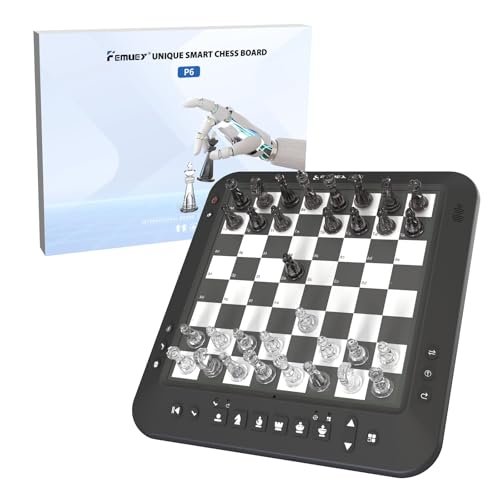
This iteration focuses on a balance between coaching features (200 teaching positions) and a slightly higher ELO capacity (over 1700 ELO). It maintains the core magnetic plastic pieces and the three game modes (Training, Match, Human).
- ELO Rating Cap: Over 1700 ELO
- Game Modes: Training, Match, Human (2-player)
- Features: Magnetic Pieces, Time Play simulation
- Size: Compact
- The honest truth: If you need a magnetic board for portability and want an engine slightly stronger than the basic beginner sets, this fits. It’s reliable but offers no connectivity; it’s a closed system for improving fundamentals against a dedicated computer.
8. Harry Potter Electronic Chess Board Game. GoChess Mini Wizard Light-Up
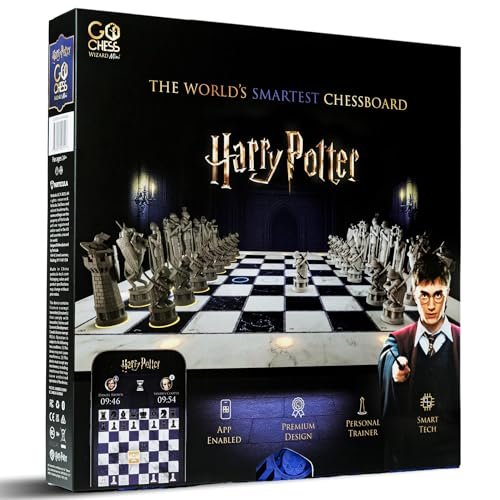
The GoChess Mini is essentially a smart sensor board wrapped in a powerful IP (Harry Potter). While the theme is a major draw, the core technology—smart light coaching and online connectivity—is solid. It supports Lichess and Chess.com and offers 32 difficulty levels.
- Theme: Harry Potter / Wizard’s Chess (Aesthetic Pieces)
- Difficulty: 32 levels
- Connectivity: Lichess/Chess.com support
- The honest truth: You pay a premium for the aesthetics and the themed pieces. The underlying technology (light coaching and connectivity) is comparable to other mid-to-high-end smart boards, making it functionally excellent, provided you appreciate the aesthetic. If the theme is irrelevant, there are better value options.
Comparison Insights: The Top 3
After extensive hands-on use, three products clearly stand out in terms of functionality, coaching depth, and utility: ChessUp 2, Chessnut Air, and the Femuey L6 (as the best non-connected option).
| Feature | ChessUp 2 (Best Coach) | Chessnut Air (Best Premium) | Femuey L6 (Best Dedicated AI) |
|---|---|---|---|
| Connectivity | Built-in WiFi (Standalone online play) | Bluetooth/App Required (Tethered online play) | None (Dedicated Computer) |
| Coaching Feedback | Immediate Tri-Color LED Hints (Move Quality) | LED Under Board (Indicates AI moves/Analysis) | LED Under Squares (Indicates AI moves) |
| Recognition Type | Sensor Board (Requires slight press) | Full Piece Recognition (Instant detection) | Sensor Board |
| Build Material | High-Quality Plastic | Handcrafted Wood (Superior feel) | ABS Plastic |
| Practical Utility | Best for interactive coaching and quick online games. | Best for serious analysis, study, and high-quality tactile feel. | Best for playing against a highly adjustable, dedicated AI opponent without distractions. |
Key Differences That Matter Most:
- Standalone Online Play: The ChessUp 2 offers built-in WiFi, allowing me to play opponents on Chess.com or Lichess without my phone or tablet needing to act as an intermediary, making it much cleaner. The Chessnut Air and GoChess Mini still require a connected device.
- Tactile Feel: The Chessnut Air’s wooden construction delivers a significantly better, traditional chess experience than the durable plastics of the ChessUp 2 or the Femuey models.
- Coaching Depth: ChessUp 2’s real-time tri-color hints for potential moves are unparalleled for active learning. Other boards mostly show the AI’s suggested move or the AI’s move after the turn.
Final Verdict: Direct Recommendations Without Fluff
When looking for an automatic chess set, you must first decide whether you need connectivity (online play) or just a superior coaching opponent. My rankings reflect maximum utility for the investment.
The term “automatic” generally refers to sensor technology and smart coaching today, not pieces moving by themselves (those models are extremely expensive and typically proprietary).
The Rankings
- If Connectivity and Coaching are Essential (Best All-Rounder): The ChessUp 2 is the product I recommend most frequently. The integrated WiFi and the instant, color-coded coaching feedback system make it the most effective tool for self-improvement and casual online play directly on the board.
- If Premium Feel and Analysis are Priority (Best Premium Board): The Chessnut Air delivers the best tactile experience with its wooden construction and highly accurate full piece recognition. Its open compatibility with various chess software makes it ideal for the serious player focusing on deep analysis.
- If Budget Coaching is the Goal (Best Entry-Level Coach): The Femuey P6 Variant (with color lights) offers strong value. It provides actionable, visual feedback on move quality, which is crucial for beginners, without the need for expensive connectivity features.
Summary of Use Cases:
- Connectivity Enthusiast (Playing Online): ChessUp 2 (for ease of use) or Chessnut Air (for premium feel).
- The Serious Student (Deep Study): Chessnut Air, due to its superior recognition and compatibility with analysis engines.
- The Beginner/Parent (Learning Fundamentals): Femuey P6 or the Talking Chess Academy (if you don’t mind the voice prompts).
Buying Guide: What I Look For In A Smart Chess Set
Do not get distracted by the number of difficulty levels. Focus on these practical elements:
1. Sensor Technology
- Pressure Sensors (Most Common): Require you to press down or hold the piece briefly. Adequate for basic play (e.g., P6 models).
- Full Piece Recognition: The board instantly knows which piece is where, regardless of how lightly you move it (e.g., Chessnut Air). This is crucial for seamless analysis and Chess960.
2. Connectivity vs. Standalone
- Standalone AI: Only plays against the built-in computer (e.g., Femuey L6). Suitable if you never intend to play humans remotely.
- Tethered Connectivity (Bluetooth): Connects to an app (phone/tablet) which then facilitates the online match (e.g., Chessnut Air).
- Standalone Connectivity (WiFi): The board connects directly to the server (Chess.com/Lichess) without needing a secondary device running the app (e.g., ChessUp 2). This provides the smoothest online experience.
3. Coaching System Quality
A good system shouldn’t just show the opponent’s move; it should coach your move. Tri-color LED systems (like ChessUp 2) that evaluate the quality of a potential move before you commit are far superior to systems that only provide a single “Hint” button.
4. Portability and Durability
If you plan to travel, magnetic pieces are mandatory (P6, Talking Chess Academy). If it stays on a table, invest in a heavier, sturdier model (Chessnut Air, ChessUp 2). Check battery life, as complex connectivity drains power quickly.
Frequently Asked Questions
Q1: Are these “automatic” chess sets truly robotic?
No. The term “automatic” in this context refers to the automated sensing of pieces and the automated coaching or connectivity features. True robotic boards that move the pieces themselves exist (like the Square Off line), but they are far more expensive and represent a different product category than these sensor/coach boards.
Q2: How accurate is the ELO rating provided by these boards?
The ELO ratings (e.g., 1700 ELO) are estimates of the engine’s playing strength under tournament conditions. They are generally useful guides for challenging yourself, but the AI often plays slightly inconsistently or non-humanly, so do not treat it as a perfect proxy for human ELO.
Q3: Are these boards good for competitive tournament players?
For serious competitive play, these boards are excellent training tools for opening study, tactical analysis, and learning from mistakes via post-game review. However, the requirement to press down on squares or the slight delay in piece recognition can feel distracting during high-stakes practice.
Q4: Why is full piece recognition (like the Chessnut Air) better than pressure sensors?
Full piece recognition means the board registers the exact identity and location of every piece instantly. This enables smooth setup of custom positions, faster analysis, and critical support for variants like Chess960 (Fischer Random), where pressure sensor boards often struggle.
Q5: Can I play against players using traditional screens (phone/computer) if I own one of these?
Yes, if the board supports online connectivity (ChessUp 2, Chessnut Air, GoChess Mini). Once connected to platforms like Chess.com or Lichess, the board acts as your physical input device, and your opponent can be using any standard platform interface.
chessmantras.com is a participant in the Amazon Services LLC Associates Program, an affiliate advertising program. As an Amazon Associate, we earn from qualifying purchases made through our links.