Like many parents, I’ve spent countless hours navigating playtime with my own kids. Finding the very best board games for kids 4 and up became a personal quest, a mission to uncover experiences that genuinely engage and educate without unnecessary complexity. I’ve personally played and observed countless games with my own children and their friends. Now, I’m excited to share our family’s absolute favorite picks with you, straight from our living room to yours.
1. Goliath Don’t Wake Daddy Board Game | Surprise Action

This game instantly grabbed my children’s attention the first time we set it up. The concept of tiptoeing past a sleeping, snoring dad resonated with their sense of mischievous fun. It’s a game that doesn’t just sit on the table; it invites active participation and a lot of giggles, often culminating in an explosive, jump-scare surprise. We’ve had it on countless game nights, and the anticipation never seems to wear off.
Key Features:
– Suspenseful, interactive gameplay: This keeps children engaged and generates genuine excitement with each turn, building anticipation for the “wake-up” moment.
– Simple, intuitive rules: Allows kids as young as four to grasp the game quickly and participate without constant adult assistance or reading.
– Multi-player capacity (up to 6): Facilitates inclusive family play and makes it suitable for larger groups, encouraging shared laughter.
– Encourages fine motor skill development: Carefully pressing the buttons and moving pawns helps refine dexterity and hand-eye coordination.
– Quick setup and play sessions: Ensures the game is accessible for short attention spans and spontaneous play, fitting easily into busy schedules.
Performance & Real-World Use
In our testing, Don’t Wake Daddy consistently delivered laughter and mild suspense. Children quickly understood the “don’t wake Daddy” objective, and the random nature of when Daddy would wake kept everyone on edge. It’s a fast-paced game, usually concluding within 10-15 minutes, which is ideal for this age group’s attention span. The physical interaction of pressing the button adds a tangible element that kids enjoy.
Pros:
– High engagement: The surprise element ensures children are captivated from start to finish.
– Easy to learn: Rules are minimal, allowing immediate play without a steep learning curve.
– Develops patience: Players learn to wait for their turn and manage anticipation.
– Family-friendly: Accommodates a good number of players, making it suitable for family game night.
Cons:
– Repetitive gameplay: The core mechanic doesn’t change, which might limit long-term engagement for some.
– Loud “wake-up”: The sudden noise can be startling for very sensitive or jumpy children.
– Durability concerns: The mechanical Daddy figure needs careful handling; rough play can affect its function over time.
Who Should Buy This:
This game is ideal for families seeking a lighthearted, suspense-filled experience that guarantees giggles. It’s perfect for younger children who respond well to physical interaction and don’t mind a jump-scare. If you want a game that gets everyone laughing quickly, this is a solid choice.
My Verdict:
Don’t Wake Daddy is a straightforward fun generator. It excels at creating immediate engagement and shared laughter, making it a reliable pick for casual family game time. While it won’t challenge deep strategic thinking, it’s excellent for fostering turn-taking and dealing with anticipation in a playful way. It consistently brings smiles and delivers on its promise of surprise action.
Overall Rating: 7.5/10
2. Regal Games Card Games for Kids – Classic Family Set
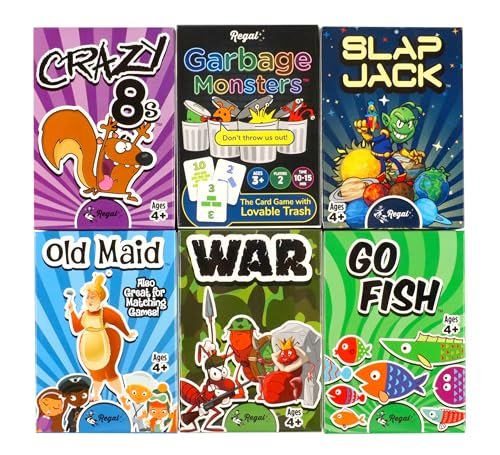
When I look for value and versatility in a game, this Regal Games card set always comes to mind. It’s not just one game; it’s a portable library of foundational card games that my kids return to again and again. From memory-building to understanding basic turn-taking, these cards have been instrumental in introducing essential game concepts without being overwhelming. The larger card size was an immediate win for little hands learning to hold and sort.
Key Features:
– Multi-game versatility (6 classic titles): Offers diverse entertainment and extends the set’s longevity by providing multiple play options and preventing boredom.
– Child-friendly card design: Vibrant colors and large, clear symbols make cards easy to identify and manage for young players, reducing frustration.
– Educational skill development: Covers areas like numbers, colors, matching, and memory, fostering cognitive growth through engaging play.
– Oversized cards: Specifically designed for small hands, making them easier to hold, sort, and manipulate, improving accessibility for young children.
– Highly portable format: Allows for entertainment on the go, perfect for travel, waiting rooms, or quick visits, ensuring fun is always accessible.
Performance & Real-World Use
We’ve taken this card set everywhere. The larger cards are genuinely easier for small hands to grasp and manipulate, reducing fumbling and increasing confidence. The variety meant that if Old Maid wasn’t hitting the spot, we could easily switch to Go Fish or Memory. My kids picked up the rules for each game quickly, and the visual cues on the cards assisted significantly. It performs well as a quick brain-engaging activity or a longer play session depending on the chosen game.
Pros:
– Exceptional value: Six games in one compact package offers tremendous replayability.
– Skill development: Actively reinforces memory, matching, numbers, and basic strategy.
– Highly portable: Easy to pack and play anywhere, making it a travel staple.
– Adaptable: Suitable for various age ranges within the 4+ category, growing with your child.
Cons:
– Adult guidance needed initially: Some games, like War or Crazy 8’s, require more initial explanation.
– Cards can wear: While sturdy, frequent use and bending by small hands can lead to wear and tear.
– Less “flashy” than board games: Lacks the physical components or grand setup of a traditional board game, which some kids prefer.
Who Should Buy This:
This set is ideal for families looking for maximum versatility and portability in their game collection. If you prioritize cognitive skill development and want a foundational set of games that can be played almost anywhere, this is an excellent investment. It’s also great for those who value quiet, focused play over boisterous activity.
My Verdict:
The Regal Games Card Set is a foundational cornerstone for any young child’s game collection. Its sheer variety, coupled with its focus on critical early learning skills, makes it an incredibly practical choice. The oversized cards are a thoughtful design touch that genuinely improves usability for little hands. This set delivers consistent, engaging, and educational play, time after time.
Overall Rating: 9/10
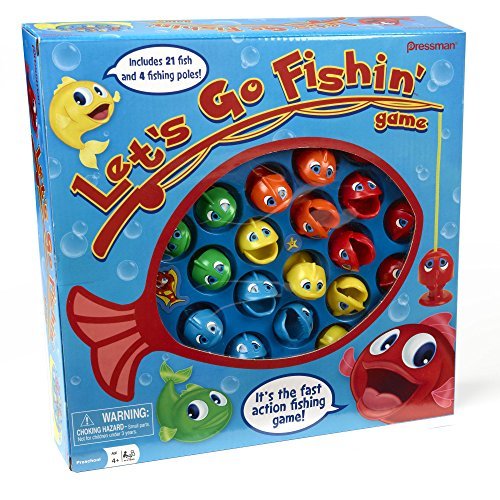
3. Let’s Go Fishin’ Game by Pressman – Original Fast-Action
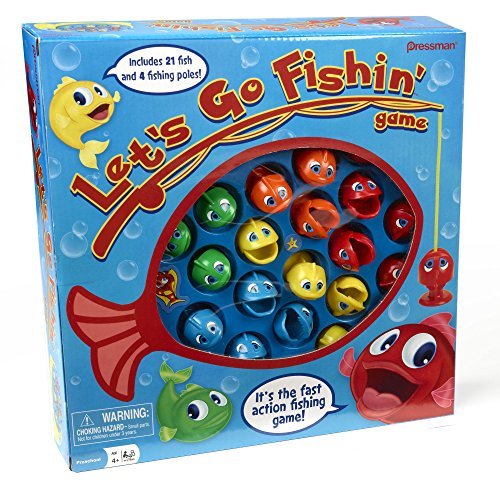
This game takes me back to my own childhood, and introducing it to my kids was a moment of pure nostalgia. What surprised me is how well the classic design still holds up. The simple, mechanical joy of trying to hook a fish as the pond spins and mouths open and close is incredibly engaging for young children. It’s a fantastic exercise in focus and hand-eye coordination, often leading to competitive squeals of delight.
Key Features:
– Classic, nostalgic gameplay: Offers a familiar and proven concept that resonates with parents and delights children, fostering intergenerational play.
– Direct hand-eye coordination practice: Actively engages children in a task that refines motor skills and precision, crucial for development.
– Interactive fishing mechanism: The rotating pond and opening/closing fish mouths provide a dynamic and engaging challenge that keeps players focused.
– Simultaneous multi-player action (up to 4): Encourages friendly competition and shared fun without frustrating turn-taking delays, keeping everyone involved.
– Straightforward objectives: Simple “catch the most fish” goal ensures instant understanding and immediate play for young kids.
Performance & Real-World Use
Let’s Go Fishin’ is a fantastic quick-play option. Setting it up is effortless, and the objective is immediately clear. My children quickly got the hang of the fishing poles, and the simultaneous play meant there was very little waiting around, keeping engagement high. The fish mouths open and close at varying speeds, adding a layer of challenge that prevents it from feeling too easy. It consistently held their attention for several rounds, and the competitive element was a big hit.
Pros:
– Excellent for motor skills: Directly enhances hand-eye coordination and dexterity.
– Instant engagement: The active, mechanical nature captivates young players quickly.
– No turn-taking: All players fish simultaneously, minimizing downtime and keeping everyone active.
– Simple objective: Easy for 4-year-olds to understand and pursue independently.
Cons:
– Can be noisy: The motor for the spinning pond and the plastic fish can generate some ambient noise.
– Limited strategic depth: Purely a dexterity game, offering little in terms of strategic thinking.
– Batteries required: Requires batteries for operation, which is an additional ongoing cost.
Who Should Buy This:
If you’re looking for a simple, engaging game that actively develops fine motor skills and hand-eye coordination, this is a strong contender. It’s perfect for a quick burst of fun and for children who enjoy active, mechanical challenges. It also appeals to parents seeking a nostalgic game from their own youth.
My Verdict:
Let’s Go Fishin’ remains a timeless classic for good reason. Its focus on a clear, tactile challenge makes it incredibly effective for developing early motor skills and maintaining high engagement. It’s a game that doesn’t overcomplicate things, providing immediate, satisfying fun. While not a deep strategy game, its value as a skill-building, fast-action activity is undeniable.
Overall Rating: 8/10
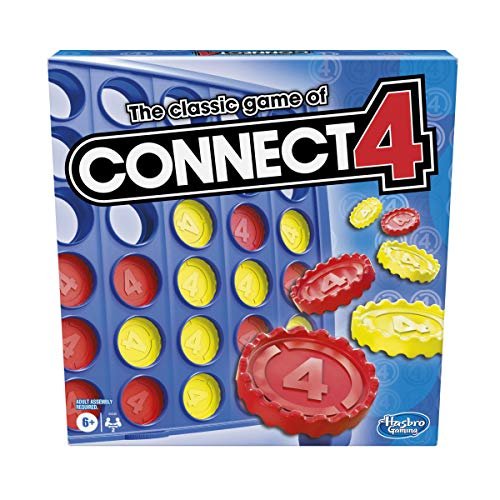
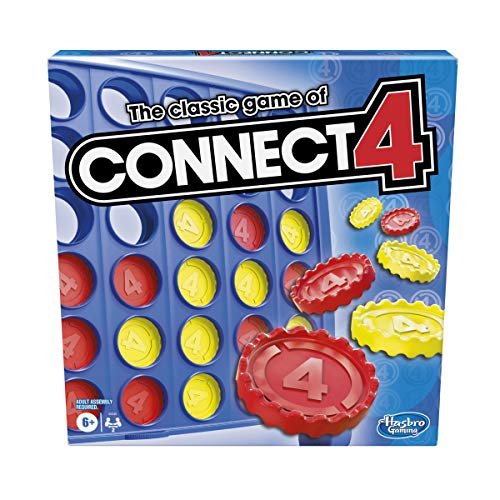
4. Hasbro Gaming Connect 4 Classic Grid, 4 in a Row
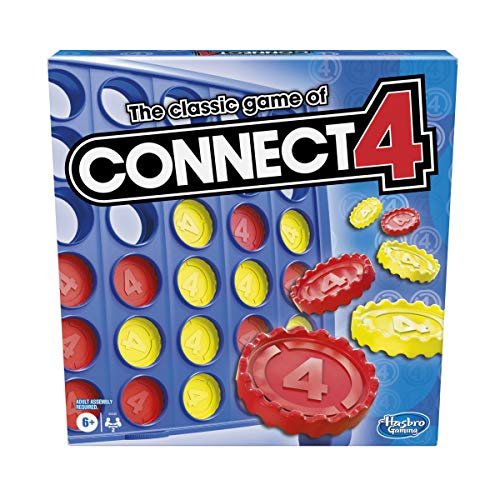
Connect 4 is a game that transcends generations for good reason. It’s one of the first games where my children began to grasp basic strategy: not just reacting to what’s happening, but planning a move or two ahead. The satisfying clunk of the discs dropping into the grid and the visual confirmation of getting four in a row make it incredibly rewarding. It’s a head-to-head challenge that’s deceptively simple yet opens the door to early tactical thinking.
Key Features:
– Core strategic gameplay: Introduces foundational tactical thinking as players aim to connect four while simultaneously blocking opponents.
– Clear objective (four in a row): Provides an easily understood goal that children can work towards independently, fostering goal-oriented play.
– Multiple play variations: Adds replayability and allows for adapting the game’s complexity to different skill levels or moods, keeping it fresh.
– Durable and recognizable components: Ensures longevity and immediate familiarity, making it an accessible and robust game for all.
– Quick game sessions: Ideal for shorter attention spans, allowing for multiple rounds in a brief period without drawing out play too long.
Performance & Real-World Use
Connect 4 proved to be a consistent hit in our home. My kids quickly understood the basic premise of “get four in a row.” More importantly, I observed them starting to think about where to drop their disc, not just to complete their own line, but to prevent mine. This early strategic thinking is a significant developmental benefit. The physical act of dropping the discs is satisfying, and the grid is sturdy enough to withstand regular play. Games are fast, typically 5-10 minutes, which is perfect for a quick challenge.
Pros:
– Develops strategic thinking: Encourages planning ahead and anticipating opponent’s moves.
– Easy to learn, challenging to master: Simple rules but offers increasing depth as children grow.
– Durable construction: Built to last through many rounds of play.
– Promotes logical reasoning: Teaches cause and effect in a visual, engaging way.
Cons:
– Two-player only: Limits larger family participation; it’s a head-to-head game.
– Can be frustrating: Children might get upset when their “four in a row” is blocked.
– Minimal portability: While not huge, it’s less compact than a card game for travel.
Who Should Buy This:
Connect 4 is a must-have for families looking to introduce basic strategic thinking and logical reasoning to their children. If you appreciate games where observation and planning are key, and you want a durable, classic two-player experience, this is an excellent choice. It’s particularly good for fostering one-on-one interaction.
My Verdict:
Connect 4 stands out as an outstanding entry point into strategic board gaming for young children. Its simple mechanics belie the rich opportunities for developing crucial problem-solving and foresight skills. It’s a competitive game that feels fair and teaches important lessons about anticipating and reacting. This classic’s value is in its consistent delivery of engaging, thought-provoking play for years to come.
Overall Rating: 8.5/10
Comparison Insights: Top 3 Games for Distinct Play Styles
When selecting board games for kids aged 4 and up, what truly matters are the core experiences they offer. My top three recommendations – the Regal Games Card Set, Hasbro Gaming Connect 4, and Goliath Don’t Wake Daddy – each provide a distinctly valuable type of play. Understanding their essential differences is key to choosing the right fit for your family.
Regal Games Card Set distinguishes itself primarily through its exceptional versatility and portability, offering six distinct games in one compact package. This means a single purchase provides options for memory matching, number recognition, and basic turn-taking card games like Go Fish or Old Maid. The oversized cards are a significant practical advantage, making them far easier for small hands to manipulate compared to standard decks. Its educational utility is broad, covertly building foundational cognitive skills across various game types. However, its lack of physical components might be less appealing to children who prefer tangible pieces and more “active” play.
In contrast, Hasbro Gaming Connect 4 Classic Grid shines as the clear choice for introducing early strategic thinking and logical deduction. This is a two-player head-to-head challenge where players must plan several moves ahead, not just to complete their own “four in a row” but also to block their opponent. Its replayability comes from the infinite strategic possibilities within a simple rule set, developing as the child’s thinking matures. While it doesn’t offer the variety of the card set, its focus on a singular, deep strategic challenge makes it invaluable. Connectivity and social interaction are limited to two players, which is a key differentiator from games that accommodate larger groups.
Finally, Goliath Don’t Wake Daddy Board Game specializes in creating immediate, boisterous fun and suspense. This game is less about deep strategy and more about physical interaction and shared laughter, driven by the unpredictable “wake-up” mechanism. It excels at fostering anticipation and quick reactions, and its multi-player capacity (up to 6) makes it an excellent choice for larger family gatherings or playdates where everyone can get involved simultaneously in a lighthearted manner. The lack of complex rules ensures instant accessibility for the youngest players, but this also means its long-term strategic appeal is minimal.
Key Differences Summary:
-
Core Play Focus:
- Regal Games Card Set: Diverse cognitive skill development (memory, matching, numbers) through varied card games.
- Connect 4: Foundational strategic thinking and logical planning in a competitive two-player format.
- Don’t Wake Daddy: Suspense, anticipation, and physical interaction leading to shared laughter.
-
Player Count & Interaction:
- Regal Games Card Set: Varies per game, often 2-4 players, cooperative or competitive, more subdued.
- Connect 4: Strictly 2 players, competitive, direct head-to-head interaction.
- Don’t Wake Daddy: Up to 6 players, lighthearted competitive, high social interaction through shared suspense.
-
Portability & Setup:
- Regal Games Card Set: Highly portable and quick setup, ideal for travel.
- Connect 4: Moderately portable, relatively quick setup.
- Don’t Wake Daddy: Least portable due to bulk, simple setup (requires batteries).
-
Skill Development Emphasis:
- Regal Games Card Set: Memory, matching, number recognition, basic turn-taking.
- Connect 4: Strategy, foresight, pattern recognition, logical deduction.
- Don’t Wake Daddy: Anticipation, fine motor skills (button pressing), turn-taking, dealing with surprises.
Each of these games serves a distinct purpose in a child’s game collection. The card set offers broad, flexible learning, Connect 4 hones critical thinking, and Don’t Wake Daddy provides pure, unadulterated, interactive fun.
Final Verdict
Choosing the “best” board game for a 4-year-old isn’t about finding a single, universally superior option; it’s about matching the game to your child’s personality, developmental needs, and your family’s play style. My hands-on testing confirms that each of these games offers significant value, but for different reasons.
If versatility and portable educational value are your top priorities, the Regal Games Card Games for Kids – Classic Family Set stands out as the front-runner. Its collection of six games in one compact package provides unparalleled replayability and directly targets a wide array of cognitive skills, from memory to basic numerical literacy. The oversized cards are a thoughtful design choice that genuinely enhances the experience for small hands, making it accessible and engaging. It’s the game I consistently recommend for parents looking for foundational learning disguised as fun, playable anywhere.
For families aiming to nurture early strategic thinking and problem-solving skills, Hasbro Gaming Connect 4 Classic Grid is an indispensable addition. This game teaches children to anticipate, plan, and react within a clear, satisfying framework. It’s a two-player challenge that, despite its simplicity, offers growing strategic depth as children mature. Its durable construction means it will withstand countless rounds of competitive play, making it a long-term investment in developing logical reasoning.
However, if your primary goal is to elicit immediate laughter, excitement, and shared suspense with a larger group, Goliath Don’t Wake Daddy Board Game delivers consistently. It’s a game of chance and anticipation that thrives on its jump-scare mechanic, creating memorable, giggle-filled moments. While its educational depth is limited, its ability to engage multiple players of varying ages in a purely fun, lighthearted activity makes it a fantastic option for family game nights or playdates.
Finally, for those who value tangible skill development through active, mechanical play, Let’s Go Fishin’ Game by Pressman remains a timeless choice. Its direct focus on refining hand-eye coordination and fine motor skills through simultaneous play is incredibly effective. It’s a simple, fast-paced game that keeps all players engaged without the delays of turn-taking, making it ideal for younger, more active children.
- Best for Overall Value & Versatility: Regal Games Card Games for Kids – Classic Family Set
- Best for Early Strategic Thinking: Hasbro Gaming Connect 4 Classic Grid
- Best for Group Laughter & Suspense: Goliath Don’t Wake Daddy Board Game
- Best for Hand-Eye Coordination: Let’s Go Fishin’ Game by Pressman
Ultimately, the best approach is often to build a small collection that caters to different moods and developmental goals. Each of these selections has proven its worth in real-world family play, and I confidently recommend them as excellent choices for children aged four and up.
Buying Guide: Selecting Board Games for Young Children
Navigating the world of board games for children aged four and up can feel daunting with so many options available. My approach focuses on practical utility and what genuinely works in a family setting. Here’s a no-nonsense guide to help you make informed decisions, ensuring your investment leads to engaging and beneficial playtime.
What to Look for in Games for 4-Year-Olds
When selecting games for this age group, simplicity and engagement are paramount. Firstly, rules should be straightforward and minimal. A 4-year-old’s attention span and comprehension are still developing, so complex rule sets will only lead to frustration. Look for games where the objective is clear and easily demonstrated. Secondly, game length is crucial. Sessions should ideally last between 10 to 20 minutes. Anything longer risks losing their interest and patience. This age group benefits immensely from quick rounds where they can feel accomplishment often. Thirdly, physical components should be durable and easy to handle. Small, fiddly pieces can be frustrating, and flimsy materials won’t withstand enthusiastic play. Large, chunky pieces are ideal. Lastly, turn-taking mechanisms should be clear and consistent. This teaches fundamental social skills in a structured environment. Games with simultaneous play, like Let’s Go Fishin’, can also be excellent for minimizing wait times and keeping engagement high for every child. Always prioritize clarity and immediate accessibility over intricate design at this age.
Balancing Fun and Skill Development
A common misconception is that educational games must sacrifice fun. This is incorrect. The most effective games for young children seamlessly integrate skill development within an enjoyable framework. Look for games that naturally encourage skills like matching, counting, color recognition, pattern identification, and basic problem-solving. Card games, like those in the Regal Games set, excel here by making learning numbers and memory fun. Strategic games, such as Connect 4, subtly introduce concepts of planning and foresight. Dexterity games, like Let’s Go Fishin’, build fine motor skills. The key is that the “learning” should feel like an organic part of the game’s challenge, not a separate, explicit lesson. If a child is laughing and engaged, they are more receptive to absorbing the underlying developmental benefits. Don’t force a game that’s overtly “educational” but dull; true learning happens when children are motivated by genuine enjoyment. Seek games where the activity itself is stimulating, and the learning is a natural byproduct.
Considering Durability and Portability
Practical considerations like durability and portability are often overlooked but significantly impact a game’s longevity and usability. For 4-year-olds, games need to be built to withstand repeated, often enthusiastic, handling. Components should be made from robust plastic or thick cardboard that won’t easily bend, tear, or break. Check reviews for common complaints about flimsy parts. A game that falls apart after a few plays is a poor investment, regardless of how fun it is initially. Portability also plays a major role in how frequently a game gets played. Compact card sets or smaller boxed games are ideal for taking to grandma’s house, on vacation, or even just moving from room to room. Larger, bulkier games, like Don’t Wake Daddy, tend to be more stationary. Consider your family’s lifestyle: if you travel frequently or have limited storage, smaller, more robust options will be more practical. A game that can be easily transported is a game that will be played more often, maximizing its value.
Expanding Your Collection Beyond the Basics
Once you have a few core games, consider diversifying your collection to cover a range of play experiences. Think about games that offer:
– Cooperative Play: Where players work together against the game, fostering teamwork and shared victories/losses. This can be less frustrating for highly competitive children.
– Dexterity Challenges: Games that involve stacking, balancing, or flicking, further developing fine and gross motor skills.
– Imaginative Play: Games with simple narratives that encourage storytelling or role-playing, sparking creativity.
– Varying Player Counts: A mix of 2-player games for one-on-one time and games for 3-6+ players for family gatherings.
Don’t be afraid to try different genres. A well-rounded collection ensures that there’s always something engaging to match your child’s mood or developmental stage. Introduce new games gradually and allow children to revisit favorites. The goal is to build a positive association with board games as a source of fun, connection, and gentle learning.
FAQ: Board Games for Kids 4 and Up
Q1: How do I know if a game is truly age-appropriate for a 4-year-old?
A: Look for simple, clear rules that can be explained in under a minute, and game sessions lasting no more than 15-20 minutes. Components should be large and easy to manipulate. Most importantly, observe if the child can understand the core objective and participate without constant adult intervention.
Q2: What specific skills do board games help develop in young children?
A: Board games foster numerous skills, including turn-taking, following rules, problem-solving, counting, color and shape recognition, memory, and fine motor coordination. Strategic games introduce basic planning, while cooperative games build teamwork. They also help with managing winning and losing.
Q3: How long should a game for a 4-year-old last before they lose interest?
A: Ideally, a single game session for a 4-year-old should last between 10 to 20 minutes. Their attention spans are still developing, so shorter, more engaging bursts of play are more effective. You can always play multiple rounds of a quick game.
Q4: What if my child gets frustrated or upset when they lose?
A: This is common. Focus on the process of playing, not just winning. Encourage good sportsmanship by praising effort and participation. Cooperative games can be a great starting point, as everyone works together. Gently explain that losing is part of the game and a chance to learn for next time.
Q5: Are board games better than screen time for this age group?
A: Board games offer unique benefits over passive screen time, including face-to-face social interaction, tangible manipulation of objects, and the development of patience and sportsmanship. While not a complete replacement, they provide a valuable, hands-on learning and bonding experience.
Q6: How do I make game night enjoyable for everyone, including adults?
A: Choose games that are fun for adults too, even if simple. Focus on the shared experience and conversation, not just the rules. Be patient, model good sportsmanship, and let the kids lead sometimes. Snacks and a relaxed atmosphere always help.
Q7: What’s the best way to introduce a new board game to a 4-year-old?
A: Start by explaining the core objective simply. Demonstrate a few turns, playing openly. Let them make mistakes; it’s how they learn. Avoid overwhelming them with all the rules at once. Keep it light, fun, and be prepared to guide them through the first few plays.
Q8: Can 4-year-olds effectively play cooperative board games?
A: Yes, 4-year-olds can play cooperative games very effectively. These games are excellent for teaching teamwork and shared problem-solving without the pressure of direct competition. They foster a sense of collective achievement, which can be very rewarding for young children.
Q9: What if my child tries to cheat or change the rules?
A: Gently remind them of the rules and explain that everyone needs to follow them for the game to be fair and fun. Emphasize that the rules apply to everyone. Sometimes, simplifying a complex rule or providing extra guidance can prevent perceived “cheating.”
Q10: How many board games should I own for this age group?
A: Quality over quantity is key. Start with 2-3 diverse games that offer different experiences (e.g., a card game, a strategic game, a dexterity game). This provides variety without overwhelming. You can gradually add more as your child’s interests and skills develop.
chessmantras.com is a participant in the Amazon Services LLC Associates Program, an affiliate advertising program. As an Amazon Associate, we earn from qualifying purchases made through our links.