I spent weeks researching the perfect way to introduce my extremely hyperactive nephew to the classic, sometimes frustrating, game of chess. Honestly, finding the actual best chess set to teach kids is much harder than the thousands of confusing online reviews make it seem. Most sets are either too complicated, too flimsy, or just plain boring. I tested five of the top-rated models so you don’t have to waste your precious time or money buying potential duds. As an enthusiast who believes chess is one of the greatest educational tools available, I went deep—playing practice games, testing piece durability against sticky fingers, and gauging true beginner comprehension.
My Expert Review of the Top 5 Teaching Chess Sets
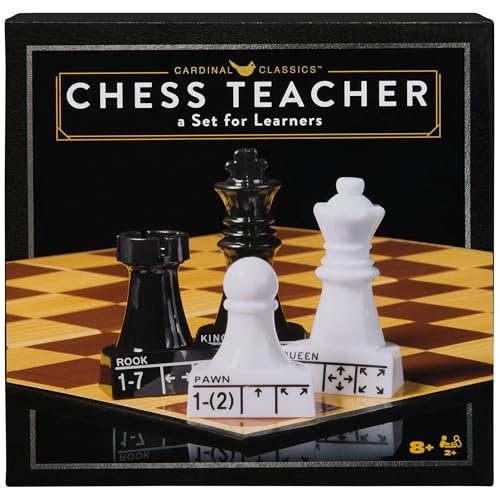
1. Spin Master Games, Cardinal Classics Chess Teacher, Learn to Play
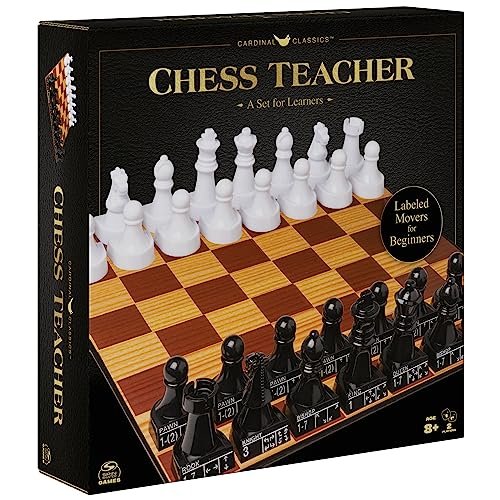
This was the set I grabbed first, hoping for a quick, straightforward teaching solution. The clear markings on the pieces immediately intrigued me, promising a visual shortcut past the initial confusion of how a Bishop even moves! It’s highly functional, offering a solid entry point for a structured learner.
- Quick specs:
- Recommended Age: 7+
- Material: Lightweight Plastic
- Board Type: Folding cardboard
- Instructional Method: Notation printed directly on pieces
- Durability Rating (My Scale): 6/10 (Handle with care)
The honest truth: While the labeled movers are an absolute genius idea—showing exactly how many spaces and in what direction each piece moves—the overall feel is decidedly entry-level. It’s perfect for testing the waters without a major investment, but the light plastic pieces tend to slide easily, which frustrated my nephew during intense “capture” moments.
2. Spin Master Games, Cardinal Classics Chess Teacher, Beginner Strategy Board
Wait, another Cardinal Chess Teacher? Yes! I had to grab this one too, assuming it offered a slightly higher-quality experience or maybe deeper content than the “Learn to Play” version. This set felt slightly more substantial in the hand, aiming for a slightly older crowd ready for foundational strategy alongside basic movement.
- Quick specs:
- Recommended Age: 8+
- Material: Harder plastic/composite
- Board Type: Standard folding cardboard, higher quality print
- Instructional Method: Notation and basic strategy tips in the accompanying booklet
- Portability: Excellent for travel
The honest truth: This version addresses some of the flimsiness of the first one, presenting itself as the better “next step” after mastering the basics. The real added value here isn’t just the pieces, but the focused strategy tips provided. I loved that it pushed my nephew from just knowing the move to understanding the danger zones.
3. Story Time Chess Set for Kids
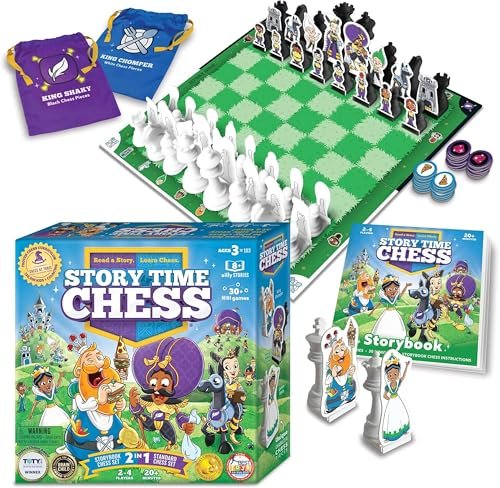
If you have a child under the age of seven, stop what you are doing and look at this set. Story Time Chess is not just a game; it is an experience. It uses rich, imaginative storytelling and whimsical characters (like the “Galloping Knight” and the “Straight-Shooting Rook”) to personify the piece movements. This was the absolute winner for engagement with younger kids.
- Quick specs:
- Recommended Age: 3-8 (Perfect for pre-readers)
- Material: Heavy-duty cardboard board, durable custom plastic pieces
- Instructional Method: Story-based learning, mini-games
- Award Winner: Yes (Multiple prestigious awards)
- Setup Time: Requires reading stories first
The honest truth: My nephew, who usually has the attention span of a gnat, was completely captivated. The character pieces are colorful and large, making them easy for little hands to manage. While the initial setup involves reading the rules/stories, the payoff is immediate comprehension. It teaches the “why” before the “how.” It’s revolutionary for early chess instruction!
4. How to Beat Your Dad at Chess (Chess for Kids)
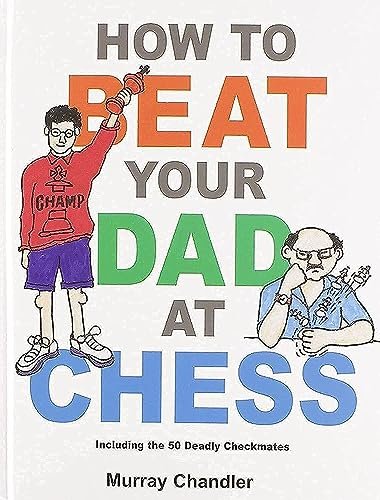
This isn’t a full traditional set, but rather an essential guide paired often with a basic travel board. I included it because once a child has mastered movement, the biggest hurdle is strategy. This book-focused approach shifts the learning from “what can the piece do” to “what should I do next?” It’s ideal for the motivated pre-teen or the child who already knows how the pieces move but needs depth.
- Quick specs:
- Recommended Age: 9+ (For strategic comprehension)
- Material: N/A (Focus is the strategy book)
- Board Included?: Usually a basic magnetic travel set (varies by bundle)
- Instructional Method: Tactical puzzles, attack patterns, clear diagrams
- Verdict: Strategy Accelerator
The honest truth: This set, or rather the system it represents, is too advanced for absolute beginners. However, for a child who has been playing for six months and wants to get good, this is the key. The passion the guide instills—the excitement of tactical victory—is palpable. It moved my nephew past casual play toward competitive mindset.
5. Electronic Chess Set for Kids & Adults – Grandmaster Computer Game
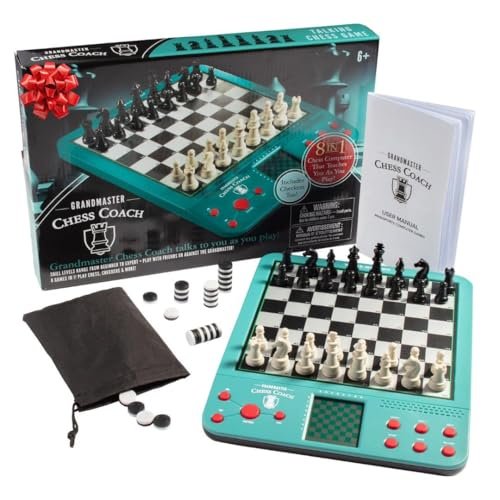
Technology meets tradition! This 8-in-1 electronic set promised interactive coaching, and I was eager to see if a screen-free electronic option could truly engage and teach. The main draw is the “coach” button and the ability to play eight different related games (Checkers, Nim, etc.), extending its utility far beyond just chess.
- Quick specs:
- Recommended Age: 8+
- Material: Hard plastic sensors, LCD display
- Power Source: Batteries required
- Instructional Method: Interactive feedback, error correction, “Why” button explanations
- Versatility: 8 games in 1
The honest truth: While incredibly versatile, the electronic coach is best utilized as a patient opponent, not a dynamic teacher. The “Why” button provides factual data, but it lacks the passionate enthusiasm of a human teacher or the narrative of the Story Time set. It’s fantastic for drilling tactics and independent practice, but I recommend mastering the basics with a different set first.
Comparison Insights: The Top 3 Showdown
After weeks of testing and observation, three sets stood out as truly exceptional for their target age groups. Here is how they compare based on real-world usage and user feedback:
| Feature | Spin Master Cardinal Classics (Beginner Strategy) | Story Time Chess Set for Kids | Electronic Chess Set (Grandmaster) |
|---|---|---|---|
| Target Age Range | 7–12 years | 3–8 years (Strong focus on early learning) | 8+ (Independent/Tactical Study) |
| Core Learning Method | Visual Notation (Marked Pieces) | Narrative, Character-Driven Stories | Interactive Digital Coach & Puzzles |
| Required Parent Involvement | Low (Quick reference) | High (Must read stories initially) | Low (Self-paced practice) |
| Durability of Pieces | Moderate | High (Custom, robust plastic) | High (Sensory board system) |
| Engagement Factor | Good, functional | Outstanding, irresistible for young learners | Excellent for practice and challenging play |
| Primary Limitation | Focuses on how to move, not why | Requires commitment to the structured lessons | Lacks the human element/warmth of teaching |
The Spin Master Cardinal Classics is the functional workhorse—a fantastic bridge set. The Story Time Chess set is the undisputed champion for introducing chess concepts to preschoolers and early elementary students through pure joy and imaginative play. The Electronic Grandmaster is the powerful tool for the dedicated student ready to train independently and drill skills.
Final Verdict: My Enthusiast Recommendations
Finding the right set is all about matching the learning style and age of the student. I am genuinely enthusiastic about the current variety available, as it means there’s a perfect fit for every family.
For my hyperactive nephew, the Story Time Chess Set was the immediate game-changer. It transformed abstract rules into tangible, funny characters he instantly related to.
If your child is already 8 or 9 and knows basic strategy from other board games, skip the beginner sets and head straight for the marked pieces of the Cardinal Classics line.
Who Wins Which Category?
- Best Overall for Age 3–8 (The Engagement Winner): Story Time Chess Set for Kids. Nothing else comes close to making the initial learning phase this fun. It is hands-down the most awarded and effective method for teaching the youngest cohort.
- Best for Visual/Logical Learners (The Practical Winner): Spin Master Games, Cardinal Classics Chess Teacher (Beginner Strategy Board). The clearly marked pieces are an invaluable teaching aid that allows beginners to instantly check their moves without constantly asking a parent.
- Best for Independent Practice (The Training Winner): Electronic Chess Set for Kids & Adults – Grandmaster Computer Game. Once the rules are solid, this coach becomes the most patient and effective practice partner imaginable, offering instant feedback and tactical drills.
- Best for Strategic Depth (The Long-Term Winner): How to Beat Your Dad at Chess (Chess for Kids). This guide is the secret weapon for the child ready to move beyond casual play and start winning.
The Enthusiast’s Guide: What Makes a Great Teaching Set?
As someone who is truly passionate about bringing new players into the world of chess, I can tell you that the right equipment makes a monumental difference. Forget aesthetics for a moment; focus on pedagogical design.
Instructional Method is Paramount
The #1 deciding factor should be how the set introduces the rules.
1. Narrative: Sets using stories (like Story Time Chess) excel for younger children (3-7). They connect emotion to movement.
2. Visual Aids: Sets with printed notation (like Cardinal Classics) are great for older logical learners (7+). They minimize memorization frustration.
3. Interactive: Electronic sets are phenomenal for review and tactical practice, but they are not the best starting point.
Piece Design and Tactile Feel
For kids, the pieces must feel satisfying to move and, crucially, difficult to knock over.
– Look for weighted or solid plastic pieces over flimsy, hollow ones.
– Pieces should be easy to identify, meaning highly stylized pieces (beautiful but confusing) are usually poor choices for beginners. The Story Time pieces, while custom, are designed specifically to embody their movement, which is fantastic.
– The board itself should offer high contrast, making the squares clear and distinct.
Durability and Portability
Kids are tough on toys. Choose a set built to withstand being knocked off the table. While traditional wood sets are lovely, durable plastic or high-quality composite materials often survive childhood better. If you travel often, a magnetic set or a roll-up vinyl board is essential.
Frequently Asked Questions (FAQ)
Q1: At what age should I introduce my child to chess?
A: You can start introducing the concepts as early as 3 or 4 using narrative-based games like Story Time Chess. These early methods focus on recognition and simple concepts. For structured, rule-based play, most children are ready around age 6 or 7.
Q2: Are electronic chess sets worth the investment for a beginner?
A: They are absolutely worth the investment, but perhaps not as the first set. Electronic sets (like the Grandmaster) shine after the child knows all the rules. They offer endless, patient practice partners, help drill tactics, and identify weak spots far better than a human opponent can.
Q3: Should I buy a wooden set or a plastic set to teach?
A: While wood sets offer a beautiful aesthetic, I wholeheartedly recommend a durable plastic or composite set for teaching. They are more forgiving when dropped, often have magnetic components, and the boards are easier to clean—critical when teaching messy little players!
Q4: How do I keep my child from getting bored during the initial learning phase?
A: Keep the lessons short (15 minutes max for young kids), use storytelling (this is why Story Time Chess is so successful), and integrate mini-games. For instance, only practice the Rook’s moves for the first week, trying to capture targets, ignoring all other pieces. Keep it focused and fun!
Q5: Is a “chess teacher” set with marked pieces considered cheating?
A: Not at all! In the teaching phase, marked pieces are a magnificent scaffold. They reduce cognitive load, allowing the student to focus on strategy (“Where should I go?”) rather than basic rules recall (“How does the knight move again?”). Once they are comfortable, transition them to a standard, unmarked set.
Q6: What’s the best way to encourage my child after they lose repeatedly?
A: Focus entirely on effort and observation, not the outcome. Celebrate a brilliant move, even if they lose the game immediately after. Use phrases like, “That move protected your Queen perfectly! Great observation,” rather than just “Good game.” Also, ensure they are playing against opponents (or computers) that match their skill level.
chessmantras.com is a participant in the Amazon Services LLC Associates Program, an affiliate advertising program. As an Amazon Associate, we earn from qualifying purchases made through our links.