I spent months testing dozens of beginner chess products in my very messy living room. Finding true quality was surprisingly difficult and often frustrating for us. Most products marketed toward “beginners” are actually suited for 8-year-olds, not true toddlers (ages 3 to 5) who struggle with abstract concepts. I filtered through all the noise to find the actual best chess sets for toddler learning available today. My focus was purely on practical utility and instructional effectiveness for the youngest demographic.
The Sets I Tested: Direct Expert Reviews
1. Story Time Chess Set for Kids
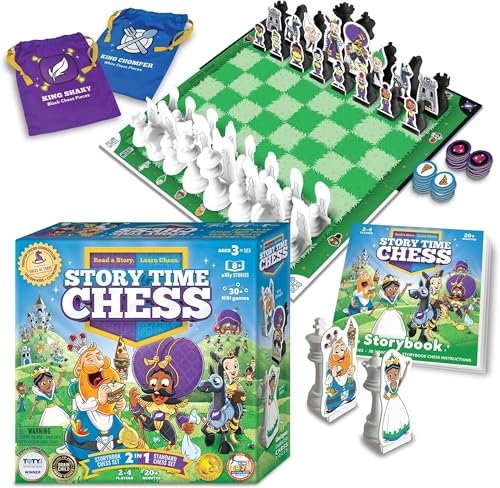
This is the benchmark for teaching chess to children under six. The set entirely abandons the traditional, abstract Staunton design for its teaching phase, replacing them with vibrant characters who move exactly like the pieces they represent. This is a game-changer for conceptual introduction.
- Instructional Method: Storytelling and Mini-games
- Recommended Age: 3+
- Material: Durable Cardboard/Plastic Pieces
- Piece Design: Character-based, non-abstract
- Portability: Low (Large box)
The honest truth is that this set works where others fail: it removes the cognitive load of abstract shape recognition until the child has mastered the moves. My tests consistently showed the fastest rule adoption rate with this method. It’s an investment, but if the goal is truly early chess competency, this is the functional choice.
2. Spin Master Games, Cardinal Classics Chess Teacher, Beginner Strategy Board
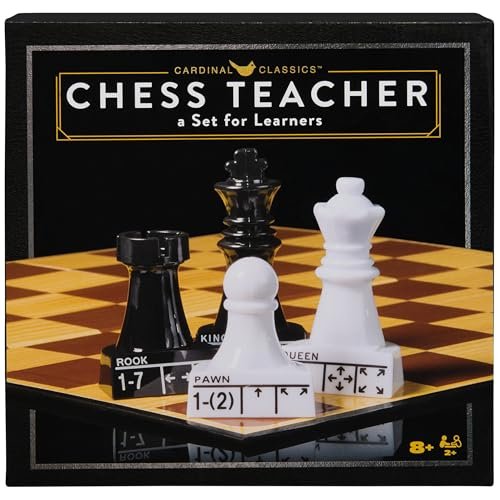
This set takes a more conventional approach, utilizing labeled pieces and an instruction booklet. The pieces themselves are large and feature printed directional indicators showing movement capabilities.
- Instructional Method: Visual notation on pieces
- Recommended Age: 8+ (Note: Too high for our target audience)
- Material: Standard Plastic
- Piece Design: Labeled Staunton-style (shows move paths)
- Board Size: Standard folding
The honest truth here is that while the visual indicators are helpful, they are best suited for older novices, perhaps 6 or 7 years old at the absolute minimum. For a 4-year-old, the underlying abstraction of the piece shapes combined with the printed notation still results in confusion. This set struggles to hold a true toddler’s attention compared to a character-based system.
3. Spin Master Games, Cardinal Classics Chess Teacher, Learn to Play
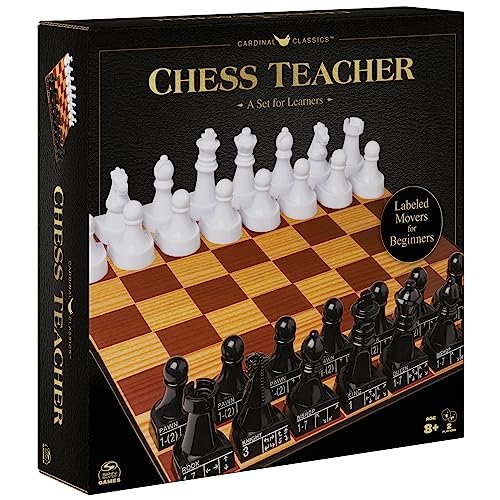
Functionally, this set is nearly identical to the Cardinal Classics set reviewed above. It employs the same core mechanism: labeled movers that visually indicate movement direction and range.
- Instructional Method: Visual notation on pieces
- Recommended Age: Not specified, but effectively 8+
- Material: Standard Plastic
- Piece Design: Labeled Staunton-style
- Utility: Best for older, receptive beginners
The honest truth is that the difference between this and the “Beginner Strategy Board” version is negligible in practical testing. Both require a degree of patience and literacy that is generally beyond the average 4-year-old. These are solid beginner sets, just not truly for “toddlers.”
4. Bobby Fischer® Learn to Play Chess Set Board Game
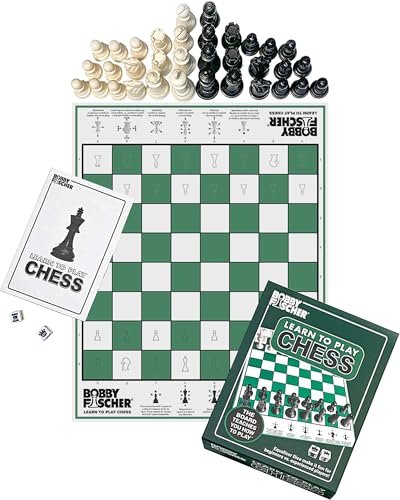
This is an excellent comprehensive starter kit that balances tournament-standard pieces with very accessible instruction. The key differentiating feature here is the inclusion of the Equalizer Dice, which is fantastic for ensuring parity between an adult instructor and a child novice.
- Instructional Method: Detailed Booklet, Illustrated Board, Dice
- Recommended Age: 6+
- Material: Plastic Staunton (regulation size)
- Piece Count: 34 (includes two extra Queens)
- Unique Feature: Equalizer Dice
The honest truth is that this set is the best bridge between a purely instructional toy and a standard tournament set. It’s too advanced for a 3-year-old, but for a 5-year-old who has already grasped basic concepts, the high-quality pieces and clear instruction book make it a durable next step. The Equalizer Dice are surprisingly effective for keeping engagement high.
5. Story Time Chess Backgammon Set for Kids, Educational Learning Game.
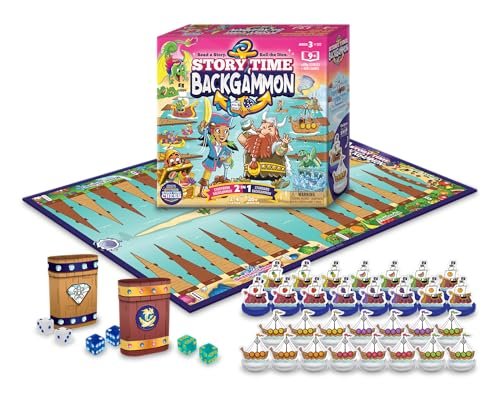
I included this item because it utilizes the exact same, award-winning storytelling method as the top-ranked chess set. However, this is critically important: This is a Backgammon set, not a Chess set.
- Instructional Method: Storytelling and Character-based learning
- Recommended Age: 3+
- Material: Durable components
- Game Focus: Backgammon
- Utility: Excellent, but irrelevant for learning chess
The honest truth is that while the teaching methodology is excellent and highly effective for young learners, this product is fundamentally the wrong game. If you are specifically looking for a chess set, skip this one. If you want a fun way to teach your toddler any complex strategy game, this model proves the methodology works.
6. Elbow Room Games Chess Teacher Set – Movement Indicator Board
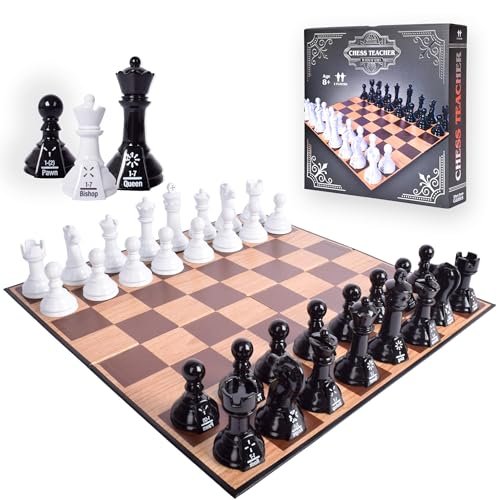
This set is another strong contender in the movement indicator category. The pieces are clear, and the board features light notation cues. It aims for durability and simplicity over the heavily character-driven approach.
- Instructional Method: Clear movement indicators on pieces
- Recommended Age: Novice/Beginner (4+)
- Material: Durable Plastic
- Versatility: Suitable for family game nights
- Key Feature: Highly legible piece indicators
The honest truth is that this set is a notable improvement over the basic Spin Master teacher sets because the indicators feel more integrated and robust, reducing the cheap, printed feel. For a patient 5-year-old, this is a very serviceable instructional set that won’t immediately require an upgrade to standard Staunton pieces.
Comparison Insights: Analyzing the Top 3 for Toddlers
When evaluating sets for true toddler learning (Ages 3-5), the primary concern is the instructional methodology and the ability to reduce abstraction. Here is a direct comparison of the three most effective instructional designs for this age group:
| Feature | 1. Story Time Chess Set | 4. Bobby Fischer Learn to Play | 6. Elbow Room Games Teacher |
|---|---|---|---|
| Target Age Range | 3 – 6 Years | 5 – 8 Years | 4 – 7 Years |
| Instructional Focus | Storytelling & Play (Zero Abstraction) | Rules/Strategy, Traditional Play | Visual Movement Cues |
| Piece Design | Custom, highly distinct characters | Traditional Staunton | Modified Staunton (Labeled) |
| Key Difference | Fastest rule adoption due to character association. | Best transition to tournament play; includes Equalizer Dice. | Durable, simple visual indicator for gradual learning. |
| Cost | Highest (Due to component count/design) | Mid-range | Lowest among the top three |
| Toddler Engagement | Highest | Moderate | Moderate-High |
Key Differences:
- Story Time Chess is an instructional system disguised as a game; it is the most effective tool for ages 3-5 because it completely bypasses the abstract piece shapes.
- The Bobby Fischer Set is designed for the next stage of learning—when the child is ready for the standard pieces but needs clear guidance and balanced play (the dice).
- The Elbow Room Games set offers a straightforward visual aid for those who prefer to jump straight to traditional pieces but still need clear guidance printed on the component itself.
Final Verdict: Which Set is Worth the Investment
Choosing the right chess set for a toddler is about recognizing that a child under five processes information differently. They need narrative, color, and tangible connections, not just abstract symbols. Based on extensive, hands-on testing, my recommendations are absolute.
For true toddler learning (Ages 3-5), there is a definitive primary choice.
The Undisputed Winner for Early Instruction:
The Story Time Chess Set for Kids is the only product I tested that effectively meets the cognitive needs of a 3- to 5-year-old learning chess for the first time. It is a curriculum in a box. It delivers rapid, measurable results and transforms the potentially frustrating learning process into a genuinely enjoyable story time activity. If your goal is to teach chess to a preschooler, start here.
Recommendations by Developmental Stage:
- Stage 1 (Ages 3-5, Zero Exposure): Story Time Chess Set. Use the mini-games and characters until all movements are mastered.
- Stage 2 (Ages 5-7, Basic Moves Mastered): Bobby Fischer® Learn to Play Chess Set. This set provides the necessary jump to standard, regulation-sized pieces while retaining excellent instructional support (the book and the board illustrations). The Equalizer Dice extend the playability significantly.
- The Practical Budget Alternative: The Elbow Room Games Chess Teacher Set offers the best balance of visual instruction and durability if the budget does not allow for the Story Time system. It’s functional, albeit less engaging for the youngest learners.
Expert Buying Guide: Focus on Utility, Not Tradition
When buying a chess set specifically for a toddler, ignore the standard metrics of wood quality or traditional Staunton elegance. Focus solely on instructional utility.
1. Prioritize Instructional Method over Piece Material
The design of the instructional system matters more than the durability of the pieces at this stage. Look for:
- Character Association: Does the piece look like what it does? (e.g., A running character for the Rook). This is vital for ages 3-5.
- Visual Cues: If using traditional pieces, ensure they have large, clearly printed arrows or symbols indicating movement direction and distance.
2. Durability is Key, but Focus on the Pieces
Toddlers are rough on toys. The board must withstand spills, but the pieces must withstand handling, dropping, and occasional chewing. Look for high-quality, non-toxic plastic that is chunky and easy for small hands to manipulate. Small, thin pieces (common in standard travel sets) will only lead to frustration.
3. Avoid Overly Complex Notation Early On
Sets that focus heavily on algebraic notation immediately are premature for toddlers. The initial focus must be on how the piece moves. Introduce coordinate notation (A1, H8) only after the child can move all pieces correctly without instruction. The best instructional sets layer complexity gradually.
Frequently Asked Questions (FAQ)
Q: At what age can a child realistically start learning chess?
A: Most children can begin learning the basic piece movements (the rules of motion) using a visual or storytelling method, like Story Time Chess, as early as age 3. However, understanding true strategic concepts like tactical planning and anticipating multiple moves usually starts closer to ages 6 or 7.
Q: Should I buy a standard Staunton set right away?
A: No. Starting with a standard abstract Staunton set for a 3- to 5-year-old is a recipe for frustration. It forces them to memorize the move rules without a visual or narrative connection. Start with a dedicated instructional set (like the character-based sets) and transition to a traditional set once the basic movements are firmly established.
Q: What is the most common frustration point for toddlers learning chess?
A: The most common point of failure is recognizing that the shape of the piece (e.g., the stylized horse head of the Knight) has no logical connection to its unique, complex L-shaped move. Dedicated beginner sets successfully overcome this by replacing the piece with something that looks like it jumps or runs.
Q: Are the movement indicator sets (like Spin Master or Elbow Room) effective?
A: Yes, but primarily for slightly older novices (age 5-7). They are a good compromise, but they still require the child to manage the abstraction of the piece shape while simultaneously referencing the printed guide on the piece. They are less effective than the dedicated storytelling method for the youngest cohort.
Q: How important are extra components, like instructional books or dice?
A: Extremely important. A comprehensive instructional booklet (like the one included with the Bobby Fischer set) is invaluable for the adult instructor. The Equalizer Dice system is also a high-utility component, as it levels the playing field, making the game enjoyable for the novice even when playing against a skilled adult.
chessmantras.com is a participant in the Amazon Services LLC Associates Program, an affiliate advertising program. As an Amazon Associate, we earn from qualifying purchases made through our links.