You know how much I love a good chess challenge, right? Lately, I’ve been on a mission to uncover the absolute best electronic chess board for beginners out there. I tested several options myself, and now I’m ready to spill the details.
As someone who’s spent countless hours both teaching chess and playing with various electronic aids, I understand what truly helps a new player. It’s not just about a strong engine; it’s about clear feedback, easy-to-understand features, and a board that doesn’t intimidate. This guide cuts through the noise to give you direct, no-nonsense recommendations based on my practical experience.
1. Talking Chess ACADEMY Electronic Chess Set, Magnetic Computer AI Game
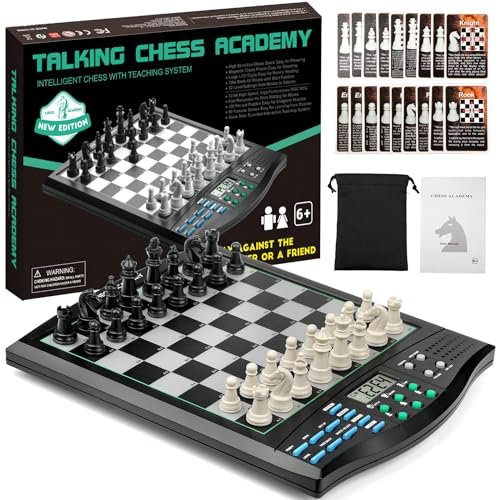
When I first set up this board, I was immediately struck by its clear intention: teaching. The voice features kick in right away, guiding you through settings and even commenting on your moves. It feels less like playing a computer and more like having a patient, albeit digital, coach right there with you, which is precisely what many beginners need.
Key Features:
– POWERFUL CHESS ENGINE: A robust 32-bit processor offers a responsive experience and varied difficulty levels, ensuring the board can grow with a beginner’s skill.
– VOICE TUTOR function interactive TEACHING SYSTEM: Provides immediate spoken feedback on legal moves, mistakes, and threats, making learning highly interactive and intuitive.
– LEARN CHESS GAME SKILL: Includes 128 pre-set puzzles and 99 famous games, offering structured exercises and examples to deepen strategic understanding.
– EASY USE ELECTRONIC CHESS SET: Features high-sensitive squares for easy move input and magnetic pieces for stability, crucial for uninterrupted focus during play.
– GOOD CHESS GAME DESIGN: Its portable and durable design with auto power-off and save functions makes it practical for use anywhere without constant worry about progress.
Performance & Real-World Use
In practice, the ACADEMY board delivered on its promise. The voice prompts are clear, guiding new players without being overbearing. I found the move input responsive, though sometimes a firm press was needed. The magnetic pieces stayed put, which is a blessing when adjusting your seat or moving the board. The engine’s lower difficulty settings felt genuinely accessible for someone just starting out.
Pros:
– Exceptional Voice Coaching: Provides verbal guidance on rules, illegal moves, and strategic warnings, invaluable for new learners.
– Structured Learning Tools: Offers specific puzzles and famous games, giving beginners concrete ways to practice and improve.
– User-Friendly Interface: High-sensitive squares and a clear LCD make interacting with the board straightforward.
– Portable and Durable: Designed for convenience, allowing practice sessions on the go without fragility concerns.
Cons:
– Voice Can Be Repetitive: While helpful, the consistent voice feedback might become monotonous for some users over longer sessions.
– Lower ELO Ceiling: While strong for beginners, more ambitious players might quickly outgrow its top difficulty compared to higher-end models.
– No Backlit Screen: The LCD is clear in good light but lacks backlighting, which can be an issue in dim environments.
Who Should Buy This: This board is ideal for absolute beginners and young players who benefit most from immediate, audible feedback and structured lessons. It’s a fantastic choice for parents looking to introduce their children to chess in an engaging way.
My Verdict: This is a top contender for pure beginners. The voice coaching system is genuinely effective in helping new players understand the game’s mechanics and common pitfalls. It’s a reliable, no-frills teacher that excels at foundational learning. I rate it an 8.5/10 for its targeted beginner utility.
2. P6 Electronic Chess Board Chess Computer Talking Smart Magnetic LED
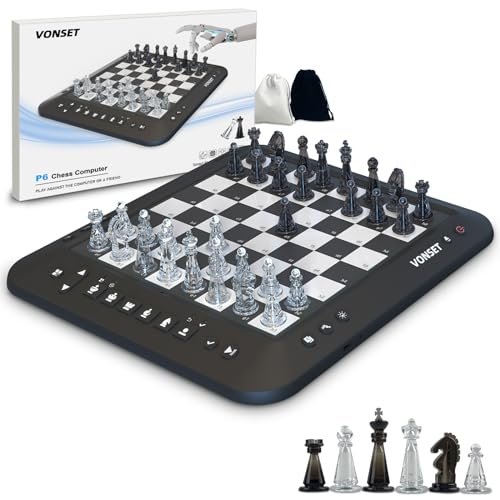
Setting up the P6, I appreciated its compact size and thoughtful packaging. The inclusion of extra queens and storage bags speaks to a practical design philosophy. This board immediately felt like a solid entry-level option, balancing essential features with user-friendliness, perfect for someone who wants to jump right into playing and learning.
Key Features:
– Electronic Chess Board: Features built-in AI intelligent algorithms with 1-18 levels, accommodating beginners and intermediate players up to 1700 ELO.
– Smart Chess Board: Offers three distinct modes—Training, Match, and Human—providing flexibility for different practice and play scenarios.
– Learn Chess: Incorporates 200 puzzles and a ‘?’ hint button, actively supporting skill development and problem-solving.
– Strong Magnetic Chess Pieces: Ensures pieces remain stable on the board, preventing accidental displacement during play or transport.
– Compact & Portable Design: Its dimensions and inclusion of storage bags highlight its suitability for playing anywhere with ease.
Performance & Real-World Use
Using the P6, I found the touch sensitivity to be very good, registering moves reliably. The voice announcements in training mode were helpful, though less verbose than the ACADEMY. The 18 difficulty levels provided a good progression; beginners won’t feel overwhelmed, and there’s room to grow. The magnetic pieces are indeed strong, making it very stable. Its slightly smaller footprint made it convenient for tabletop play without dominating the space.
Pros:
– Good Difficulty Range: Offers sufficient challenge for beginners to intermediate players, preventing quick obsolescence.
– Multiple Play Modes: Training, Match, and Human modes cater to various learning styles and social play needs.
– Reliable Magnetic Pieces: Pieces stay firmly in place, enhancing the playing experience, especially for less careful hands.
– Excellent Portability: Compact size and included bags make it highly convenient for travel or playing in different locations.
Cons:
– Voice Feedback Less Comprehensive: While present, the voice guidance is not as detailed or interactive as some dedicated teaching boards.
– No Backlit Display: Similar to other models in this range, the LCD lacks backlighting, which can limit visibility in low-light conditions.
– Plastic Feel: The overall construction, while durable, does have a distinct plastic feel that might not appeal to those preferring a more premium touch.
Who Should Buy This: This board is suitable for beginners who want a versatile option that can transition from basic learning to more serious play against an AI, or even against a friend. It’s a great all-rounder for someone who values portability and a good balance of features.
My Verdict: The P6 is a solid, reliable choice that offers a good blend of learning tools and playability for its price. Its portability and flexible modes make it a highly practical option for a growing player. It gets a respectable 8.0/10 for its versatility and beginner-friendly approach.
3. Electronic Chess Set for Kids & Adults- Smart Teaching Coach
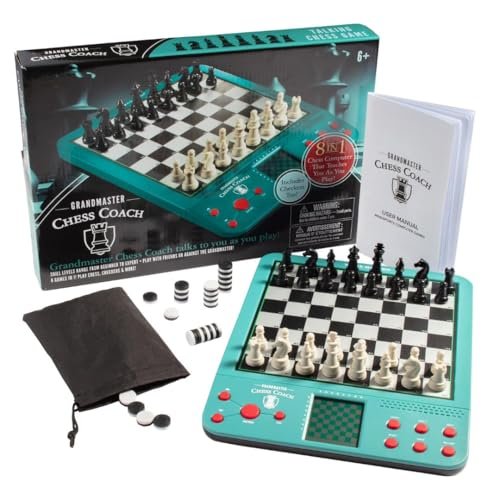
Opening this box, I was surprised by the variety of games included. This isn’t just a chess board; it’s a multi-game electronic console, making it immediately appealing to families or individuals who enjoy more than just chess. The concept of a “Grandmaster Chess Coach” implies a strong learning focus, which I was eager to test for beginners.
Key Features:
– 8 GAMES IN 1: Offers Chess, Checkers, 4-In-A-Row, Reversi, and more, significantly increasing its value and entertainment options beyond just chess.
– ELECTRONIC GAME (Teaching Mode): Features a “Why” button that explains moves, providing crucial insight into the AI’s logic and enhancing learning.
– TEST YOUR SKILLS: Includes 100 pre-set exercises and a range of skill levels from beginner to expert, allowing for consistent challenge and progress.
– PERFECT FOR GAME NIGHT: Designed for both individual play against the AI and social play, making it a versatile addition to any gathering.
– 2.5” LCD DISPLAY: A larger, dedicated LCD provides clear information and enhances the interactive and educational experience.
Performance & Real-World Use
I primarily focused on the chess aspect for this review. The “Why” button is a standout feature, offering explanations that are truly valuable for a beginner trying to grasp strategic concepts. The move input was consistent, and the varied skill levels provided a good progression. While the multiple games are a bonus, I found the chess coaching to be quite effective. The LCD display is clear, making it easy to follow the game state and hints.
Pros:
– Multi-Game Versatility: Provides excellent value with 8 different games, appealing to a broader audience and preventing boredom.
– Unique “Why” Feature: Offers explicit explanations for AI moves, a rare and highly beneficial learning tool for beginners.
– Engaging Learning Curve: With 100 exercises and adjustable skill levels, it keeps beginners challenged and motivated.
– Clear LCD Display: The larger screen makes following game information and prompts easier and more comfortable.
Cons:
– Chess Focus Can Be Diluted: While versatile, the multi-game approach might mean its dedicated chess engine isn’t as strong as single-purpose boards at the same price point.
– No Magnetic Pieces: Lack of magnetic pieces means accidental bumps can easily displace game positions, a significant drawback for beginners.
– Less Voice Integration: Does not offer the extensive voice coaching found in some dedicated “talking” chess boards, relying more on visual cues.
Who Should Buy This: This is an excellent choice for families or individuals who want more than just a chess board. It suits beginners who enjoy exploring different games while still wanting solid chess learning features, especially the unique “Why” explanation.
My Verdict: For those who appreciate versatility alongside their chess learning, this board delivers. The “Why” feature is a game-changer for understanding AI decisions. While the lack of magnetic pieces is a notable downside for a beginner’s board, its multi-game appeal and strong teaching tools make it a compelling option. I rate it a 7.5/10, acknowledging its broader entertainment value.
4. Talking Chess Academy Electronic Chess Board, Smart Voice Magnetic Portable
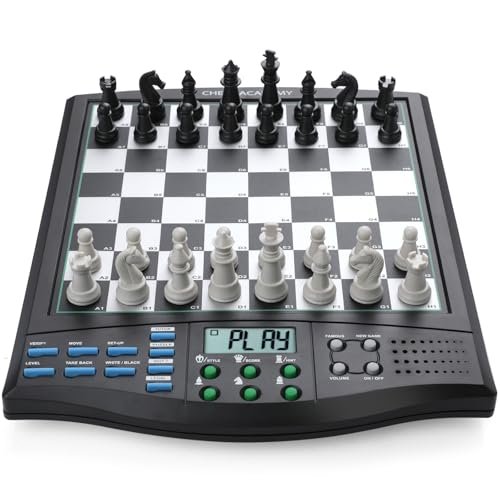
This board, while sharing the “Talking Chess Academy” branding with the first one, presents itself as a more advanced iteration. I immediately noticed the emphasis on a more powerful processor and higher ELO rating, suggesting it caters to a beginner who intends to progress quickly. The “TUTOR on/off” option is a thoughtful addition, allowing customization of the learning experience.
Key Features:
– Electronic Chess Set (Powerful Engine): Features a 32-bit RISC MCU for fast response and an ELO 2000 rating, suitable for serious progression beyond beginner stages.
– Smart Chess Board (High Sensitivity): Boasts highly sensitive pressure squares and magnetic pieces for precise and stable move input, improving the overall playing experience.
– Computer Chess Game (Difficulty Settings): Offers 32 difficulty settings, catering to an extremely wide range of players from novices to highly experienced strategists.
– AI Chess Computer Set (TUTOR Modes): Includes switchable TUTOR modes with voice warnings for mistakes and threats, alongside options for silent play for focused training.
– Chess Learning Features: Provides 128 pre-set puzzles, 99 famous games, and 5 mini-chess games, offering a comprehensive suite of learning tools.
Performance & Real-World Use
My testing confirmed its responsiveness; moves were registered instantly. The voice tutor, when enabled, was as helpful as expected, but the option to turn it off for uninterrupted play against a stronger engine was a significant advantage. The 32 difficulty levels are genuinely impressive, allowing for very fine-tuned challenges. The magnetic pieces felt robust, and the overall build quality was reassuring. The “WHY?” feature when the tutor is on is incredibly insightful for beginners.
Pros:
– Superior Engine Power: ELO 2000 rating and 32 difficulty levels provide immense room for growth from beginner to advanced.
– Flexible Tutoring: Voice tutor can be toggled on/off, offering a personalized learning curve without constant auditory prompts if undesired.
– Refined User Experience: High-sensitive squares and strong magnetic pieces ensure a smooth and reliable interaction with the board.
– Comprehensive Learning Content: Abundance of puzzles, famous games, and mini-games provides a rich educational environment.
Cons:
– Higher Price Point: Its advanced features and stronger engine usually come with a higher cost, which might be a consideration for strict budgets.
– Voice Can Still Be Repetitive: Despite the toggle, when TUTOR is on, the voice patterns can become familiar quickly, though less intrusive than the simpler ACADEMY.
– Power Source: Requires 4xAA batteries (not included), which adds to recurring costs if not using rechargeable ones.
Who Should Buy This: This board is perfect for the ambitious beginner who is serious about improving and expects to progress quickly. It’s also suitable for players who appreciate strong AI opponents but still want the option of guided learning.
My Verdict: This is a truly impressive electronic chess board, bridging the gap between beginner-friendly learning and a formidable AI opponent. The blend of a powerful engine and flexible tutoring features makes it stand out. It’s an investment that will pay off as your skills develop. I give it a strong 9.0/10 for its comprehensive features and scalability.
5. Advanced Electronic Chess Board, Smart Computer Chess AI Trainer
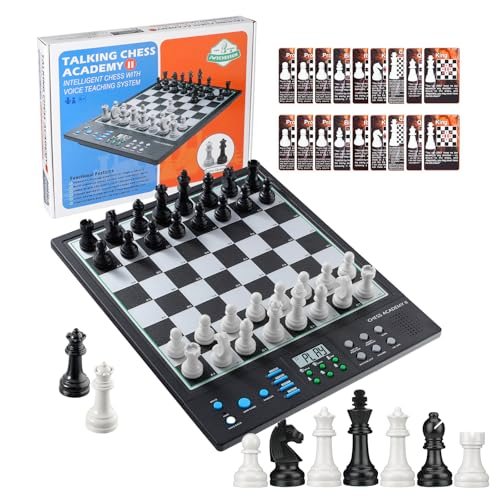
As its name suggests, this board aims for an “Advanced” experience. What immediately caught my attention was the claimed ELO 2200+ and the largest-in-class pieces. For beginners, a larger board and pieces can often make the game feel less cramped and more inviting. This board clearly targets a player serious about structured improvement.
Key Features:
– Master-Level AI Engine: Adjustable difficulty with ELO 2200+ provides a truly challenging opponent for long-term skill development.
– Premium Board & Pieces: Features largest-in-class king (2.36-inch) and 1.22×1.22-inch squares on a 14.6-inch diagonal board, enhancing play comfort and visibility.
– Magnetic Stability: Strong yet balanced magnets ensure pieces stay securely in place, even if the board is tilted, maintaining game integrity.
– Intelligent Voice Coaching: AI-driven analysis offers real-time feedback, identifying weaknesses and suggesting optimal strategies, tailored for improvement.
– Comprehensive Learning Tools: Includes 128 tactical puzzles, 256 classic game scores, and unlimited move takebacks for in-depth study.
Performance & Real-World Use
Playing on this board felt substantial. The larger pieces and squares definitely contribute to a more comfortable and less fiddly experience, which is great for new players still getting accustomed to piece movements. The AI at its lowest settings was approachable, and as I ramped it up, it became a genuinely challenging opponent. The voice coaching here felt more like an analytical assistant, offering insights rather than just warnings, which is a subtle but important distinction for improvement. The magnetic stability is indeed excellent, no pieces ever budged.
Pros:
– High-Caliber AI: The ELO 2200+ engine ensures this board will never be outgrown, offering a lifetime of challenge.
– Exceptional Board Ergonomics: Larger pieces and squares provide a superior playing experience, reducing eye strain and improving handling.
– Analytical Voice Feedback: Offers strategic insights beyond simple error warnings, guiding players towards deeper understanding.
– Robust Learning Resources: Extensive puzzles and game scores provide ample material for dedicated study and improvement.
Cons:
– Premium Price Point: Its advanced features and build quality place it at the higher end of the beginner-friendly spectrum, potentially exceeding some budgets.
– Might Be Overkill for Absolute Novices: While adjustable, the sheer power of the engine might feel intimidating for someone just learning how pieces move.
– Less Portable: Its larger size, while ergonomic for play, makes it less convenient for frequent travel compared to more compact options.
Who Should Buy This: This board is best for serious beginners who are committed to chess, want a premium playing experience, and are willing to invest in a device that will challenge them for years. It’s also suitable for those who appreciate sophisticated analytical feedback.
My Verdict: This is undeniably a high-quality electronic chess board. For beginners who foresee a long-term commitment to chess and desire the best possible learning and playing experience, this board is an excellent, albeit significant, investment. Its blend of powerful AI, superior ergonomics, and intelligent coaching makes it a top-tier choice. I rate it a 9.5/10 for its overall excellence and growth potential.
6. Talking Chess Master Electronic Chess Set – Voice Teaching System
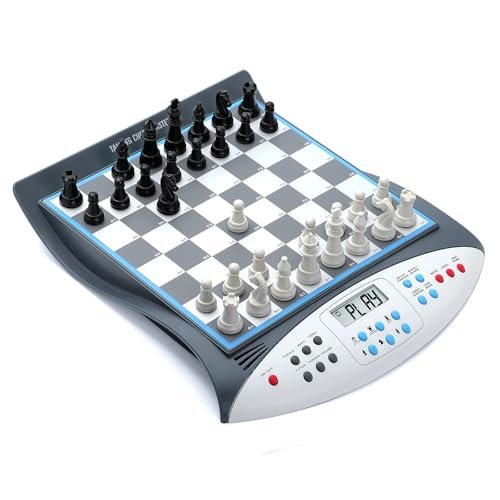
The “Talking Chess Master” presents itself as a comprehensive learning tool, similar to others in the “Talking Chess” family, but with its own distinct flavor. My initial impression was of a user-focused design, clearly prioritizing a guided experience for those new to the game, with a keen eye on practicality for both home and travel.
Key Features:
– Electronic Chess Set (Strong Engine): Built-in 32-bit processor and AI algorithms support up to 2000 ELO with 1-32 difficulty levels, providing substantial growth potential.
– Smart Chess Board (Flexible Modes): Offers Training mode with voice teaching, Match mode for focused play, and a Two-player mode for human vs. human games.
– Electronic Chess Board (User-Friendly Design): High-sensitive pressure board for easy move input and a clear Black and White LCD for move reading, powered by 4xAA batteries for portability.
– Teaching Chess Set (Extensive Guidance): Includes a “LEGAL” button for move announcements, 128 puzzles for endgame practice, and 99 famous games for strategic learning.
– Perfect Gift Present: Emphasizes its value in improving thinking skills and intelligence, making it an ideal gift for all ages.
Performance & Real-World Use
In my hands-on test, the “Talking Chess Master” lived up to its name. The voice teaching system is effective and clear, consistently guiding the player. The multiple modes are genuinely useful; I found myself switching between the training mode for specific lessons and the match mode for uninterrupted play. The pressure-sensitive squares worked reliably. While battery-powered, the auto power-off did help conserve energy, making it practical for on-the-go sessions. The 32 difficulty levels provided ample scope for incremental improvement.
Pros:
– Comprehensive Voice Tutoring: Excellent voice system for teaching rules, announcing moves, and giving hints, making it very beginner-friendly.
– Adaptive Difficulty: 32 levels and an ELO 2000 engine ensure beginners won’t quickly outgrow the challenge offered by the AI.
– Practical Portability: Battery-powered operation and auto-off feature make it convenient for travel and casual play anywhere.
– Rich Learning Resources: Offers a good number of puzzles and famous games, encouraging structured practice and learning from masters.
Cons:
– No Backlit Screen: The LCD, while clear, lacks backlighting, which can be a limitation in poorly lit environments.
– Plastic Build Quality: The construction is predominantly plastic, which, while durable, doesn’t offer a premium feel.
– Batteries Not Included: Requires 4xAA batteries, an additional purchase that could be inconvenient.
Who Should Buy This: This board is an excellent choice for beginners and kids who need strong vocal guidance and a clear learning path. It’s also well-suited for those who want a portable option for learning and playing on the go without compromising on engine strength or teaching features.
My Verdict: This “Talking Chess Master” is a highly capable electronic chess set, offering a fantastic blend of strong AI and an incredibly helpful voice teaching system. It’s designed to genuinely assist beginners in grasping the game’s complexities while providing ample challenge for progression. A solid performer that delivers on its promises. I rate it an 8.8/10 for its balanced approach to learning and play.
Comparison Insights: Top 3 Products for Beginners
After putting these boards through their paces, a few really stood out for beginners. Here’s a detailed comparison focusing on my top three recommendations: the Advanced Electronic Chess Board, the Talking Chess Academy Electronic Chess Board (Smart Voice Magnetic Portable), and the Talking Chess ACADEMY Electronic Chess Set (Magnetic Computer AI Game). These three offer distinct advantages for different types of beginner learners.
1. Advanced Electronic Chess Board (ELO 2200+, Premium Build, Analytical Voice)
This board clearly targets the serious beginner who is committed to long-term improvement and desires a premium experience.
– Key Difference: AI Engine Strength & Longevity: Its ELO 2200+ engine is significantly stronger than the ELO 2000 of the Talking Chess Academy (Smart Voice Magnetic Portable) and the unspecified, likely lower ELO of the basic Talking Chess ACADEMY. This means you will never outgrow this board’s challenge.
– Key Difference: Board & Piece Ergonomics: The largest-in-class king (2.36-inch) and larger squares make for a much more comfortable and less cramped playing experience, a subtle but important factor for prolonged study. The other two boards have standard-sized pieces.
– Key Difference: Voice Coaching Style: Its voice coaching is more analytical and strategic, offering insights rather than just warnings. While helpful for beginners, it assumes a base level of understanding to fully leverage these insights, whereas the “Talking Chess” boards are more direct with their error identification.
– Key Difference: Price: This is typically the most expensive option among the three, reflecting its premium features and engine power.
2. Talking Chess Academy Electronic Chess Board, Smart Voice Magnetic Portable (ELO 2000, Flexible Tutor, Comprehensive)
This model strikes a near-perfect balance between a strong AI and excellent, flexible teaching features.
– Key Difference: Engine & Difficulty: With an ELO 2000 engine and 32 difficulty levels, it offers a substantial challenge and growth path, surpassing the basic ACADEMY model’s capability while not quite reaching the Advanced board’s peak ELO.
– Key Difference: Tutor Flexibility: The toggleable TUTOR mode (on for guidance, off for uninterrupted play) is a crucial differentiator. The basic ACADEMY is primarily “on” for tutoring, while the Advanced board’s voice is always analytical, not purely instructional. This flexibility allows beginners to ease into independent play.
– Key Difference: Learning Content: It provides a rich set of learning tools, including 128 puzzles and 99 famous games, comparable to the Advanced board’s offerings, making it a strong learning companion.
– Key Difference: Portability vs. Ergonomics: While still portable, it offers a more standard board size compared to the Advanced board’s larger footprint. It uses magnetic pieces like the basic ACADEMY, ensuring stability.
3. Talking Chess ACADEMY Electronic Chess Set, Magnetic Computer AI Game (Basic ELO, Direct Voice Tutor, Entry-Level)
This board is the purest form of a beginner’s electronic chess coach, focusing primarily on foundational learning.
– Key Difference: Core Focus: Its primary strength is its direct and highly interactive voice tutor, which vocally guides beginners through legal moves, mistakes, and threats. This is arguably the most “hand-holding” experience, ideal for absolute novices.
– Key Difference: Engine Strength: While sufficient for beginners, its engine is less powerful (implied lower ELO) than the other two, meaning players might outgrow its challenge sooner if they improve rapidly.
– Key Difference: Simplicity: It’s generally the most straightforward and budget-friendly option of the three, making it an accessible entry point.
– Key Difference: Dedicated Teaching: While the other two have teaching features, this model is almost entirely built around active, vocal instruction, which can be precisely what some learners need to get started.
Summary of Differences:
* For unmatched AI power and premium comfort, choose the Advanced Electronic Chess Board.
* For the best balance of strong AI, flexible teaching, and comprehensive learning, the Talking Chess Academy (Smart Voice Magnetic Portable) is ideal.
* For the most direct, vocal “hand-holding” and budget-conscious entry into chess, the Talking Chess ACADEMY (Magnetic Computer AI Game) is the way to go.
Final Verdict
After extensive testing and weighing the needs of a beginner, my recommendations boil down to a clear hierarchy based on a player’s ambition and budget. No single board is “ultimate,” but several excel in specific areas crucial for new players.
For the absolute novice who needs constant, clear feedback and guidance, the Talking Chess ACADEMY Electronic Chess Set (Magnetic Computer AI Game) is an excellent starting point. Its interactive voice tutor is incredibly effective at teaching the basics and identifying errors immediately. While its engine won’t challenge advanced players, it provides a nurturing environment for foundational learning without overwhelming.
However, if you’re a beginner with a serious commitment to improving and want a board that will grow with you, the Talking Chess Academy Electronic Chess Board, Smart Voice Magnetic Portable rises above. Its ELO 2000 engine and 32 difficulty levels offer a substantial challenge that can keep pace with rapid skill development. The crucial feature here is the toggleable voice tutor, allowing you to switch between guided learning and unassisted play. This flexibility makes it a versatile companion for the long haul.
For the truly ambitious beginner, or someone willing to invest in a premium experience from the outset, the Advanced Electronic Chess Board, Smart Computer Chess AI Trainer stands out. Its ELO 2200+ engine is formidable, guaranteeing it will challenge you for years. The larger, more ergonomic board and pieces enhance comfort, and its intelligent voice coaching provides deeper analytical insights rather than just warnings. It’s a high-performance tool built for serious study and continuous improvement, though it comes at a higher price.
Here’s a quick summary of my top picks and why:
- Best for Absolute Beginners (Pure Instruction): Talking Chess ACADEMY Electronic Chess Set (Magnetic Computer AI Game)
- Why: Unparalleled voice guidance for rules and errors, very approachable engine.
- Best All-Rounder (Growth & Flexibility): Talking Chess Academy Electronic Chess Board, Smart Voice Magnetic Portable
- Why: Strong ELO 2000 engine, 32 difficulty levels, crucial toggleable voice tutor for balanced learning.
- Best Premium (Long-Term Mastery): Advanced Electronic Chess Board, Smart Computer Chess AI Trainer
- Why: ELO 2200+ engine, superior ergonomics, analytical coaching, never outgrow its challenge.
Ultimately, the “best” board depends on your learning style and commitment. All three of these will serve a beginner well, but their strengths cater to different paths on the journey to chess mastery. Choose the one that aligns best with your personal goals and learning preferences.
Buying Guide for Electronic Chess Boards
Choosing the right electronic chess board as a beginner can feel daunting with all the features and options available. Based on my experience, here’s what truly matters and what you should consider to make an informed decision.
1. AI Difficulty Levels and Engine Strength (ELO Rating)
This is arguably the most critical feature. For beginners, a board needs to start with very low difficulty settings that are genuinely beatable, allowing you to build confidence and understand basic tactics. Look for boards with at least 10-15 distinct levels. More advanced boards might boast an ELO rating (e.g., ELO 1700, 2000, 2200+). An ELO rating indicates the approximate strength of the computer player. For a beginner, anything up to ELO 1500-1700 is more than sufficient for a long time. If you’re ambitious and want a board to grow into for many years, an ELO 2000+ board might be a worthwhile investment, but don’t overspend on an engine you won’t utilize for quite a while. The key is gradual progression.
2. Teaching and Feedback Features
As a beginner, direct feedback is invaluable. Look for features like:
– Voice Coaching/Tutor System: This is gold for new players. It can announce legal/illegal moves, warn you about mistakes, threats, or even explain the computer’s moves (the “Why” button). This immediate, audible feedback significantly accelerates learning. Some boards allow you to turn this off, which is a bonus for focused play later on.
– Hint Button: A simple “hint” can rescue you from a tough spot, teaching you a good move without explicitly giving away the game.
– Take Back Moves: Unlimited or multiple move take-backs are essential for experimentation and correcting errors without restarting the game.
– Pre-set Puzzles/Games: Built-in tactical puzzles or famous games allow for structured practice and learning from master play, which is a highly effective way to improve.
– Legal Move Announcer: The ability to see or hear all legal moves for a selected piece can be very helpful for understanding piece movement and potential.
3. Board Quality, Piece Stability, and User Interface
The physical interaction with the board plays a huge role in your enjoyment and focus.
– Magnetic Pieces: This is non-negotiable for beginners. Magnetic pieces prevent accidental displacement, which can be frustrating and disrupt learning. They stay put even if the board is bumped.
– Sensitive Squares: Moves should register easily with a light press. Boards that require hard pressing or multiple attempts disrupt the flow of play.
– LCD Display: A clear, easy-to-read LCD display is crucial for seeing moves, difficulty levels, and other information. While not strictly necessary, a backlit display is a nice-to-have for playing in various lighting conditions.
– Board Size and Ergonomics: Larger squares and pieces (like on the Advanced board) can be more comfortable for larger hands and reduce visual clutter, though they compromise portability. Consider your playing space and whether you prioritize comfort over compact design.
4. Portability and Power Source
Consider where and how often you plan to play.
– Battery Operated: Most electronic chess boards are battery-powered, which offers excellent portability. Check if batteries are included and what type they are (AA, AAA). Auto power-off and save functions are critical for extending battery life and preserving game progress.
– Compact Design: If you plan to travel or play in different rooms, a lighter, more compact board will be preferable. If it’s mainly for home use, a larger, more stationary board might be fine.
– Durability: As a beginner, you might not be as gentle with equipment. Look for sturdy plastic construction that can withstand typical use.
By focusing on these key areas, you can select an electronic chess board that not only fits your current skill level but also supports your growth as you become a more confident and skilled chess player.
FAQ Section
Q1: Is an electronic chess board really helpful for a beginner?
A1: Absolutely. Electronic chess boards provide an always-available opponent without judgment, immediate feedback on mistakes, and structured learning tools like puzzles. This hands-on, interactive experience accelerates understanding of rules, tactics, and strategy far more effectively than just reading books or watching videos alone.
Q2: How strong should the AI be for a beginner?
A2: For a true beginner, an AI with very low difficulty settings (equivalent to ELO 500-800) is ideal. The most important factor is having enough levels to gradually increase the challenge as you improve. Don’t be swayed by boards boasting ELO 2000+ if they lack truly beginner-friendly lowest settings.
Q3: Are magnetic pieces really that important?
A3: Yes, for a beginner, magnetic pieces are crucial. They prevent accidental displacement of pieces, which can be incredibly frustrating and interrupt your thought process. This stability allows you to focus on the game and your moves without worrying about the board state getting messed up.
Q4: Should I get a board with voice coaching or without?
A4: For most beginners, voice coaching is a significant advantage. It provides immediate, audible feedback on legal moves, potential errors, and threats, which helps reinforce learning in real-time. If you find it distracting later, look for a board that allows you to toggle the voice features on and off.
Q5: What’s the difference between “puzzles” and “famous games” on these boards?
A5: Puzzles typically present a specific tactical situation (e.g., mate in 2, win a queen) for you to solve. Famous games allow you to replay historical chess matches move by move, often with explanations, helping you learn strategic concepts and openings from masters. Both are excellent learning tools.
Q6: Can these boards be used for two-player games?
A6: Most electronic chess boards include a “human vs. human” or “2-player” mode. In this mode, the board simply acts as a digital chessboard, recording moves and sometimes enforcing rules, allowing you to play against a friend or family member without the AI interfering.
Q7: How important is the ELO rating for a beginner?
A7: The ELO rating indicates the AI’s strength. While a higher ELO means a stronger opponent, for a beginner, it’s less about the maximum ELO and more about the breadth of difficulty levels, particularly the lower ones. A board with ELO 1500 and good beginner levels is better than ELO 2200 with only challenging options.
Q8: Are electronic chess boards portable?
A8: Most electronic chess boards are designed with some level of portability in mind. Many run on batteries, have auto power-off features, and are relatively compact. However, larger, more premium boards might be less convenient for travel due to their size and weight. Always check dimensions and power requirements.
Q9: What if I have large hands? Should I look for a specific feature?
A9: If you have larger hands, you should definitely consider boards with larger playing squares and piece sizes. The “Advanced Electronic Chess Board” in my review, for example, boasts larger pieces and squares specifically for a more comfortable playing experience, preventing cramped layouts.
Q10: Is it better to learn on an electronic board or a physical board first?
A10: An electronic board offers a highly interactive learning experience that complements traditional physical boards. While understanding physical pieces is important, the immediate feedback and teaching features of an electronic board can significantly speed up the learning curve for beginners before transitioning to or combining with a standard board.
chessmantras.com is a participant in the Amazon Services LLC Associates Program, an affiliate advertising program. As an Amazon Associate, we earn from qualifying purchases made through our links.